InterviewEmployee

Insights into the Role of a Working Student in Product Management at Beta Systems

Having joined the team last year, Cinthya was drawn to Beta Systems' modern corporate culture and diverse learning opportunities. As a working student, she gets to handle a range of different tasks which makes here job diverse and exciting.

Interviewee

betasystems_portraits-cinthya-salazar.jpg
Cinthya Salazar
Working Student Product Management

When did you start working at Beta Systems? Why did you choose Beta Systems back then?

I've been part of the Beta Systems team since 2023. I chose Beta Systems due to its modern corporate culture and diverse learning opportunities. Known not only for industry leadership but also for its open and collaborative work environment, Beta Systems values innovation and teamwork. During my time here, I've had the chance to work on exciting projects and learn from talented colleagues. I'm confident that my journey at Beta Systems has just begun, and I look forward to making a positive contribution to the team and company goals.

What are your tasks at Beta Systems?

As a working student, I handle a diverse range of tasks, including accounting, designing customer opinion surveys, contributing to internal and external communication, and shaping our User Research website.

Office or home office?

For me, a mix of both is ideal. Working three days a week as a working student, I spend two days in the office, surrounded by friendly colleagues and enjoying good coffee. Since I live a bit away from the office, I work from home on the third day. This flexibility allows me to make the most of both worlds and optimize my work.

What do you enjoy most about your job?

What I find most enjoyable is the opportunity to engage in User Research projects. Here, I can unleash my creativity, working on our User Research website and preparing customer surveys to better understand their needs. This combination of creative and analytical aspects makes my job fulfilling and exciting.

What do you particularly appreciate about your colleagues?

I particularly appreciate the support, helpfulness, and humor of my colleagues, always ready to assist with any questions. This supportive atmosphere creates a positive work environment, allowing me to continuously develop. Honesty and reliability are additional qualities contributing to this atmosphere, making collaboration pleasant.

What qualities do you need for a job in your field? What challenges are there?

The willingness to face new challenges is crucial. The position as a working student in product management requires a blend of analytical thinking, communication skills, teamwork, and creativity to successfully manage products and meet the demands of the evolving market.

What 3 words would you use to describe Beta Systems?

Transformational, team-oriented & visionary.

Interviewee
betasystems_portraits-cinthya-salazar.jpg
Cinthya Salazar
Working Student Product Management

Further Resources

Blog Article

DevOps Workflow Automation Explained in 2026

What happens at your company when a deployment fails at 6 a.m., and the engineer who owns that pipeline is asleep? For most teams, the honest answer involves a Slack alert, a scramble, and a manual fix. DevOps workflow automation is the practice of removing that manual dependency by letting scheduled and event-driven triggers handle builds, tests, deployments, and recovery on their own. Below, we break down what it actually involves, why it matters more in 2026 than it did even two years ago, the tools teams use to implement it, and how to roll it out without breaking what already works.
Blog Article

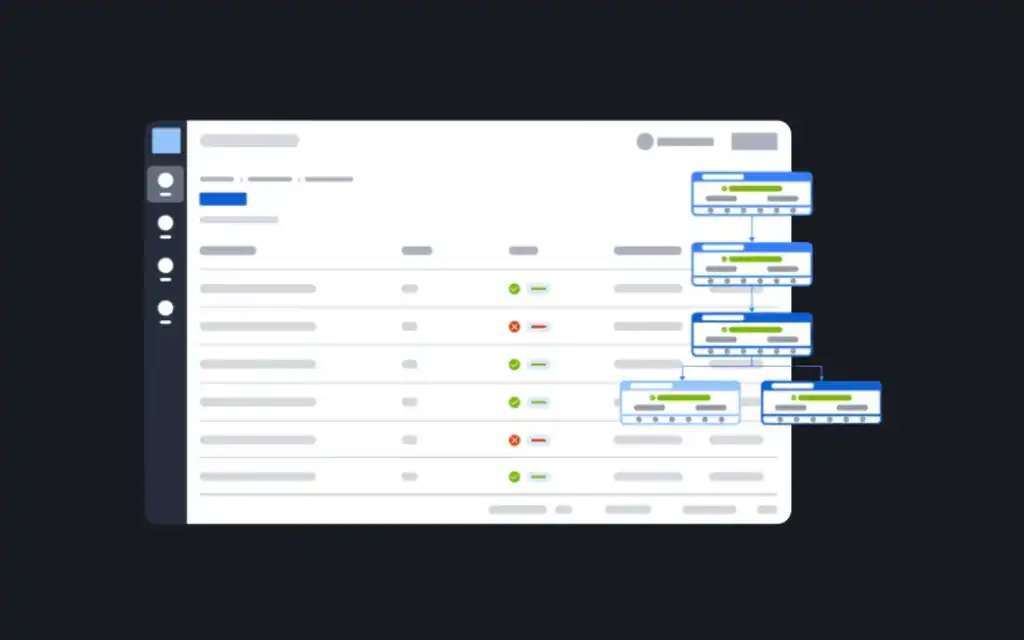
5 Best Job Scheduling Software & Tools for IT Teams in 2026

It’s 6 a.m and the finance team is waiting on an overnight batch job that didn’t deliver at 2 a.m. The problem is nobody gets an alert until the report doesn’t show up. That single missed dependency can delay payroll, stall a data pipeline, or disrupt an SLA a regulator cares about. This is the daily reality for IT teams running dozens or hundreds of interdependent jobs across mainframes, cloud platforms, and everything in between. Job scheduling software solves this by automatically triggering, sequencing, and monitoring tasks across your IT environment so you are not relying on cron jobs, spreadsheets, or a handful of engineers who know where all the bodies are buried. Below, we compare the five job scheduling and workload automation platforms enterprise IT teams evaluate most often in 2026, covering features, pricing, and exactly who each tool is built for.
Blog Article

Workflow Orchestration: How It Works, Use Cases, & Tools

A batch job finishes on one system. Nobody tells the next system to start, so three teams spend the next two hours on a call trying to figure out which of them broke it. This is what happens without workflow orchestration: coordinating automated tasks, data, and dependencies across systems so a process runs end to end without a human stitching the pieces together manually. Unplanned downtime now costs Global 2000 companies $600 billion a year, up 50% in just two years, according to Splunk and Oxford Economics. A meaningful share of that traces back to exactly this kind of gap: automated tasks that run fine individually but were never orchestrated as a connected process. Below, we break down what workflow orchestration actually involves, how it works step by step, where it differs from automation, and which platforms enterprise IT teams are evaluating in 2026.