:quality(50))
What is an Enterprise Automation Platform?
An enterprise automation platform is software designed to orchestrate, schedule, and manage complex IT and business workflows across on-premises, cloud, and hybrid environments.
Unlike basic task schedulers, robotic process automation tools, or no-code business tools, enterprise automation platforms handle event-driven workloads, cross-system dependencies, SLA compliance, and large-scale job execution across distributed infrastructure.
Demand reflects this with the global workload automation market projected to grow with a CAGR of 7.4% through to 2031. Furthermore, 87% of respondents in 2024 agreed that digital transformation is requiring more from their workload automation solution, up from 77% in 2020.
The key benefits include:
Centralized visibility and control over all automated workflows
Reduction in manual errors and operational overhead
Improved SLA compliance and business continuity
Seamless integration with enterprise systems (SAP, cloud hyperscalers, ITSM, data platforms)
Scalable orchestration from hundreds to millions of jobs
5 Best Enterprise Automation Platforms: A Quick Overview
Platform | Best For | Standout Feature |
|---|---|---|
Beta Systems ANOW! Suite | Legacy WLA replacement | 500+ integrations, cloud-native, data sovereignty |
BMC Control-M | BMC-native hybrid IT orchestration | Enterprise-scale workflow orchestration |
Broadcom Automic | Large Broadcom-ecosystem enterprises | End-to-end batch & cloud job automation |
Redwood RunMyJobs | SAP-centric enterprises | SAP-endorsed, 99.95% uptime SLA |
UiPath | RPA-led automation, document processing | Process mining + AI document understanding |
Beta Systems: Best for Legacy WLA Replacement

Beta Systems’ ANOW! Suite is a modern, cloud-native workload automation, orchestration, and observability platform built specifically for large enterprises looking to replace legacy solutions like Autosys, for instance.
Backed by 40 years of enterprise infrastructure experience, Beta Systems has rebuilt its automation offering from the ground up, offering genuine cloud-native architecture and full data sovereignty with no vendor lock-in.
Enterprise Workload Automation
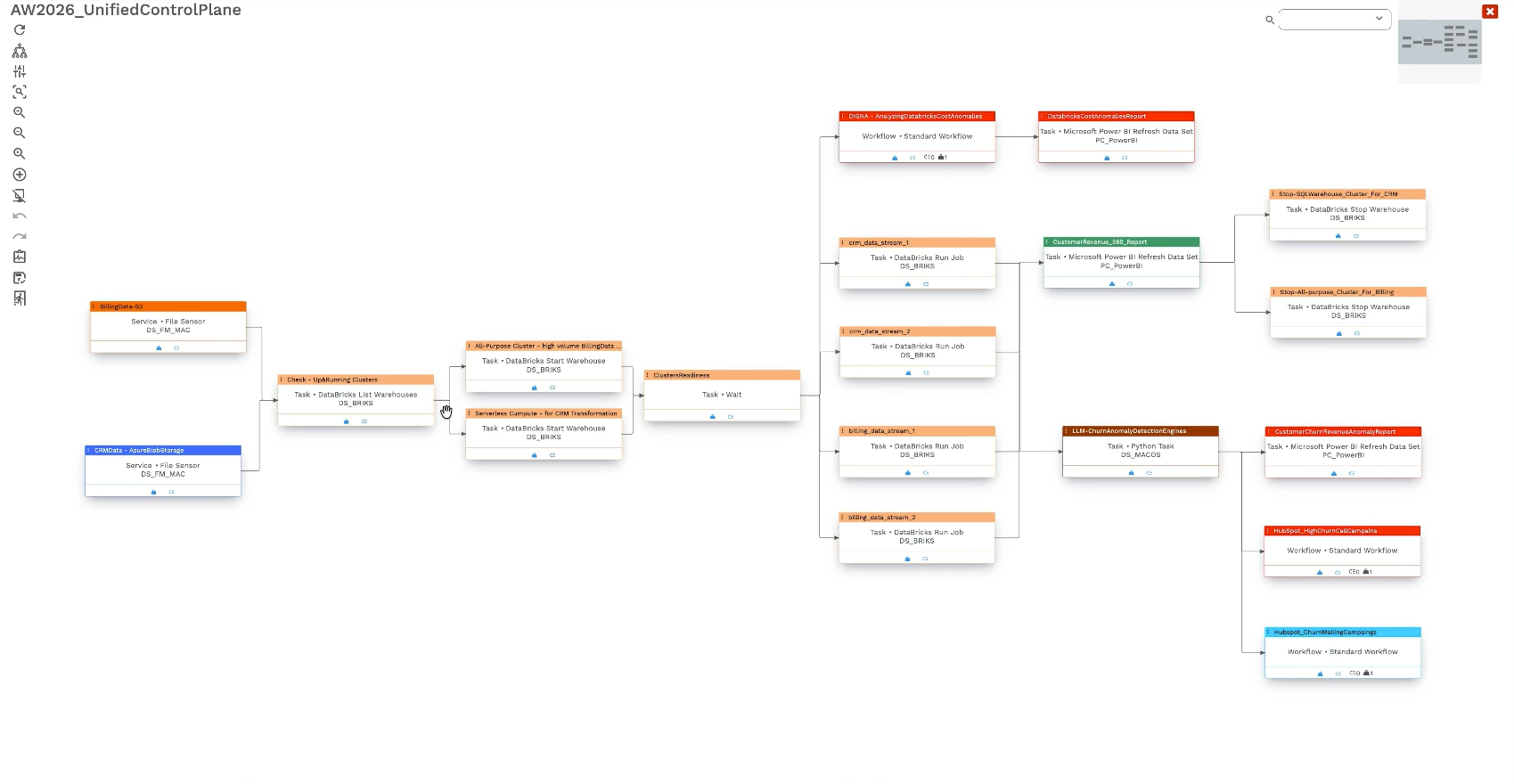
ANOW! Automate provides enterprise-grade orchestration for complex, cross-platform environments ranging from on-premises mainframes and distributed servers to AWS, Azure, and Google Cloud.
It supports event-driven, time-based, and dependency-based scheduling, with a low-code interface that removes the need for specialized scripting expertise.
Research shows that approximately 30% of WLA jobs now run in public clouds, with an additional 14% in hybrid cloud environments. SaaS-hosted WLA deployments are growing fastest.
Infinite Integration Capability
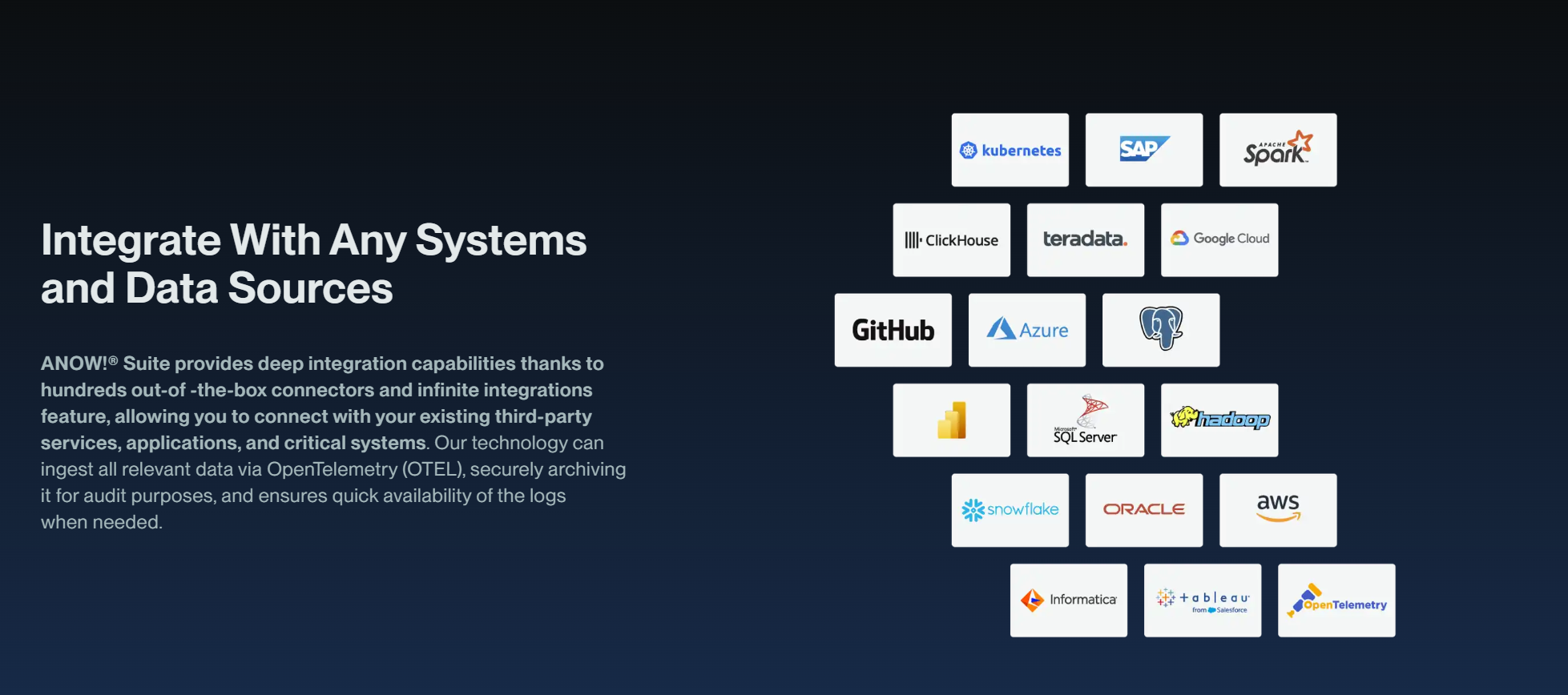
ANOW! Automate ships with over 500 out-of-the-box connectors, covering:
Cloud hyperscalers
SAP
DevOps toolchains
Data platforms (Snowflake, BigQuery, Databricks, AWS Glue)
ITSM tools (ServiceNow, Jira, Remedy)
Legacy schedulers
Beyond the pre-built library, the Infinite Integration framework lets teams rapidly onboard any proprietary, open-source, or custom system via API, CLI, scripting, or JavaScript.
Purpose-Built Workload Observability

Unlike competitors that treat observability as an afterthought, ANOW! Observe is purpose-built for workload automation environments.
It embeds OpenTelemetry-native telemetry directly into the orchestration engine, enabling real-time anomaly detection, SLA risk forecasting, and automated remediation.
The result? A closed-loop system where telemetry, machine learning, and AI continuously refine operational outcomes.
Contextual Intelligence & Dynamic Workflow Generation
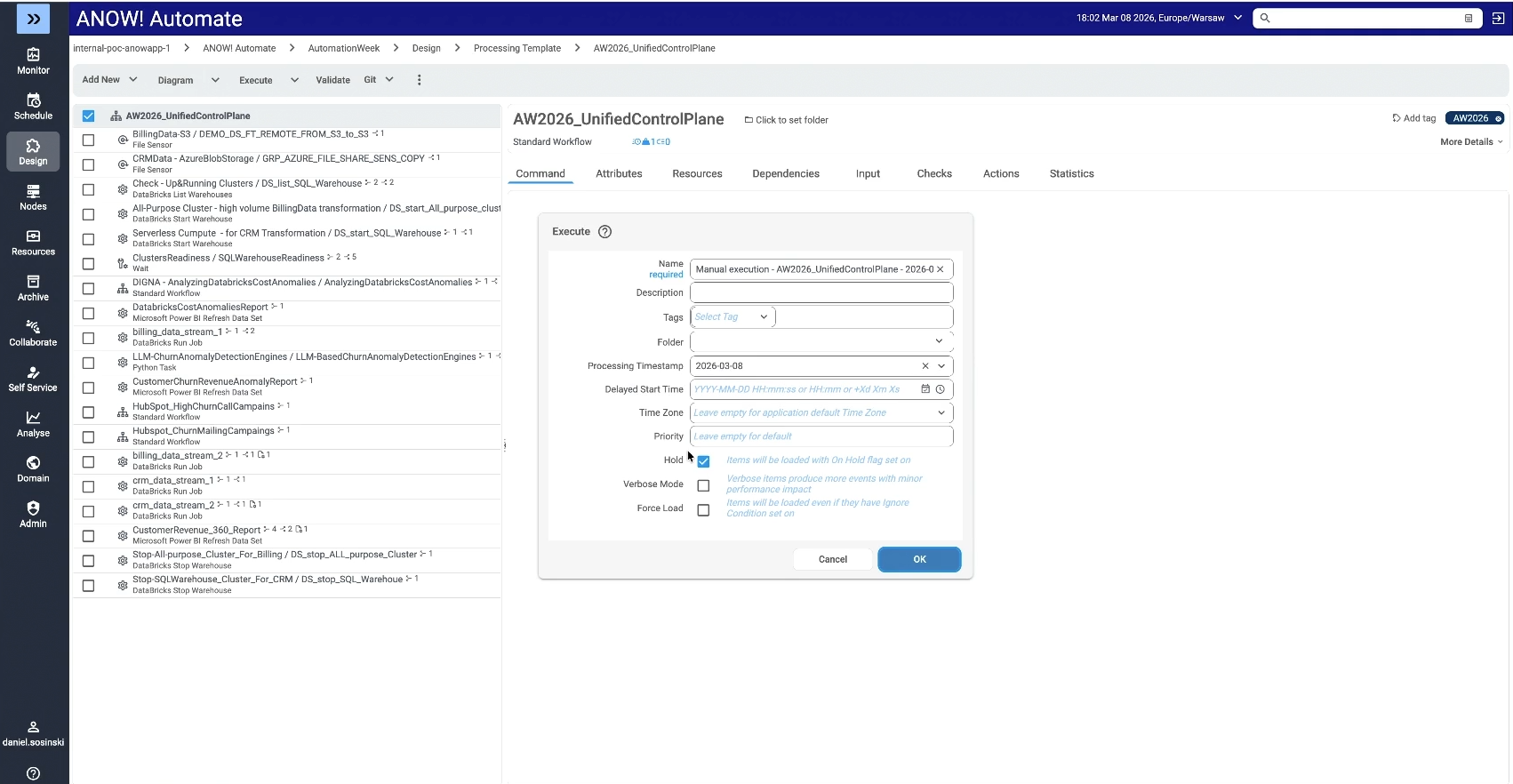
ANOW! Automate supports multi-level dynamic variables that adapt workflows in real time.
From minimal definitions, the platform can generate hundreds of thousands of unique workflow variants, enabling high-scale adaptive automation far beyond what traditional WLA platforms can deliver.
Where Beta Systems Shines
True cloud-native with zero vendor lock-in: ANOW! Automate is built on microservices and Kubernetes from inception and not a legacy scheduler retrofitted for the cloud. Deployment is easily portable and disruption-free.
Digital sovereignty for European enterprises: As a trusted European vendor, Beta Systems provides full data sovereignty and GDPR-aligned architecture, critical for regulated industries.
Fastest migration path from legacy vendors: Beta Systems offers zero-touch migration toolkits and dedicated migration support with minimal disruption and without rewriting workload definitions from scratch.
Where Beta Systems Falls Short
Limited UI language support: The ANOW! interface is currently available in English, German, and Polish. A broader UI redesign is underway.
Maturing AI feature set: While ANOW! Observe delivers solid telemetry-driven intelligence, broader AI capabilities are still expanding. This matters less for core orchestration (where ANOW! excels) and more for teams prioritizing advanced predictive analytics above all else.
Did you know?
Only 18% of organizations currently use AI to significantly impact their WLA strategy, but 70% plan to adopt AI-driven capabilities within the next 12 months.
Customer Reviews
G2 Review (4.5/5): “It feels like a premium tool that actually understands the needs of a modern professional, making complex tasks feel much simpler and more organized.”
G2 Review (4/5): “I really love how ANOW facilitates the real-time and centralized control of the end nodes, workflows for enterprises.”
Where Beta Systems Falls Short Who Beta Systems is Best For
Head of IT Operations / I&O: Teams managing complex hybrid IT environments spanning mainframe, on-prem, and multi-cloud who need a single point of control with enterprise-grade SLA compliance.
Chief Data Officer / Director of Data Platforms: Leaders orchestrating end-to-end pipelines across modern data platforms who need reliability, observability, and real-time monitoring built in.
Enterprise Automation Lead / CoE Manager: Teams consolidating multiple schedulers and legacy tools into a unified, governed automation platform with self-service capabilities.
Ready to replace your legacy automation platform?
Talk to an expert and see how ANOW! Suite accelerates your migration.
BMC Control-M: Best for Hybrid IT Orchestration Within the BMC

BMC Control-M is one of the most established workload automation platforms on the market.
It provides a single interface for orchestrating application and data workflows across mainframe, distributed, and cloud environments, with strong SLA management, predictive analytics, and a deeply mature integration ecosystem.
Key Features
Hybrid orchestration: Unified management across mainframe (z/OS), on-premises, AWS, Azure, and Google Cloud
Predictive SLA management: Identifies bottlenecks before they impact critical services, with automated escalation workflows
Jobs-as-code: Integrates workflow definitions into CI/CD pipelines via JSON, Python, Jenkins, and Git
Where Control-M Shines
Mature orchestration engine: Decades of enterprise refinement with proven reliability for mission-critical batch workloads across highly complex environments
Strong ecosystem integrations: Deep native integrations with data platforms including Snowflake, Airflow, and Azure Data Factory, alongside robust ITSM connectivity
Where Control-M Falls Short
Escalating licensing costs: BMC’s pricing model has drawn consistent criticism for complexity and year-on-year increases
Aging interface and complex setup: User reviews frequently note an outdated GUI and steep configuration requirements, particularly for teams without existing BMC expertise on staff
Customer Reviews
Ujjwal Y. says, “Control-M integrates with our databases, ETL tools, and cloud platforms to orchestrate end-to-end workflows.”
Rittam D. notes, “Control-M’s interface can feel complex for beginners, setup requires expertise, troubleshooting sometimes lacks clarity, and licensing costs can be relatively high.”
Who Control-M is Best For
Large enterprises: Already heavily invested in BMC's broader ecosystem, with established BMC expertise and budget for premium licensing costs
Broadcom Automic: Best for Enterprises Under Active Broadcom Contracts
Broadcom Automic (formerly CA Automic) is an enterprise automation platform focused on end-to-end batch processing, cloud job scheduling, and cross-platform workflow orchestration.
Key Features
Cross-platform batch automation: Orchestrates workloads across mainframe, distributed, and hybrid cloud environments
DevOps integration: Supports CI/CD automation and deployment pipelines across enterprise toolchains
Workflow analytics: Forecasting and SLA monitoring dashboards for operational visibility
Where Broadcom Automic Shines
Breadth of automation coverage: Strong across enterprise batch, event-driven, and service orchestration use cases in established accounts
Large enterprise footprint: Deep penetration in BFSI and manufacturing enterprise accounts, with a long track record
Where Broadcom Automic Falls Short
Significant price increases post-acquisition: Customers have reported dramatic licensing cost increases and deteriorating support quality
High vendor lock-in risk: Deep ecosystem dependency makes migration complex and costly without a structured replacement program
Customer Reviews
An enterprise user noted, “Its multi cloud resource is super helpful.”
Sridhar K. flags, “Crash recovery is at its worst. After client outage, the environment will not resume correctly to its original position, instead we need to make that manually.”
Who Broadcom Automic Is Best For
Enterprises with active multi-year Broadcom contracts: Organizations not yet ready to migrate but maintaining existing automation coverage
Considering exiting Broadcom? Beta Systems offers a structured replacement pathway.
Redwood RunMyJobs: Best for SAP-Centric Enterprises
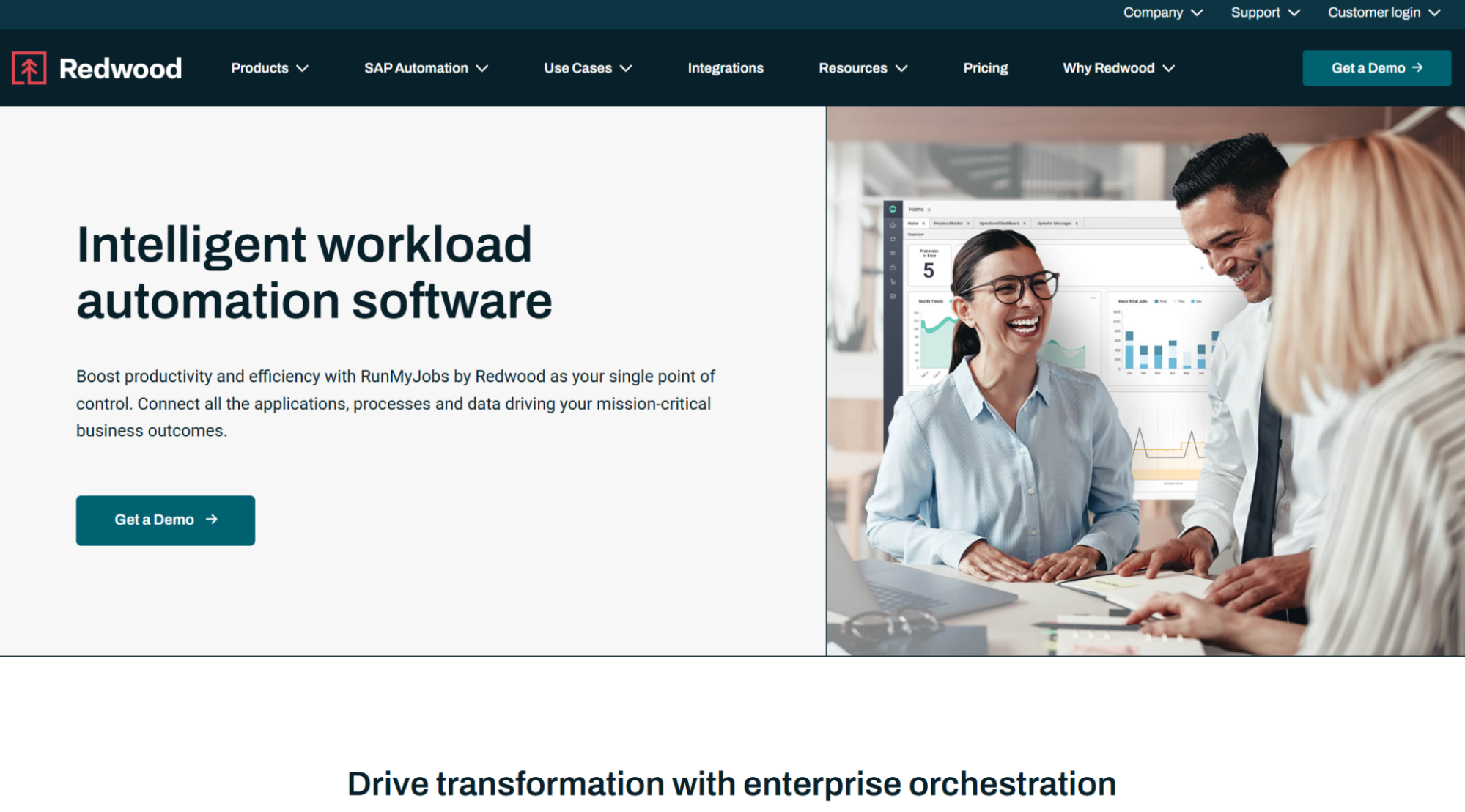
Redwood RunMyJobs is the only SAP-Endorsed workload automation platform, making it a natural consideration for enterprises running SAP S/4HANA environments.
Key Features
SAP orchestration: Deep support for RISE with SAP, S/4HANA, BTP, and legacy ECC environments with 1,000+ pre-built templates
99.95% uptime SLA guarantee: Backed by 24/7 dedicated support and proactive monitoring
Low-code workflow builder: Drag-and-drop interface with an extensive template library for faster automation deployment
Where Redwood Shines
SAP endorsement and certification: The only workload automation vendor to achieve premium SAP endorsement
Clean-core migration support: Purpose-built to ensure no process disruption during multi-phase RISE with SAP migrations.
Where Redwood Falls Short
Narrower integration breadth: Strongest in SAP ecosystems; less differentiated for organizations with complex non-SAP, multi-cloud orchestration requirements
New licence risk: Users might carry over inefficiencies in their current scheduling process and use it to determine the job count
Customer Reviews
Srinivas T. praises that it, “Seamlessly connects with SAP, Informatica, Power BI, Tableau, and other applications for end-to-end automation.”
Vinayak B. notes, “Advanced configurations and integrations may also require specialized knowledge, particularly in large SAP-heavy environments.”
Who Redwood RunMyJobs Is Best For
SAP-heavy enterprises: Organizations migrating to RISE with SAP or S/4HANA that need guaranteed process continuity with minimal disruption to critical ERP operations
UiPath: Best for RPA-Led Automation with AI Document Processing

UiPath offers a platform that has expanded beyond traditional bot-based automation to include process mining, task mining, AI document understanding, and agentic AI orchestration.
Key Features
Process and task mining: Automatically analyzes existing workflows to surface high-value automation opportunities before any build begins
AI document understanding: Extracts and processes structured data from invoices, contracts, and forms with high accuracy
Agentic AI orchestration: AI agents that reason and act on goals rather than fixed rules
Where UiPath Shines
RPA depth and maturity: Best-in-class for automating legacy applications where API access isn’t available
End-to-end automation stack: Covers discovery, design, deployment, and governance within a single governed ecosystem
Where UiPath Falls Short
Not a workload automation platform: UiPath is purpose-built for RPA and business process automation, not for complex IT batch job orchestration, data pipeline scheduling, or hybrid-cloud workload management
Escalating licensing at scale: Costs increase significantly as bot counts and program scope expand, making large-scale deployments expensive to sustain
Customer Reviews
Wesley R. says, “What I find most remarkable about UiPath Agentic Automation is its ability to automate complex end-to-end processes, even those previously impossible due to their unpredictable nature.”
Parikshit A. warns, “Traditional RPA bots are faster and light but with this, it is slightly more expensive and slow.”
Who UiPath Is Best For
Finance, insurance, and healthcare operations teams: With high volumes of repetitive data entry, document-heavy, or legacy-system-dependent workflows requiring attended or unattended bot automation
How to Choose an Enterprise Automation Platform
Not all automation platforms are built for the same job.
Before evaluating vendors, clarify which of the following requirements applies to your organization. The right fit depends on whether you need task-level intelligent automation or enterprise-wide workload orchestration.
Workload Complexity and Cross-System Dependencies
If your requirements span multiple systems such as mainframes, cloud platforms, SAP, data pipelines, and ITSM tools, you need a true workload automation platform, not an RPA tool or no-code workflow builder.
For enterprise-wide, cross-system orchestration, ANOW! Automate's 500+ native integrations and event-driven architecture provide a single point of control across your entire hybrid environment.
Pro Tip
Citizen developers and automation CoEs often underestimate cross-system dependency complexity. Read our guide to learn more.
Cloud Strategy and Deployment Flexibility
Does your organization need SaaS, private cloud, on-premises, or a combination? Will this change over time?
Legacy platforms often lock you into specific deployment models. ANOW! Automate is deployment-agnostic from inception. You can switch between SaaS, private cloud, and on-premises at any time without disruption, backed by a 99.95% availability SLA.
Total Cost of Ownership and Pricing Transparency
Legacy vendors like BMC and Broadcom have drawn sustained criticism for escalating licensing costs, per-module pricing, and opaque renewal terms. When evaluating platforms, it’s best to request detailed TCO modeling across a 3–5 year horizon, including migration, training, and support costs.
Beta Systems offers workload-based pricing with no per-user fees and transparent contract terms, delivering 25-40% better TCO for enterprises replacing legacy schedulers.
Observability and SLA Compliance
As automation programs scale, proactive visibility becomes critical. Look for platforms that offer real-time telemetry, SLA risk forecasting, and automated remediation.
ANOW! Observe embeds OpenTelemetry-native observability directly into the orchestration engine, enabling anomaly detection and SLA risk management before issues impact operations
Automate Your Enterprise Operations with Beta Systems
Choosing the right enterprise automation platform in 2026 comes down to your use case, your existing environment, and your long-term automation strategy.
For large enterprises with complex, cross-platform workloads, Beta Systems ANOW! Suite represents a modern, sovereign, and cost-effective path forward. It combines enterprise-grade workload automation, real-time observability, and AI-driven orchestration in a single cloud-native platform, eliminating the need for multiple point tools while giving IT and operations teams full visibility and control.
For organizations currently running on legacy workload automation platforms, ANOW! is purpose-built for this exact transition. Beta Systems has helped enterprises migrate off outdated, overpriced platforms with zero-downtime deployment, a proven migration toolkit, and predictable pricing.
Ready to modernize your workload automation?
Get to know Beta Systems, what we stand for, and how we’ve brought success to our clients.
Frequently Asked Questions
What is the difference between workload automation and RPA?
WLA platforms like ANOW! Automate orchestrate complex IT process automation across hybrid and cloud environments. RPA platforms automate repetitive, UI-level business tasks by mimicking human interaction with software interfaces.
How long does it typically take to migrate from a legacy WLA platform?
The length of the migration phase depends on the number of jobs a customer has to migrate. Typically, it can take 2-4 months per phase but this can vary. Beta Systems’ zero-touch migration toolkits automate the conversion of existing workload definitions, reducing manual effort and risk significantly.
What industries benefit most from enterprise workload automation platforms?
BFSI, manufacturing, IT and telecom, and retail are the best fits. Regulatory frameworks like DORA have made reliable, auditable workload automation a compliance requirement going beyond operations.
:quality(50))