The Evolution of Enterprise Automation
Enterprise automation has transformed remarkably over the past several decades. Each technology generation has expanded what organizations expect from automation platforms. What began as simple job scheduling has evolved into intelligent orchestration platforms that coordinate
applications,
infrastructure,
cloud services,
APIs,
operational events,
observability,
and AI.
Today, we're seeing the fastest expansion yet as we move closer to fully agentic AI platforms.
Understanding this evolution helps explain why organizations are moving past traditional workload automation and embracing enterprise orchestration.
From Job Scheduling to Workload Automation
The earliest automation platforms solved the relatively simple operational problem of executing recurring jobs without manual intervention.
Typical workloads included nightly batch processing, payroll execution, financial close processes, report generation, database maintenance, file transfers, and system backups. Platforms running these jobs typically focus on answering what/when/where it should run. Calendars, dependencies, execution windows, and reliability became the foundation of enterprise operations.
At the time, this represented a significant technological advancement. However, these platforms were designed to execute individual jobs rather than coordinate business processes.
As enterprise environments expanded, automation evolved into Workload Automation. So, instead of running isolated jobs, platforms began coordinating related tasks across multiple systems. New capabilities included dependency management, conditional execution, and event triggers to coordinate tasks, along with automated recovery, centralized monitoring, resource management to keep them reliable, and cross-platform execution.
This upgrade marked an important shift. Automation began coordinating operational workloads rather than simply executing scheduled jobs. Even so, workload automation remained largely infrastructure-focused. Business processes were still represented as sequences of technical tasks rather than end-to-end operational workflows.
The rise of distributed computing dramatically increased operational complexity. Organizations suddenly had to manage environments spanning operating systems and platforms (Windows, Linux, UNIX, mainframes, and virtual machines), plus the layers on top: enterprise applications, middleware, and storage platforms.
Automation vendors responded by building connectors for every new technology.
Pro Tip
Don't just automate tasks; orchestrate outcomes. Shift your focus from individual job execution to designing workflows that deliver measurable business results, leveraging AI for dynamic adaptation while maintaining human governance.
Cloud Computing and the Hybrid Enterprise
Cloud computing fundamentally transformed enterprise operations. As a result, infrastructure became programmable, and resources became elastic. At the same time, provisioning shifted from manual administration to API-driven automation.
Modern platforms coordinate infrastructure provisioning, cloud lifecycle management, API-driven execution, cloud-native deployments, and resource orchestration, far beyond scheduling jobs. In other words, hybrid execution has become the standard operating model for enterprise IT.
Despite predictions that cloud would replace traditional infrastructure, most organizations now operate highly diverse hybrid environments.
A typical enterprise may simultaneously rely on mainframes, legacy applications, and VMware alongside Kubernetes and the major clouds (AWS, Microsoft Azure, and Google Cloud), all connected to business platforms such as SAP, Microsoft platforms, ServiceNow, and other SaaS services.
A single workflow might start in an ERP system, provision cloud infrastructure, trigger containerized services, update an IT service management platform, run analytics, and archive operational data. Today’s business processes rarely stay within a single platform.

From Workload Automation to Enterprise Orchestration
For years, organizations measured automation success by how efficiently they could schedule and execute jobs. Workload automation platforms focused on batch processing, calendars, dependencies, operating system processes, and centralized scheduling.
Those capabilities remain critical, but they can't solve modern enterprise operations challenges. Today’s organizations must coordinate complete business processes across applications, cloud platforms, infrastructure, APIs, and operational events, and the differences are clear.
| Enterprise Orchestration | |
|---|---|---|
Batch execution | End-to-end business workflows | |
Job scheduling | Hybrid cloud and on-premises execution | |
Calendars and dependencies | Application and service coordination | |
Operating system processes | Infrastructure automation | |
Centralized scheduling | API-driven integrations | |
– | Event-driven operations | |
– | Governance, compliance, and operational visibility |
Adding hundreds of integrations doesn't change this. Connectors increase connectivity, but they don't automatically create end-to-end orchestration. Enterprise orchestration represents a fundamental shift in what organizations expect of their automation platforms. As a result, workload automation becomes one capability within a much broader operational architecture.
Modern Orchestration Requires APIs, Observability, and Events
Innovative enterprise systems increasingly communicate through APIs. Instead of automating operating system commands or user interfaces, organizations now orchestrate REST APIs, cloud services, Kubernetes, messaging platforms, SaaS applications, infrastructure services, and security platforms.
This shift makes openness and interoperability more valuable than proprietary integrations. Successful orchestration platforms are thus designed to connect technologies across the enterprise, regardless of vendor or deployment model.
Executing workflows is only part of the equation. Operations teams also need full visibility into workflow health, execution status, and performance, including failures, dependencies, SLA compliance, and operational trends.
Modern orchestration combines automation with observability, enabling teams to identify issues faster, improve resilience, and optimize business operations.
Traditional automation relied mainly on calendars and fixed schedules, but today’s enterprises increasingly respond to real-time events such as
application deployments,
infrastructure alerts,
customer transactions,
security incidents,
API callbacks,
monitoring events,
and operational anomalies.
Automation has become dynamic and context-aware. For example, instead of asking, “What time should this run?”, organizations now ask, “What should happen when this event occurs?”

Agentic AI, Governed by Human Oversight
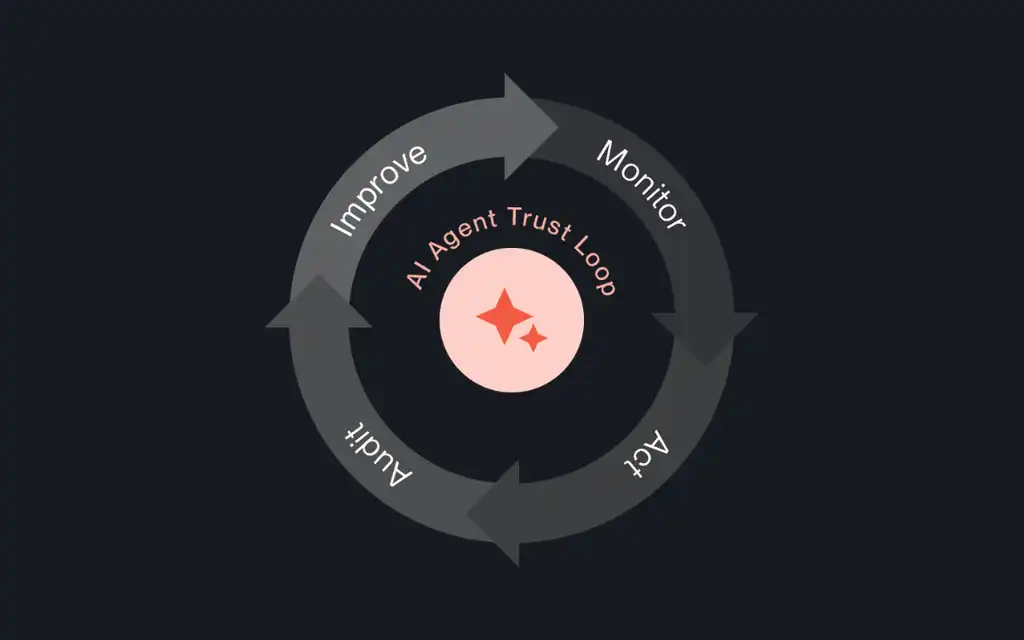
Artificial intelligence represents the next evolution of enterprise automation. However, it's important to note that AI doesn’t replace orchestration; it enhances it.
Current agentic AI capabilities include anomaly detection and predictive analytics to spot problems early, root cause analysis and operational summaries to explain them, and workflow recommendations, natural language interaction, and intelligent migration assistance to help teams act on them.
Enterprise automation is steadily moving toward greater autonomy. Nonetheless, autonomy does not eliminate the need for human oversight.
Today’s enterprises still require governance, compliance, and auditability, supported by policy enforcement, approval workflows, and operational transparency.
Why ANOW! Is Built for Enterprise Orchestration
The ANOW! platform reflects the complete evolution of enterprise automation.
It builds on the proven reliability of enterprise workload automation while extending orchestration across hybrid infrastructure, cloud services, enterprise applications, APIs, observability platforms, operational events, and AI-assisted capabilities. Rather than simply scheduling jobs, ANOW! coordinates end-to-end digital operations across the modern enterprise.
As enterprise IT evolves, the new challenges are now focused on orchestrating the entire digital enterprise instead of automating individual tasks. The ANOW! platform is built for the future of enterprise automation as we continue to progress towards fully orchestrated enterprise IT powered by agentic AI.
Ready to move beyond job scheduling and orchestrate your entire digital enterprise?
Discover how ANOW! combines proven workload automation with hybrid orchestration, observability, and agentic AI. Contact our team and see what enterprise orchestration can do for your organization.