:quality(50))
| Best For | Standout Features | |
|---|---|---|---|
| Enterprises replacing Broadcom Automic or AutoSys that want no vendor lock-in and digital sovereignty | 500+ native integrations with zero-touch migration tooling | |
BMC Control-M | Enterprises already invested in the BMC ecosystem | Broad mainframe-to-multicloud orchestration | |
Stonebranch UAC | Enterprises running active multi-vendor displacement evaluations | Universal Portal for citizen-automator self-service | |
Redwood RunMyJobs | SAP-heavy enterprises on RISE with SAP or S/4HANA | Native SAP Endorsed App status | |
HCL Workload Automation | Global enterprises with mixed mainframe and cloud-native estates | Flexible SaaS topologies with granular data-residency control | |
Apache Airflow | Engineering-led teams with strong internal Python expertise | Python-native DAG authoring | |
ServiceNow Workflow Orchestration | Organizations already standardized on ServiceNow for ITSM | Native tie-in to ITSM approvals and service requests |
1. Beta Systems: Best for Enterprise Workload Automation and Orchestration
Beta Systems has been in the automation business for over 40 years, but its ANOW! Suite is a modern, cloud-native rebuild. Gartner named Beta Systems a Leader in the 2026 Gartner Magic Quadrant, citing particular strength in risk-averse, mission-critical verticals like financial services, insurance, and the public sector.
Where Broadcom customers most often cite renewal-pricing volatility and a lack of self-service migration tooling, ANOW! Automate is built specifically to remove both sources of friction: transparent, workload-based pricing and a proprietary migration tool that automates the ingestion and translation of competitor task definitions.
Beta Systems’ ANOW! Suite Key Features
Workload automation and orchestration in one
ANOW! Automate combines workload automation and orchestration with observability and AI-driven insights in a single platform, rather than requiring separate point tools for scheduling, monitoring, and compliance.
Zero-downtime, container-native architecture
Built on Kubernetes, ANOW! Automate supports zero-downtime upgrades and on-demand scaling without interrupting running workloads. There’s no client installation required as teams access the platform via a browser, which shortens onboarding for large, distributed IT organizations migrating away from a legacy, agent-heavy Broadcom deployment.
Infinite integration capability
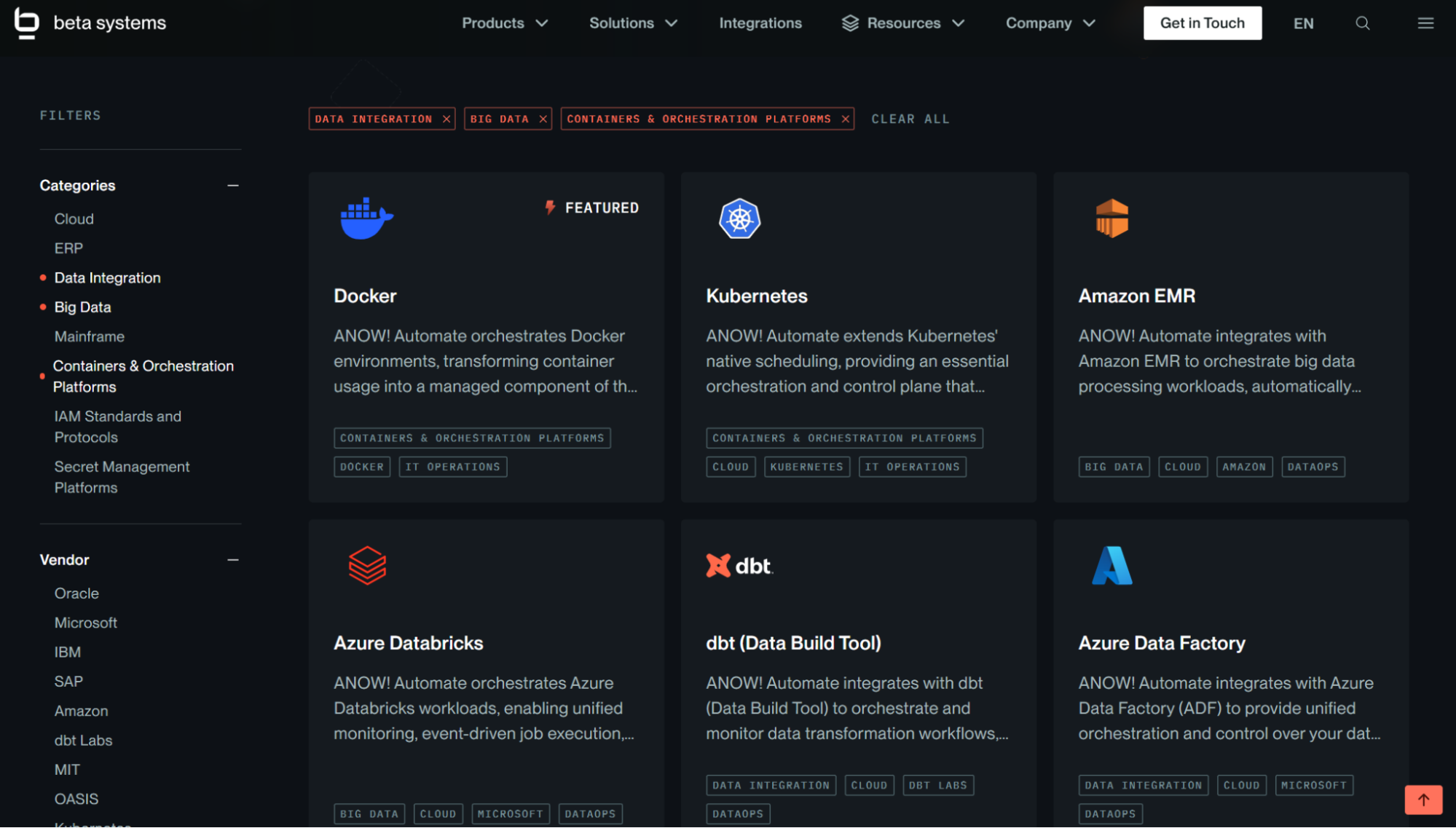
ANOW! Automate connects to virtually any on-premises or cloud platform through APIs, CLI, and scripting-based integration logic. The platform ships with 500+ native, out-of-the-box connectors spanning cloud, DevOps, containers, databases, ERP, CRM, and ITSM systems, more than most other WLA vendors offer natively. At the same time, its extensible interface lets teams build custom connectors for anything outside the standard library.
Full-stack, OpenTelemetry-native observability
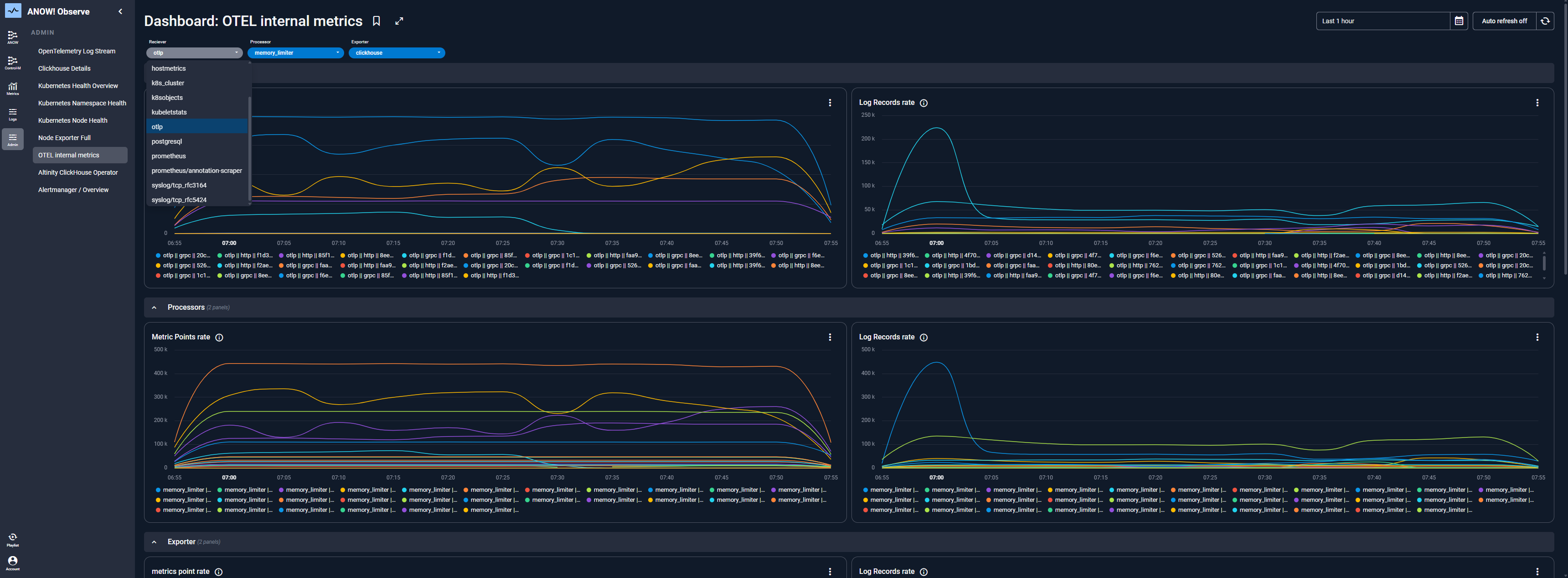
ANOW! Observe embeds real-time telemetry directly into the orchestration engine, emitting standardized metrics, logs, and traces that power anomaly detection, SLA-risk forecasting, and automated remediation. This closed-loop system is a meaningful differentiator against Broadcom, which does not offer native OpenTelemetry data streams.
Where Beta Systems’ ANOW! Suite Shines
No vendor lock-in: Deployment portability across SaaS, private cloud, and on-premises means organizations can switch deployment types without disruption or re-architecture.
Digital sovereignty for European enterprises: ISO 27001-compliant infrastructure and full data residency control matter directly to BFSI and manufacturing buyers navigating GDPR and DORA requirements.
Migration tooling built for Broadcom displacement: The platform's automated migration factory is designed to reduce the risk and manual scripting typically required when moving off Automic or AutoSys.
Where Beta Systems’ ANOW! Suite Falls Short
Geographic concentration: Beta Systems' sales, marketing, and support footprint remains concentrated in Western Europe. Enterprises with large APAC or LATAM operations may find less direct local field support compared to more globally established vendors.
Market perception: Because of its 40-year mainframe heritage, Beta Systems is sometimes overlooked by cloud-native DevOps and DataOps teams during tool evaluations, even though ANOW! itself is a modern platform.
Beta Systems’ ANOW! Suite Customer Reviews
On G2, a couple of verified users have positives to share. One says, “I really like that everything is in one place. It gives me a 'single point of control' for all my tasks and workflows, which makes it much easier to see what is happening in real-time.”
Another user speaks highly of ANOW!’s centralized setup, stating, “It helps me organize tasks, track progress, and maintain better visibility across ongoing activities. What I like most about ANOW! Suite is its ability to bring everything into one centralized platform. It makes task management and tracking very intuitive, improves visibility across workflows, and helps me stay organized.”
Who Beta Systems’ ANOW! Suite Is Best For
Enterprises replacing Broadcom Automic or AutoSys, especially those in BFSI, manufacturing, or insurance seeking a proven migration path with predictable pricing
European organizations with sovereignty requirements, such as DORA and GDPR compliance, make a European-headquartered vendor a meaningful differentiator
Teams consolidating multiple point tools can tap into ANOW! Suite's unified orchestration, observability, and compliance layer to reduce the tool sprawl that drives up TCO with fragmented Broadcom deployments
Beta Systems Software is Recognized as a Leader in the 2026 Gartner® Magic Quadrant™
Discover why analysts trust Beta Systems to deliver enterprise-grade workload automation and observability at scale.
:quality(80))
2. BMC Control-M: Best for Enterprises Already Invested in the BMC Ecosystem
BMC Control-M is the most obvious enterprise alternative on this list, and the tool most Broadcom migrators will already be evaluating in parallel. Gartner named BMC a Leader in the 2026 SOAP Magic Quadrant, citing Control-M's orchestration across mainframes, distributed systems, cloud-native AI/ML, and data pipelines as a core strength, as well as its expanding agentic AI capabilities via the Jett AI Advisor.
Key Features
Broad connector coverage: For established enterprise applications and cloud services.
Low-code application integrator: Great for building custom extensions.
Agentic AI Jobs: Autonomous AI agents analyze operational data and execute remediation within governed, role-based access controls.
Where Control-M Shines
Enterprise credibility: Control-M appears on virtually every enterprise shortlist and carries deep bench strength in mainframe-to-cloud environments.
Data pipeline assurance: Native data-quality validation within the execution layer prevents low-quality data from propagating downstream to workflows and AI/ML models.
Where Control-M Falls Short
No native OpenTelemetry support: Teams that need modern observability must rely on Control-M’s own dashboards, APIs, or third-party integrations rather than an OTel-native data stream.
Licensing complexity: Task-execution-based pricing can create budgeting unpredictability, a complaint that mirrors what many Broadcom customers already cite as a reason to leave.
Customer Reviews
Shivaji B. praises, “Control-M makes complex job scheduling simple. I love its intuitive interface, strong automation capabilities, and the way it integrates seamlessly with multiple platforms. It saves time and reduces manual effort.”
Indranil S. warns, “The reporting tool still needs a lot of improvement. It was supposed to get better with the upgrade, but it really didn't. It needs help, because it's such a useful thing to have. It needs to be more powerful and easier to use.”
Who Control-M Is Best For
Large enterprises with deep mainframe investments that need proven mainframe-to-cloud bridging and are prepared to manage task-execution-based licensing.
3. Stonebranch UAC: Best for Enterprises Running Active Multi-Vendor Evaluations
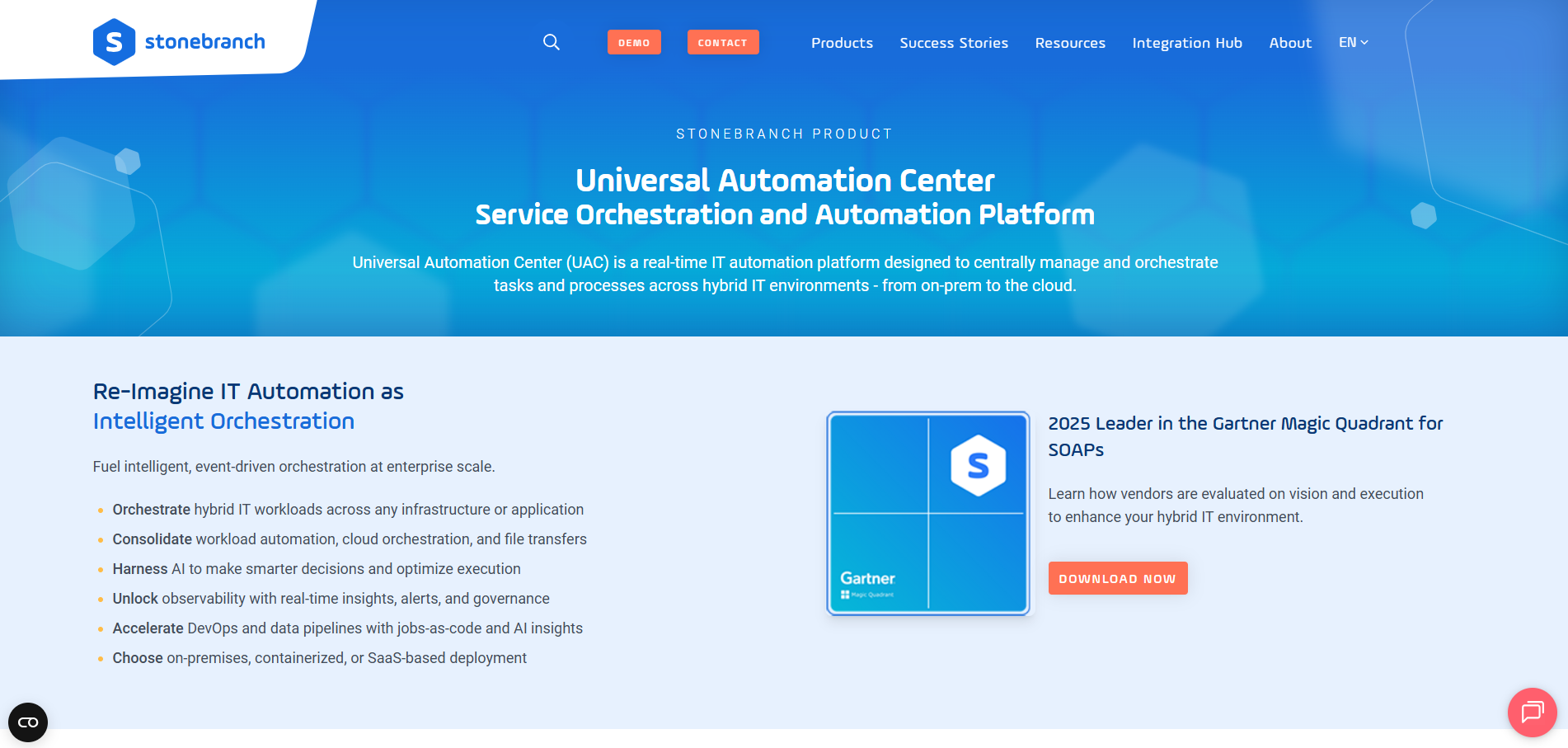
Stonebranch’s Universal Automation Center (UAC) is one of the more modern alternatives to Broadcom in active displacement scenarios. Enterprises migrating off Broadcom Automic or AutoSys will almost certainly encounter Stonebranch during evaluation.
Key Features
Native data-pipeline integrations: For Snowflake, Databricks, and dbt inside the same control plane used for traditional IT operations, plus embedded managed file transfer.
Universal Portal: Nontechnical business technologists can build and trigger automations without writing scripts
AI Extension Builder: Speeds up custom integration development.
Where Stonebranch Shines
Business technologist enablement: Self-service automation through the Universal Portal broadens adoption of automation beyond central IT while preserving governance.
Data pipeline orchestration: Native support for modern data-engineering tools makes UAC a strong fit for DataOps-heavy organizations.
Where Stonebranch Falls Short
U.S. federal compliance limitations: UAC lacks native FedRAMP certification, which complicates procurement for public-sector or federal buyers.
GSI ecosystem footprint: A smaller network of certified independent consultants can increase reliance on Stonebranch's internal professional services for large rollouts.
Customer Reviews
Vinothkumar M. mentions, “The most valuable feature of the Stonebranch Universal Automation Center (UAC) is its superior scheduling and cross-platform integration capabilities, which have fundamentally transformed how we orchestrate our ETL workflows. Now, we have centralized, end-to-end control over every ETL job.”
Jeff V. complains, “I would improve the user interface a bit to make it even more intuitive, especially for new users. I also want more out-of-the-box reporting templates so I don't have to build everything from scratch.”
Who Stonebranch Is Best For
Organizations already running a modern, DevOps-native platform evaluating alternatives side-by-side, particularly DataOps-heavy teams.
4. Redwood RunMyJobs: Best for SAP-Heavy Enterprises
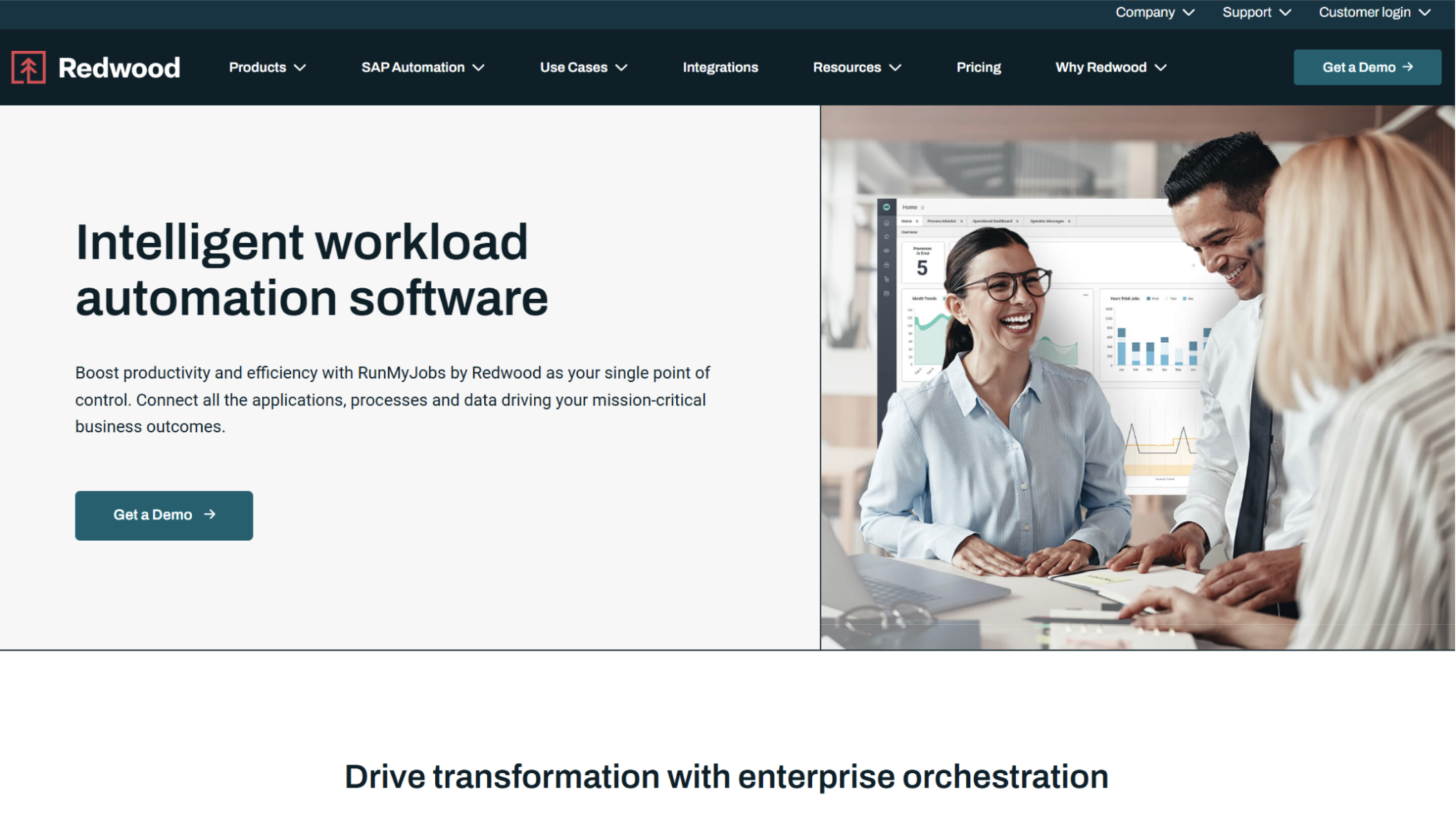
Redwood RunMyJobs is a strong fit for enterprises where a large share of critical workloads runs through SAP, a common pattern across manufacturing, BFSI, and retail. Gartner noted its status as an SAP Endorsed App and its native embed in the RISE with SAP reference architecture, an advantage worth weighing against Beta Systems' own native SAP orchestration for organizations comparing SAP-specific capabilities.
Key Features
Fully managed, single-tenant SaaS: Includes isolated cloud infrastructure and databases per customer.
Automated cross-region disaster recovery: Often bundled into standard agreements.
Native support for the Model Context Protocol: As well as for the Agent2Agent protocol for bidirectional agentic AI governance.
Where RunMyJobs Shines
Strategic SAP partnership: Co-development with SAP gives RunMyJobs deep, native orchestration for SAP-centric enterprises.
Resilient SaaS architecture: Fully isolated infrastructure per customer with aggressive enterprise RTO SLAs included at no extra cost.
Where RunMyJobs Falls Short
Renewal pricing volatility: Gartner notes customers frequently cite frustration with sales execution and unexpected price escalations during contract renewals, a familiar pain point for anyone already leaving Broadcom for the same reason.
Native mainframe integration gaps: As a cloud-native, SaaS-first platform, RunMyJobs requires remote gateways to route on-premises or mainframe job execution back to the public cloud.
Customer Reviews
Vandana S. praises, “I've been using RunMyJob Tool for a while now and I'm genuinely impressed with how smooth and efficient it makes managing tasks. The interface is clean, user- friendly and easy to navigate, even for those who are new to this tool.”
Alex S. complains, “...there’s a risk of simply carrying over their current, inefficient scheduling as-is and using that to determine the job count required under the new license. Huge customer savings potential here.”
Who RunMyJobs Is Best For
SAP-heavy enterprises on RISE with SAP or S/4HANA that are comfortable with a SaaS-only deployment model.
5. HCL Workload Automation: Best for Global Enterprises with Mixed Mainframe and Cloud-Native Estates
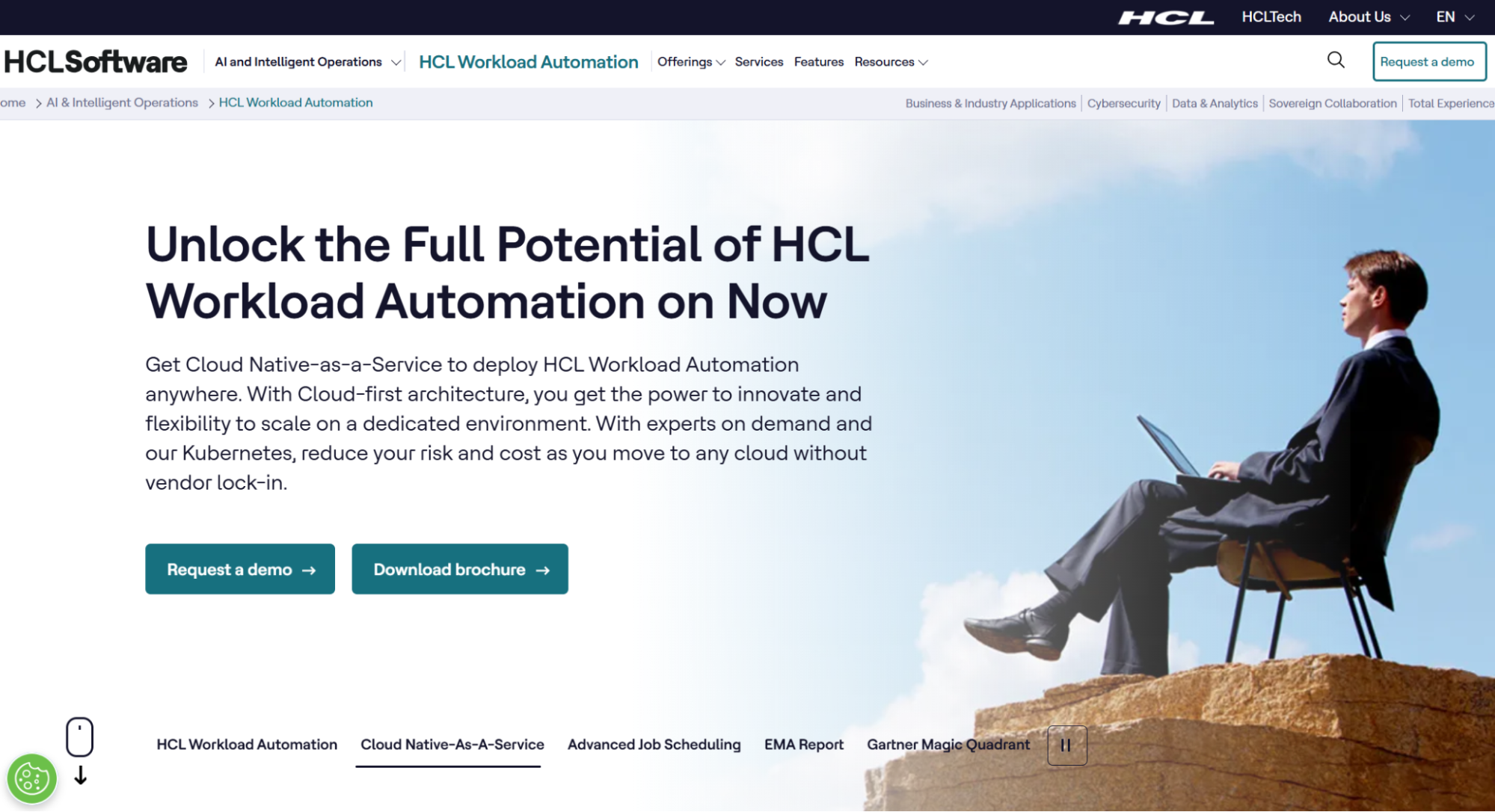
HCLSoftware’s Automation Orchestrator Suite (AOS) unifies HCL Workload Automation (HWA) with the cloud-native HCL Universal Orchestrator (UnO/UnO+) to coordinate hybrid workflows across mainframes, distributed infrastructure, and containerized cloud-native environments.
Key Features
Multiple deployment options: Spanning on-premises, containerized Kubernetes configurations, and fully managed single- or multitenant SaaS, with customers able to dictate precise geographic hosting zones across major hyperscalers
Agentic AI Builder: Including native Model Context Protocol support, letting autonomous AI agents analyze operational anomalies and execute remediation paths within role-based access controls and human-in-the-loop checkpoints
Backed by HCLSoftware's Actian data division: Its acquisitions of business-intelligence and conversational data-analyst tools, unifying data-pipeline ingestion, metadata cataloging, and embedded reporting directly inside the orchestration workflow.
Where HCL Workload Automation Shines
Flexible SaaS topologies and data sovereignty: Customers can choose between private single-tenant SaaS and modern multitenant cloud-native environments, with granular control over geographic hosting, which is attractive for organizations navigating strict local compliance mandates.
Governed agentic AI architecture: Agentic automation is embedded directly into the core engine, with nondeterministic AI actions bound by RBAC and human-in-the-loop checkpoints to limit risk.
Where HCL Workload Automation Falls Short
Lower stand-alone brand awareness: Gartner notes HCL Software is often perceived primarily as an extension of the broader IT services ecosystem, which means organizations outside its core regional hubs sometimes omit it from stand-alone shortlists.
Cross-training gap between personas: HCL AOS bridges two very different users: the infrastructure/mainframe operator (HWA) and the cloud-native AI developer (UnO+). Organizations adopting the unified suite may need to cross-train legacy infrastructure teams on containerized and agentic AI concepts.
Customer Reviews
Manikishore S. praises, “HCL Workload Automation is a robust and feature-rich solution that automates and manages complex workloads across heterogeneous environments. Its scalability, integration capabilities, and comprehensive monitoring features make it well-suited for enterprise-level workload automation.”
The same reviewer shares, “The solution may have a steeper learning curve for new users, particularly those who are not familiar with workload automation concepts or have limited technical expertise.
Who HCL Workload Automation Is Best For
Global enterprises with a genuinely mixed mainframe-plus-cloud-native estate that need strict data-residency control and are comfortable cross-training teams across both infrastructure and cloud-native personas.
6. Apache Airflow
Apache Airflow is worth including as a contrast tool rather than a true enterprise workload automation alternative. It’s a community-maintained framework, not a purpose-built commercial SOAP platform, and it appears on virtually every technically-minded reader's automation shortlist.
Airflow is a great natural fit for engineering-led teams that already have strong internal Python expertise; what it doesn't offer out of the box: enterprise governance, SLA management, cross-system dependency orchestration for non-data workloads, or vendor support. These are all things a Broadcom migrator moving business-critical, cross-system batch processing will typically need.
Best for: Engineering-led teams with strong internal Python expertise handling primarily data-pipeline orchestration rather than broad enterprise workload automation.
Organizations that outgrow a self-managed deployment often look at ANOW! Automate's native Airflow integration as a path to enterprise-grade orchestration without abandoning existing DAGs.
→ Read more on migrating from Apache Airflow
7. ServiceNow
Many large enterprises already run ServiceNow for ITSM, which naturally raises the question of whether it can also replace Broadcom for workload automation.
ServiceNow’s Workflow Orchestration capabilities are strong for ITSM-adjacent workflow approvals and service requests, but keep in mind that ServiceNow is not a purpose-built workload automation or job scheduling platform for complex, cross-system batch dependencies at enterprise scale.
If your evaluation criteria include SLA-driven batch orchestration across mainframe, cloud, and SAP environments, ServiceNow simply isn't built for that job, which is exactly the specialist gap that platforms like ANOW! Automate are purpose-built to fill.
Best for: Organizations that want lightweight workflow approvals tied to existing ITSM processes, not full-scale enterprise WLA.
Reasons to Consider an Alternative to Broadcom
If you're still weighing whether a migration is worth the effort, these are the patterns Gartner and enterprise IT buyers cite most often when evaluating a move off Broadcom Automic Automation or AutoSys.
Renewal Pricing Volatility
Gartner specifically notes that some Broadcom customers report commercial friction with the vendor and its partners, citing significant price increases during contract renewals.
This isn't a one-off complaint; it's consistent with the broader pattern across legacy WLA vendors, where per-module and per-task pricing structures make multi-year budgeting difficult.
Beta Systems addresses this directly with transparent, workload-based pricing and no per-user fees, so the cost of scaling automation doesn't become a renewal-cycle surprise.
Lack of Self-Service Migration Tooling
Broadcom doesn’t provide customer-facing, self-service migration utilities. Independent migrations are technically feasible using standard programmatic interfaces, but they require significant custom scripting to translate legacy logic.
This is why most large-scale Broadcom migrations ultimately rely on Broadcom's own Expert Advantage Partners for professional services. That dependency adds cost and timeline risk to what should be a controlled, predictable transition.
ANOW! Automate's proprietary migration tool is built specifically to automate the ingestion and translation of competitor task definitions, reducing both migration risk and the professional-services burden.
Partner-Tiered Support Routing
Broadcom uses a dual support model in which large accounts receive direct service, while smaller or standard accounts are routed through regional partner channels. All customers receive 24/7 coverage, but partner-led support can introduce triage handoffs before reaching a native Broadcom product specialist.
Support quality can vary meaningfully by account size. Enterprises evaluating alternatives should ask any vendor directly how support is tiered and whether escalation paths differ by contract size, not just by SLA tier on paper.
Replace Broadcom with a Future-Ready Platform
The SOAP market’s growth is being driven in large part by organizations replacing legacy, per-task-priced schedulers with unified, cloud-native orchestration platforms, the same shift that's likely driving your own Broadcom re-evaluation.
If your priority is proven, broad-spectrum orchestration and you’re comfortable with BMC's licensing model, Control-M remains a credible option. If you're SAP-heavy, Redwood RunMyJobs deserves a serious look.
But for enterprises that want to escape per-task pricing volatility, retain full deployment flexibility, and work with a vendor built around European data sovereignty, ANOW! Suite is purpose-built for exactly that transition with a migration path designed to get you off Broadcom without the downtime or guesswork.
One Platform for Enterprise Automation
Bring workload automation, orchestration, and observability together in a unified platform built for modern IT operations.
FAQs
1. Is Broadcom Automic Automation the same as Broadcom AutoSys?
No. They are two distinct Broadcom workload automation products with different architectures and target use cases. Automic Automation focuses on end-to-end batch processing and cross-platform workflow orchestration, while AutoSys is a longer-standing job scheduler more commonly found in legacy distributed systems environments.
2. Do I need a full workload automation platform or would a point scheduler work?
It depends on your workload complexity. If your organization only needs a narrow, point-specific scheduler (for example, a basic AWS Batch scheduler or a standalone SAP job scheduler), a full enterprise WLA platform may be more than you need. A broader platform makes sense once you have complex, interconnected, business-critical workflows spanning multiple systems and environments.
3. How long does a typical Broadcom-to-alternative migration take?
Migration timelines vary significantly by scope, job volume, and the extent of custom scripting in the legacy environment. Enterprises using a vendor’s proprietary migration tooling and phased rollout approach typically see meaningfully shorter timelines than teams relying on manual, script-by-script conversion.
:quality(50))
:quality(50))
:quality(50))