:quality(50))
Top 7 Best Control-M Alternatives: At a Glance
Platform | Best for | Standout features |
|---|---|---|
Beta Systems ANOW! Observe | Enterprise workload automation & legacy replacement | 500+ native integrations, digital sovereignty |
Redwood RunMyJobs | SAP-centric enterprises | Deep SAP/S4HANA integration |
Stonebranch UAC | Modern, API-first WLA | Self-service automation portal |
Apache Airflow | Code-first data pipeline orchestration | Python-defined DAGs |
Broadcom AutoSys | Consolidating multiple legacy schedulers | Event-driven scheduling, CPU-Mon load balancing |
Broadcom Automic | DACH/European legacy Broadcom replacement | Zero Downtime Upgrade |
HCL Workload Automation | Established vendor, broad platform coverage | Consumption-based licensing |
Note: Pricing for enterprise workload automation platforms is almost always quote-based and scoped to job volume, agents, or environments.
1. Beta Systems ANOW! Suite: Best for Enterprise Workload Automation
Beta Systems ANOW! Suite is named a Leader in the 2025 Gartner Magic Quadrant for Service Orchestration and Automation Platforms (SOAP), and Gartner specifically calls out its customer retention as above average among Leaders in the category, particularly in mission-critical sectors like finance and insurance. ANOW! Automate is the company’s workload automation and orchestration platform, built for organizations moving off legacy schedulers like Control-M, Broadcom Automic, or Redwood.
Key Features
ANOW! Automate is designed around a modern, cloud-native architecture that avoids the rigidity of legacy job schedulers.
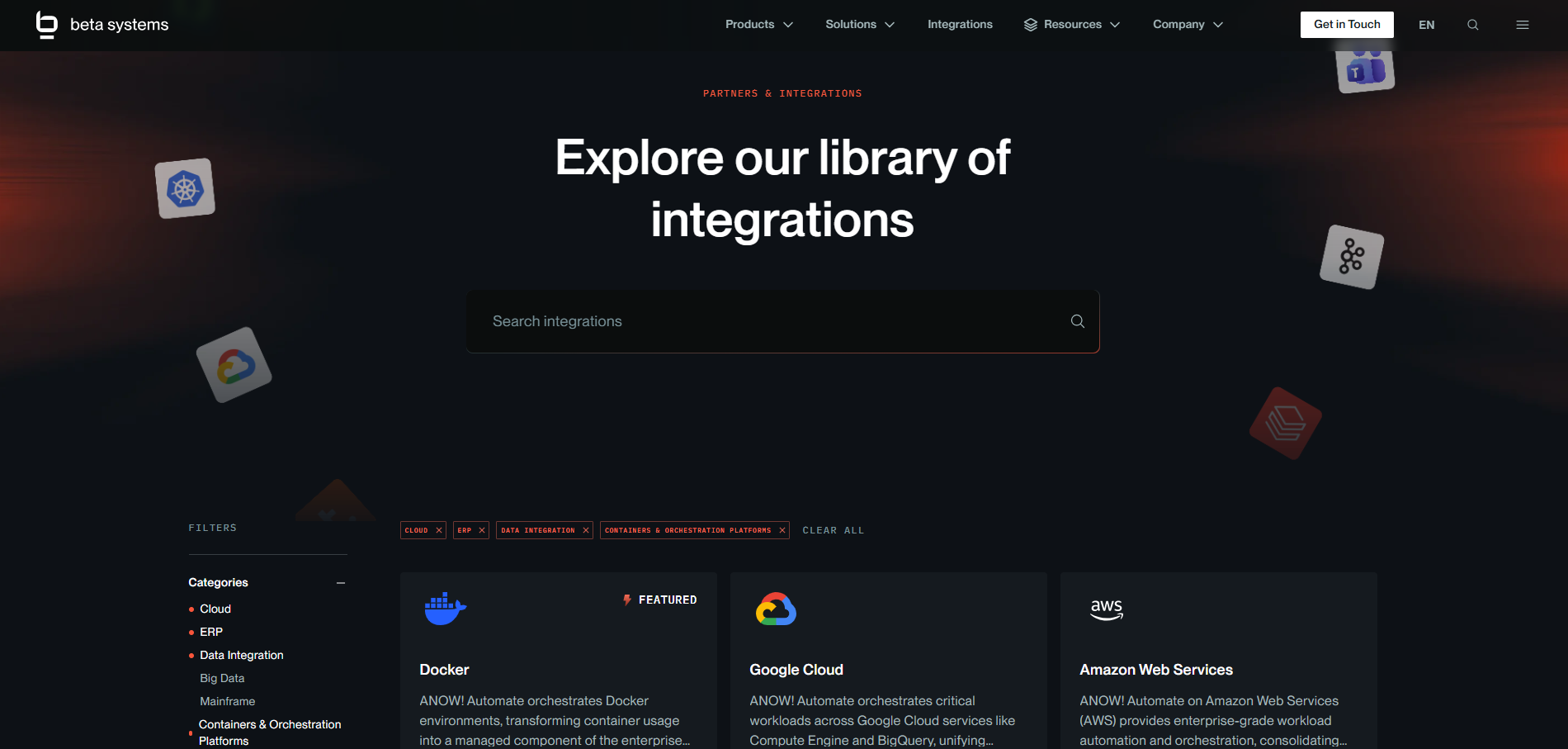
500+ native integrations
ANOW! Automate connects out-of-the-box to cloud services, databases, ERP systems, containers, and legacy schedulers alike, including Snowflake, Databricks, SAP, Kubernetes, and IBM mainframe/IBM i systems, so teams aren’t stuck stitching together custom scripts for every new tool.
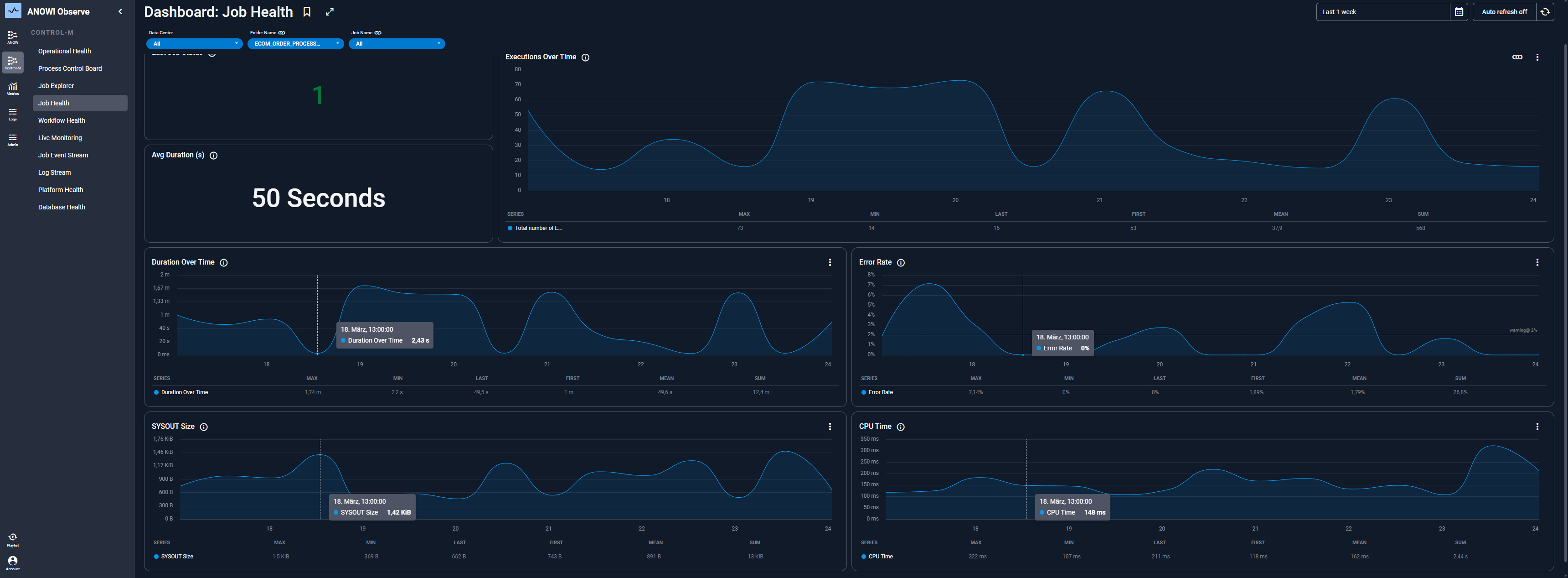
Unified observability
ANOW! Observe's OpenTelemetry-native observability layer provides a real-time view of the health of an organization's entire hybrid IT landscape, which Gartner flagged as a key differentiator the platform has gained since its previous evaluation. This can help maximize efficiency within event-driven automation workflows.
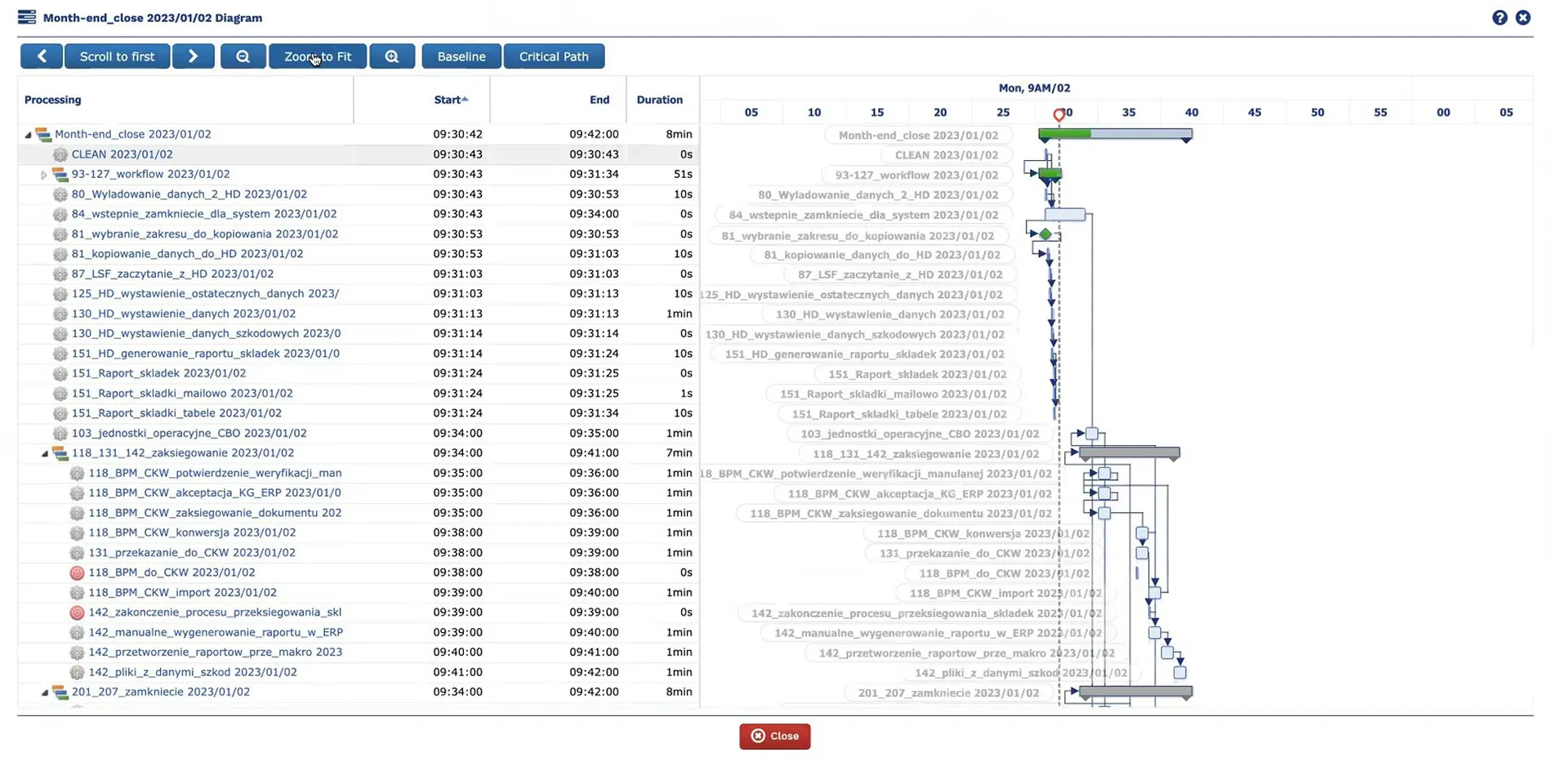
Contextual, dynamic workflows
Multi-level dynamic variables let workflows adapt in real time to context changes, sensor-driven inputs, and computed values, which is useful for teams managing thousands of interconnected jobs.
Pro tip:
If your team is migrating off a legacy scheduler, ask about ANOW!'s zero-touch migration tooling and container-native, Kubernetes-based deployment model, both are built to minimize downtime during cutover.
Where Beta Systems’ ANOW! Suite Shines
No vendor lock-in: Deployment portability means you can move between SaaS, private cloud, and on-premises without disruption, posing as a direct answer to the price hikes and contract friction driving most Control-M replacement projects.
Digital sovereignty: As a European vendor, Beta Systems gives EU enterprises a sovereign alternative to US-based legacy vendors, which matters increasingly under regulations like DORA.
Enterprise-grade SAP orchestration: Native, bidirectional support for S/4HANA (both GROW and RISE editions) makes it a credible option even for SAP-heavy replacement scenarios.
Beta Systems Software is Recognized as a Leader in the 2026 Gartner® Magic Quadrant™
Discover why analysts trust Beta Systems to deliver enterprise-grade workload automation and observability at scale.
:quality(80))
Where Beta Systems’ ANOW! Suite Falls Short
Limited UI language coverage: The interface currently ships in English, German, Polish, and Japanese with a broader UI redesign underway, so it’s worth checking against your global rollout needs.
Lighter GSI presence: Gartner notes Beta Systems' direct-sales model means it has less visibility through global system integrators than some Leaders, so large enterprises procuring exclusively through GSIs may need to ask directly about availability.
Customer Reviews
A verified user praises the platform, saying, “I really like that everything is in one place. It gives me a “single point of control” for all my tasks and workflows, which makes it much easier to see what is happening in real-time.”
Another user praises ANOW’s centralized nature, saying, “It helps me organize tasks, track progress, and maintain better visibility across ongoing activities. What I like most about ANOW! Suite is its ability to bring everything into one centralized platform. It makes task management and tracking very intuitive, improves visibility across workflows, and helps me stay organized.”
➜ See how ANOW! Automate compares for Control-M replacements
Who Beta Systems ANOW! Suite Is Best For
Enterprises replacing BMC Control-M, Broadcom Automic, or Redwood, especially those in BFSI, manufacturing, or IT & Telecom, seeking a modern, cloud-native platform with European data sovereignty
➜ Related reading: Migration without regret: how to future-proof your automation strategy
Replace Control-M Without Vendor Lock-In
Modernize enterprise automation with a cloud-native platform designed for flexible deployment and seamless migration.
2. Redwood RunMyJobs: Best for SAP-centric Enterprises
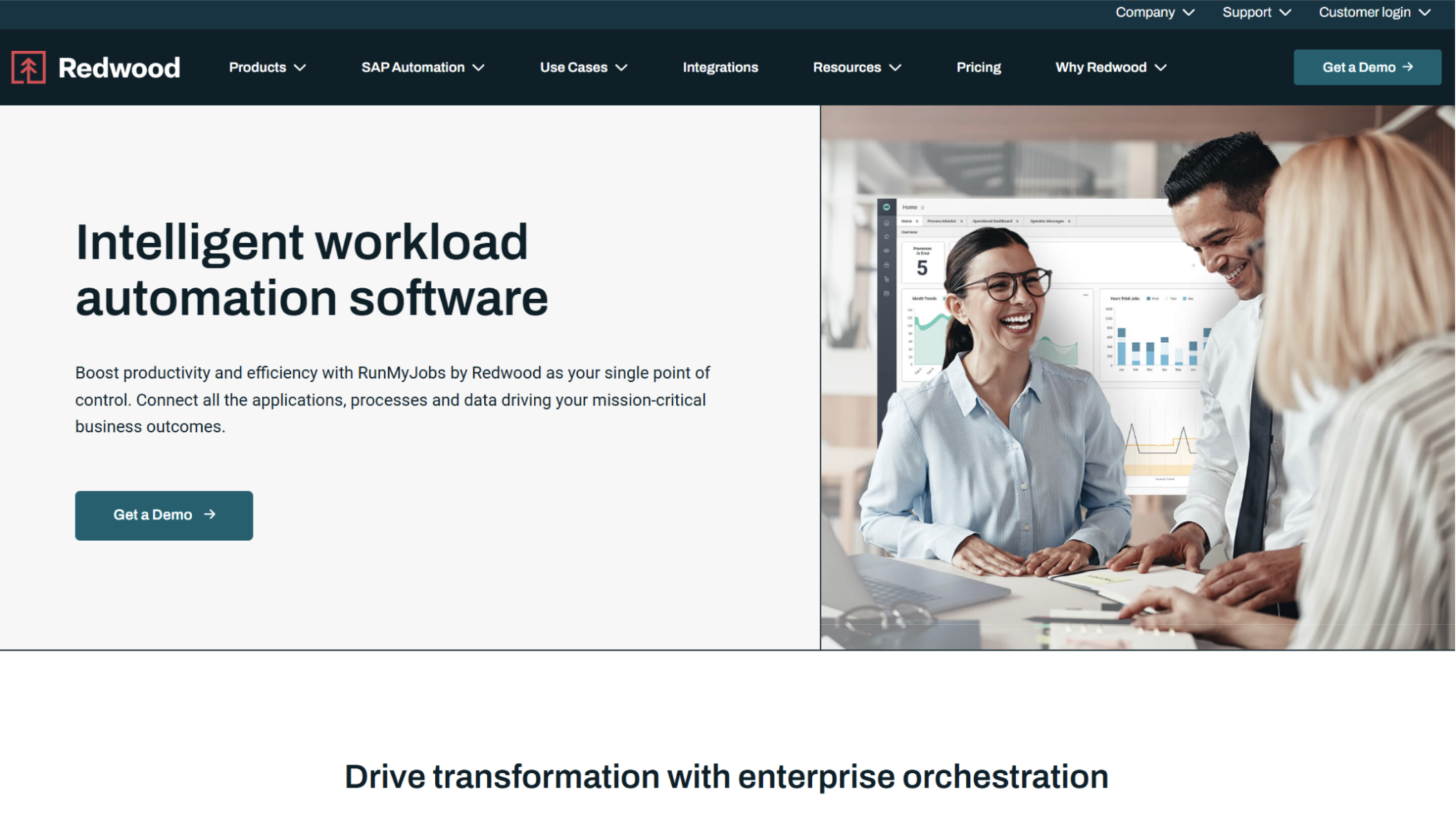
Redwood Software’s RunMyJobs is a SaaS-first workload automation platform best known for its deep SAP integration, and it’s one of the most common alternatives enterprises shortlist alongside Control-M, particularly in SAP-heavy evaluations.
Key Features
Deep SAP/S4HANA integration: RunMyJobs is an SAP-endorsed app included in the RISE reference architecture, with native connectivity to S/4HANA, BTP, and IS-U.
Low-code workflow editor: A drag-and-drop interface lets both IT operations and business analysts build automations without deep scripting knowledge.
Redwood Insights: An AI-powered observability layer launched in 2025 that predicts potential SLA misses and explains process behavior in plain language.
Where Redwood Shines
SAP depth: For organizations where SAP is the operational backbone, RunMyJobs’ certified integration reduces the risk of custom workarounds.
User experience: Consistently praised for ease of onboarding and a clean, low-code interface.
Where Redwood Falls Short
SaaS-only bias: RunMyJobs is offered primarily as a multitenant SaaS service, which may not suit organizations in highly regulated industries with strict data-sovereignty requirements. This is an area where Beta Systems’ flexible SaaS/private-cloud/on-prem portability offers more room to maneuver.
Renewal pricing concerns: Gartner customers have reported frustration with cost increases during contract renewals.
Customer Reviews
Vandana S. praises, “I've been using RunMyjob Tool for a while now and I'm genuinely impressed with how smooth and efficient it makes managing tasks. The interface is clean, user- friendly and easy to navigate, even for those who are new to this tool.”
Mamta N. warns, “Some sections can take a little time to get familiar with when using them for the first time. I have also noticed that filtering candidates in very specific ways sometimes requires a few extra steps.”
Who Redwood Is Best For
SAP-centric enterprises, particularly those already on or migrating to S/4HANA RISE, that want a SaaS-first scheduler with minimal custom integration work.
3. Stonebranch Universal Automation Center
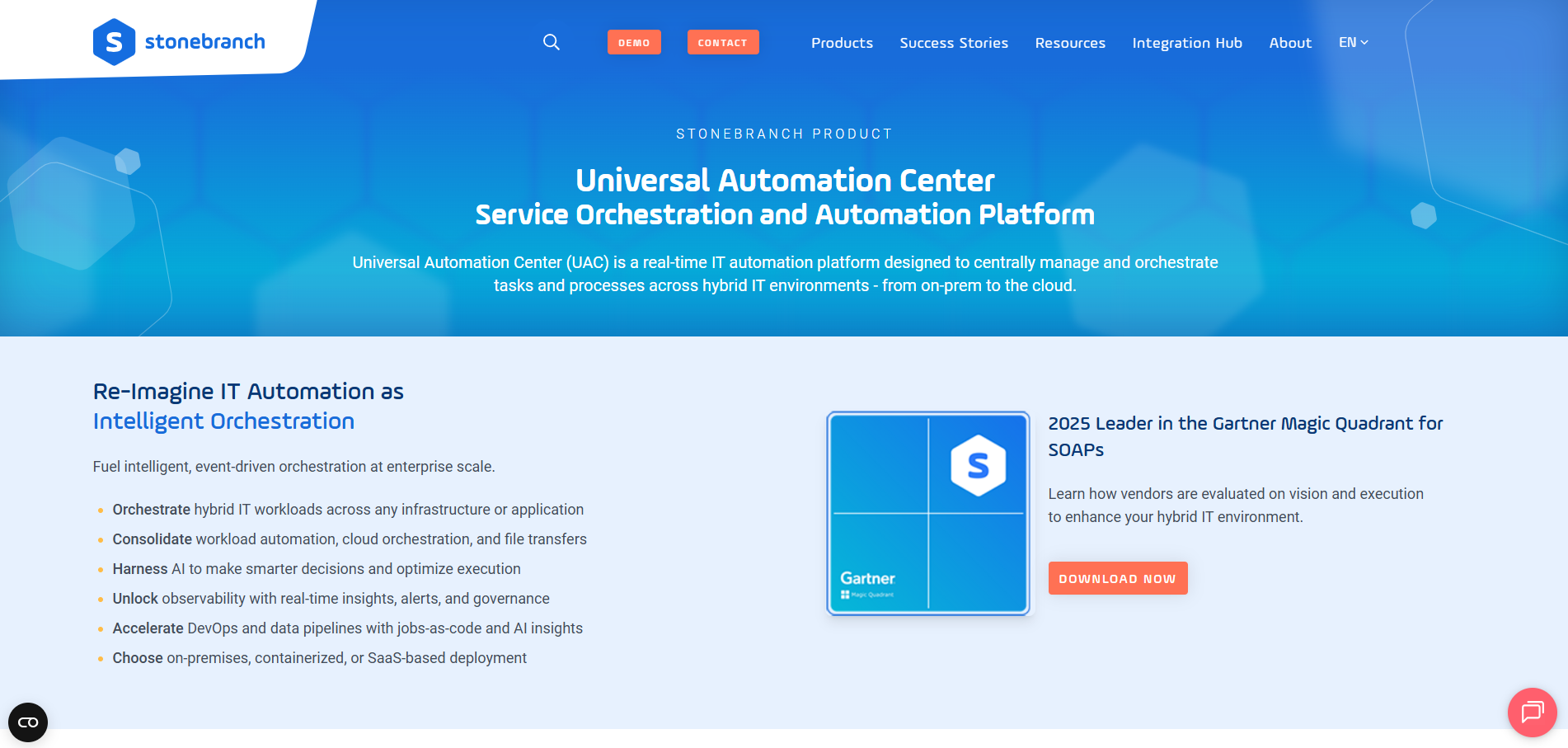
Stonebranch, like Beta Systems, also pitches itself as the contemporary answer to legacy on-premises schedulers such as Control-M.
Key Features
Universal Portal: Launched in 2025, this self-service layer enables end users of varying skill levels to run automations on any device.
Data Pipeline Orchestration: A purpose-built module for designing and monitoring data pipelines across tools like Snowflake, Databricks, and dbt.
Low-code workflow designer: Reviewers note Stonebranch’s intuitive, web-based UI as a differentiator versus older-generation schedulers.
Where Stonebranch Shines
Modern architecture: Purpose-built for hybrid and multi-cloud orchestration with a genuinely contemporary UX.
Migration services: Gartner and customer reviews both note strong, consistent outcomes from Stonebranch's expert-led migration engagements.
Where Stonebranch Falls Short
AI capabilities still maturing: Gartner notes Stonebranch's GenAI features (Robi AI) are in early access and currently limited to documentation and report generation, trailing other Leaders' more developed AI assistants, an area Beta Systems has invested in more heavily with its unified observability and AI-powered PII redaction.
Learning curve: Stonebranch UAC has a steep learning curve for new administrators due to the platform's extensive configuration options.
Customer Reviews
Jeff V. praises, “I use Stonebranch to automate and centralize operations, like scheduling jobs and moving files securely, connecting different applications so everything runs smoothly. I like how I can see all my workflows from one place, which helps me monitor and fix issues faster and ensure processes run on time.”
Stephen E. notes, “My main problem was with the setup process. Although the knowledge base contains a lot of information, it can be somewhat difficult to navigate at times. There are definitely sections where, if you overlook something, you might find yourself stuck.”
Who Stonebranch Is Best For
Teams that already have a “good enough” scheduler but want a purpose-built, API-first WLA platform with strong self-service and data pipeline capabilities and don't mind a sales-led buying process
4. Apache Airflow
Apache Airflow is a community-maintained workflow orchestration framework, and it’s the most common alternative teams consider when moving lighter-weight or code-first data workloads off Control-M, rather than replacing a full enterprise WLA.
Key Features
Python-defined DAGs: Workflows are written as code, which appeals to data engineering teams already working in Python.
Retry and monitoring: Built-in retry logic and a web UI for tracking task execution are consistently cited as strengths.
Extensibility: A large plugin ecosystem and active community mean new integrations appear quickly, though they aren’t officially supported the way vendor-built connectors are.
Where Airflow Shines
Data engineering fit: Excellent for ETL/ELT pipeline orchestration where teams are comfortable maintaining code-based workflows.
Active community: A large, open contributor base means frequent updates and a deep well of community troubleshooting resources.
Where Airflow Falls Short
Not built for enterprise cross-system orchestration: Airflow lacks the native SAP orchestration, mainframe integration, and governed, no-code workflow design that enterprise WLA platforms like ANOW! Automate provide out of the box, meaning teams often end up building and maintaining custom glue code for anything outside of data pipelines. This is exactly the gap ANOW!’s infinite integration capability is designed to close.
Steep learning curve: Airflow includes setup complexity and a learning curve for teams new to DAG-based orchestration or Python.
No built-in enterprise support model: Because it's community-maintained, enterprises need either in-house Airflow expertise or a paid managed offering to get production-grade support.
Customer Reviews
Lokesh S. speaks highly, saying, “It's like the clock and the nervous system within our whole data architecture design.That's definitely the selling point of Airflow that everyone can't outrace from - configuration as code.”
Akash M. warns, “For beginners, Apache Airflow can be complex to set up, especially with Docker. At times when a DAG is updated, the UI can feel slow.”
Who Airflow Is Best For
Data engineering teams managing ETL/ELT pipelines who need code-first control but who aren’t trying to replace a full enterprise WLA platform with cross-system, business-critical orchestration needs
➜ Check out our Apache Airflow replacement guide for additional information on migration.
5. Broadcom AutoSys Workload Automation
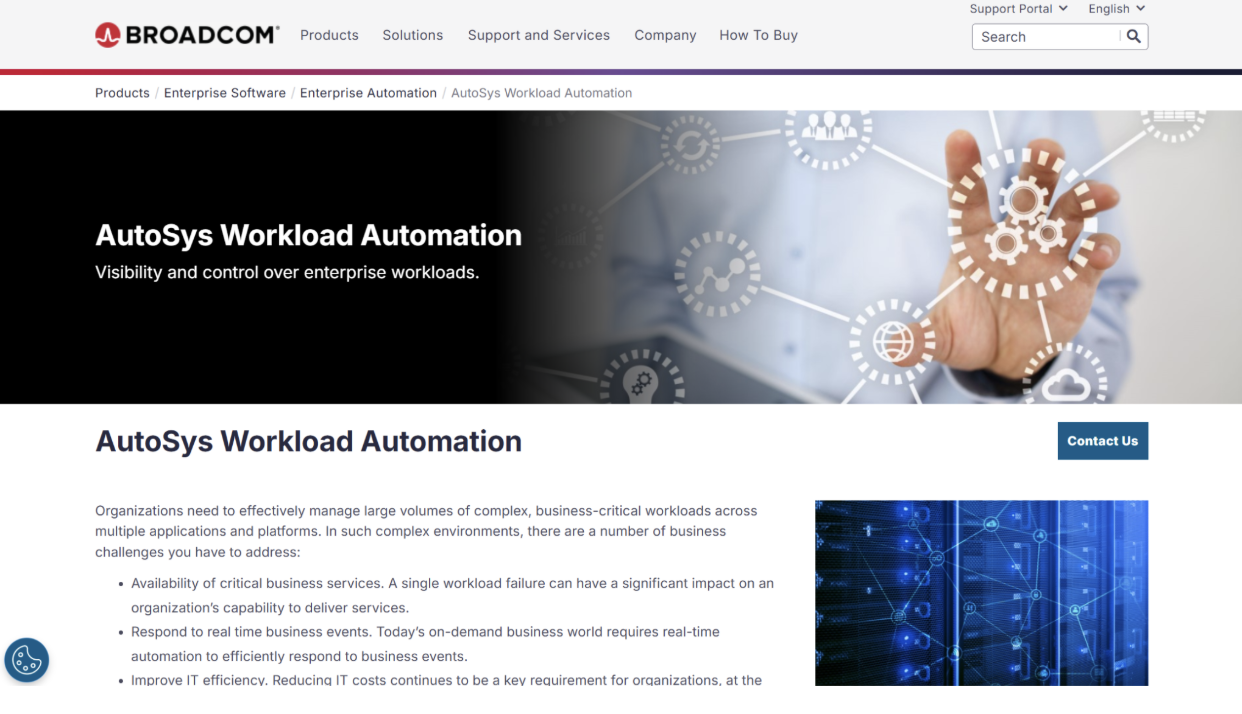
AutoSys (formerly CA AutoSys) is one of Broadcom's two workload automation lines (distinct from Automic Automation), and it's another entrenched legacy scheduler that enterprises are commonly migrating away from, alongside Control-M, especially when consolidating multiple schedulers into a single platform.
Key Features
Centralized scheduling: AutoSys centralizes scheduling control across heterogeneous environments such as Windows, Unix, Linux, mainframe systems, and major cloud platforms, via its Job Information Language (JIL) or a web UI.
CPU-Mon: This feature dynamically load-balances jobs across agents in real time to avoid bottlenecks.
Expanding AI features: Broadcom has been building out AI job types and MCP orchestration as part of its “Intelligent Control Plane” roadmap for the platform.
Where AutoSys Shines
Reliability at scale: AutoSys is a stable alternative for large, complex batch environments with strong dependency management.
Broad platform support: Coverage spans on-premises, mainframe, and major cloud platforms from a single control point.
Where AutoSys Falls Short
Dated interface: The web UI is often seen as outdated, requiring command-line work for tasks that feel like they should be simpler, a contrast with ANOW! Automate's browser-based, low-code interface requires no client installation.
Rising licensing costs: Pricing has become less predictable since the Broadcom acquisition.
Need a more modern interface without the pricing uncertainty? AutoSys alternatives are worth a look.
Customer Reviews
Vedavikas M. notes, “We use Autosys for automation of our jobs in SAP ECC, HANA, INFA, MFT environments throughout the organisation. All of the process is automated in the systems, starting from triggering the job, getting the log, depending jobs, etc. This helped us in reducing a huge workload and manpower.”
Gaurav G. complains of its outdated feel, saying, “The interface feels outdated and not very intuitive, which makes onboarding new team members slower than it should be. Simple tasks often require command‑line work or digging through documentation. Integrations exist, but they’re not always smooth, and troubleshooting can feel overly technical for what should be routine scheduling work.”
Who AutoSys Is Best For
Enterprises consolidating multiple legacy schedulers that need a stable, if dated, option while they plan a broader modernization roadmap
6. Broadcom Automic
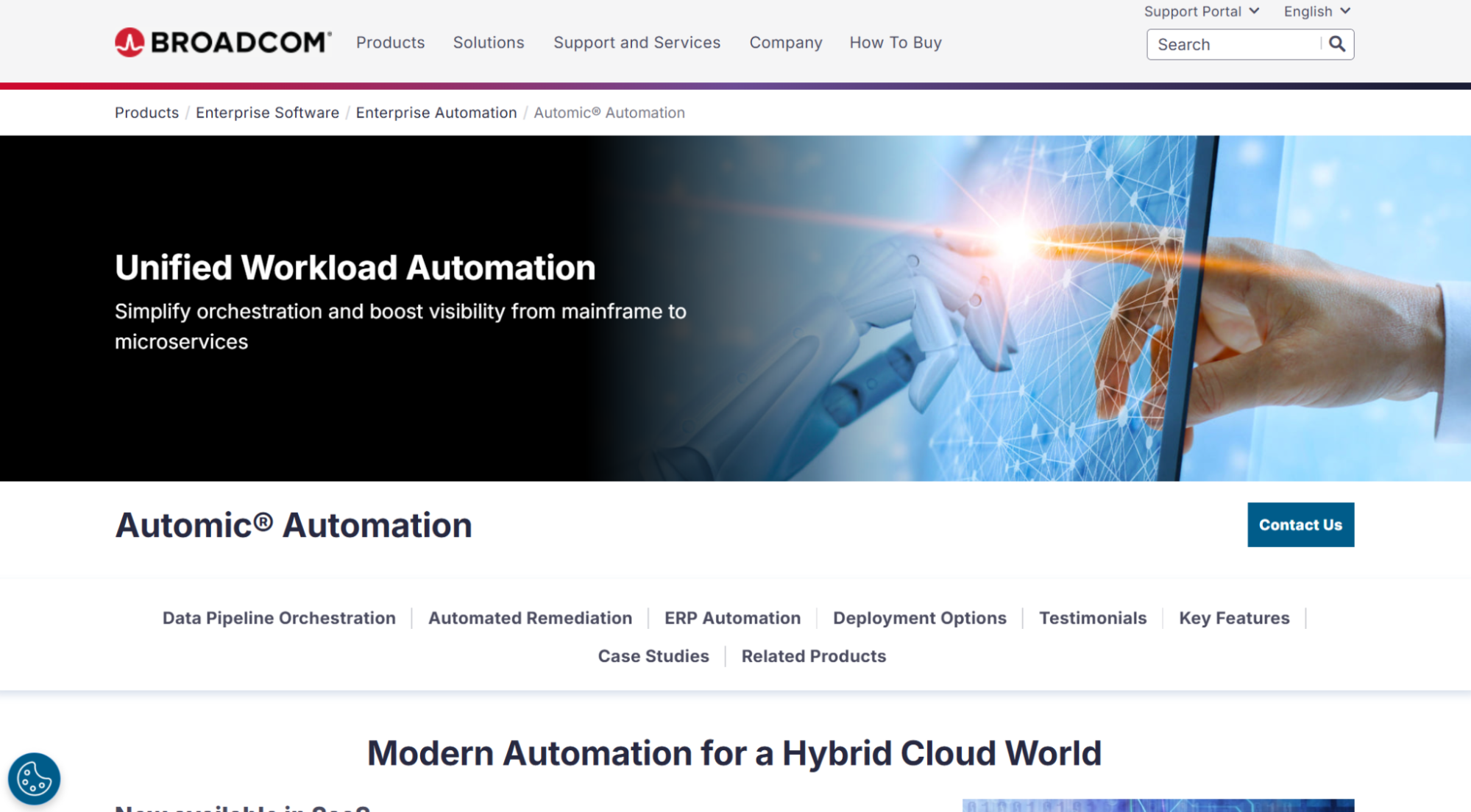
Automic Automation is Broadcom's other SOAP offering with an Automic Zero Downtime Upgrade feature and AI-powered cross-vendor observability (AAI) alongside flexible deployment across on-premises, containers, and SaaS.
However, it also has a relatively high total cost of ownership and a slower pace of expanding out-of-the-box integrations compared with other Leaders, meaning customers sometimes need to build and maintain their own connectors for newer cloud services or DevOps tools.
While it offers solid integration flexibility, it also has a steeper setup and administration curve, especially compared with more modern, SaaS-first platforms.
For DACH-based enterprises weighing a move off Automic, ANOW! Automate’s 500+ out-of-the-box connectors and European data sovereignty are worth a direct side-by-side look.
7. HCL Workload Automation
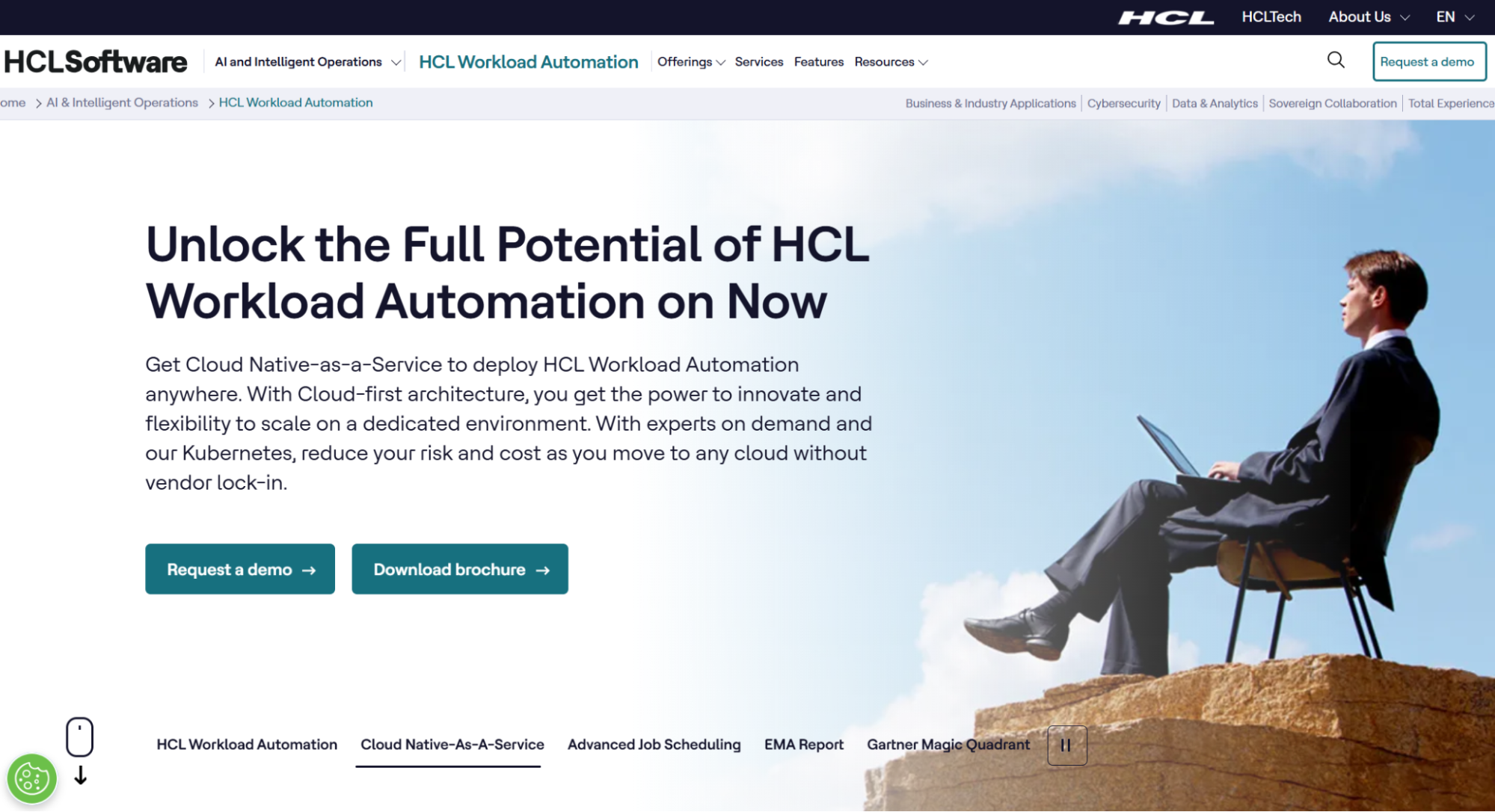
HCL Workload Automation (formerly IBM’s licensed technology, now part of HCLSoftware's product line) rounds out this list as an option for enterprises seeking an established vendor with broad platform coverage.
HCLSoftware offers flexible deployment options (self-hosted, SaaS, or managed SaaS in specific regions for data-sovereignty needs) and strong AI investment, including its UnO AI pilot and HCL Clara virtual assistant.
It’s worth noting that HCLSoftware’s newer AI product launches have created some customer confusion about how the pieces of its automation suite fit together, which is worth clarifying directly with HCL during evaluation if this is on your shortlist.
Reasons to Consider an Alternative to Control-M Software
Control-M remains a capable, widely deployed platform, but several factors are pushing enterprises to actively evaluate alternatives.
Reason #1: Total Cost of Ownership
Control-M’s total cost of ownership is relatively high compared with competing platforms, reflecting licensing costs plus the personnel expense of skilled administrators.
This combination can be hard to justify outside the largest, most complex deployments.
ANOW! Automate is positioned to deliver a meaningfully better TCO through its low-code approach and flexible deployment portability.
Reason #2: Organizational Uncertainty After the BMC Split
In April 2025, BMC split into two independent companies: BMC and BMC Helix. Almost a year later, in June 2026, BMC Helix was acquired by Montagu. Despite a relatively smooth transition, customers have expressed concern about potential support and long-term integration challenges when using products across both companies.
Beta Systems, by contrast, has a four-decade operating history, offering a steadier long-term partner for risk-averse buyers.
One Platform for Enterprise Automation
Bring workload automation, orchestration, and observability together in a unified platform built for modern IT operations.
Reason #3: Vendor Lock-In and Data Sovereignty
Enterprises, particularly in the EU, are increasingly prioritizing digital sovereignty and control over where their operational data resides, driven in part by regulations such as DORA.
Control-M’s architecture, like most legacy US-based platforms, doesn't center this the way a European-headquartered vendor can.
ANOW! Automate is built around no vendor lock-in and full deployment portability across SaaS, private cloud, and on-premises.
Reason #4: Legacy Administration Overhead
Even with modern additions like Jett, Control-M’s decades-old roots as a scheduler mean that many day-to-day workflows still assume deep in-house scripting and administrator expertise, as noted in the review below.

ANOW! Automate's low-code, web-based interface and zero-touch migration tooling are designed to reduce operational overhead for teams seeking broader, self-service adoption across IT and business teams.
What’s next?
If you're actively replacing Control-M, the right next step depends on your environment:
SAP-heavy shops should weigh Redwood alongside Beta Systems
Data engineering teams may only need Airflow for pipeline orchestration
Enterprises consolidating multiple legacy schedulers should start with a side-by-side TCO comparison
For a deeper look at how a migration actually plays out, get in touch with us and book a demo of ANOW! Automate to see how it fits your specific replacement scenario.
:quality(50))
:quality(50))
:quality(50))