:quality(50))
The 6 Best AutoSys Alternatives at a Glance
Tool | Best For | Standout Feature | |||
|---|---|---|---|---|---|
|
| 600+ native integrations, no vendor lock-in | |||
|
|
| |||
Redwood RunMyJobs |
| SAP Endorsed App; RISE with SAP native support | |||
Stonebranch UAC |
| Data Pipeline Orchestration for Snowflake, Databricks | |||
Apache Airflow |
| Open source; DAG-based Python workflows | |||
ActiveBatch by Redwood | Mid-market, simpler enterprise automation needs | Super REST API adapter; low-code GUI |
1. Beta Systems ANOW! Suite: Best AutoSys Alternative for Enterprise Workload Automation
Beta Systems ANOW! Suite is the most compelling AutoSys replacement for large enterprises evaluating a step-change in platform capability. Named a Leader in the 2025 Gartner Magic Quadrant for Service Orchestration and Automation Platforms, ANOW! Suite is a cloud-native workload automation and orchestration platform purpose-built for hybrid and distributed enterprise environments.
It directly addresses the three core frustrations that drive AutoSys migrations:
pricing opacity
vendor lock-in
a legacy architecture that struggles to keep pace with modern data and cloud demands
Unlike AutoSys's rigid, event-server-centric design, ANOW! Suite runs on a microservices-based, container-native architecture, deployable on AWS, Azure, Google Cloud, as SaaS or on-premises, with full feature parity across all models.
Migration path
Beta Systems provides a dedicated AutoSys replacement program and zero-touch migration tooling designed to reduce cutover risk and downtime during transition.
Key Features
Here’s what differentiates the ANOW! Suite from the rest.
600+ Native Out-of-the-Box Integrations
The ANOW! Suite offers the most of any WLA vendor, covering cloud services (AWS, Azure, GCP), databases, ERP, DevOps, containers, BI, ITSM, and ETL tools, including Snowflake, Databricks, dbt, Apache Airflow, and Kubernetes.
Cloud-Native
With architecture that’s been built on Kubernetes for zero-downtime upgrades, on-demand scaling, and dynamic service expansion without interrupting operations
Unified Observability via ANOW! Observe
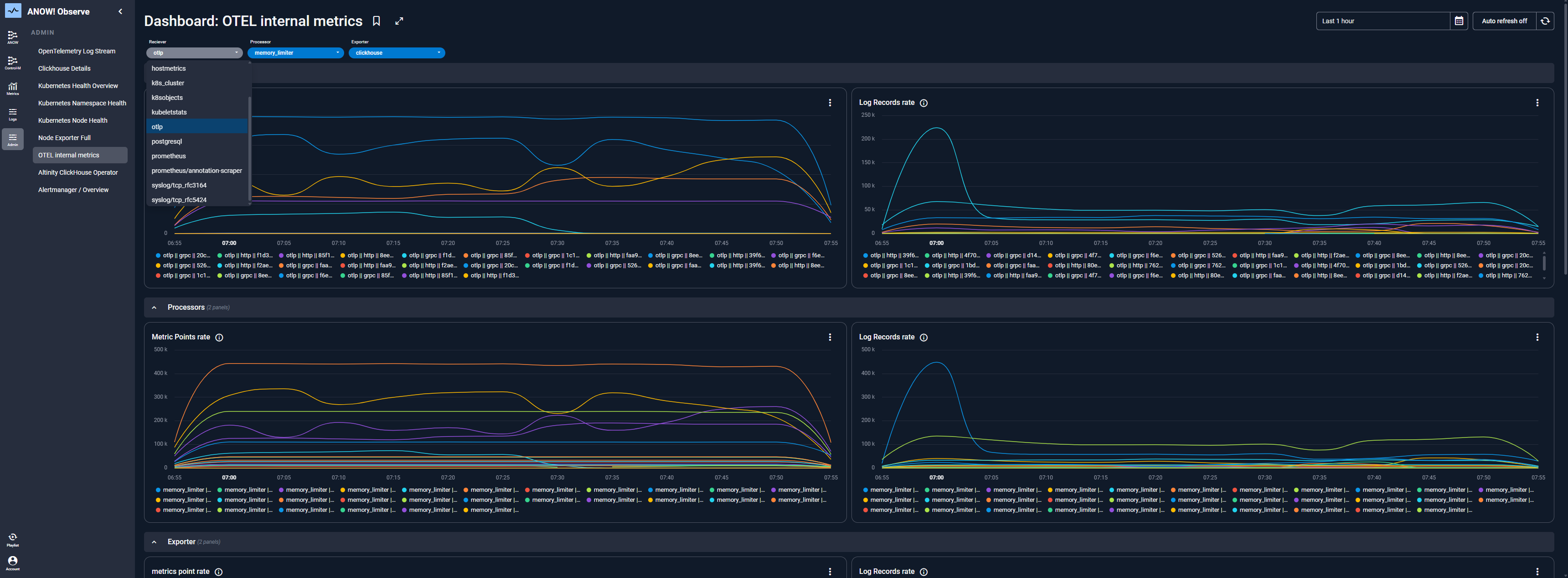
OpenTelemetry-native, real-time telemetry that detects anomalies, forecasts SLA risks, and triggers automated remediation. Per the Gartner MQ, Beta Systems “transformed what was a caution in 2024 into a key competitive differentiator” with this capability.
Contextual Intelligence & Dynamic Workflows
Multi-level dynamic variables, sensor-driven inputs, and computed values that can generate hundreds of thousands of unique workflows from minimal definitions.
Enterprise-grade SAP Orchestration
The ANOW! Suite offers full support for SAP R/3, S/4HANA, S/4HANA Cloud, GROW and RISE with SAP, BW, and BTP, with dynamic variant handling and job interception.
Jobs-as-Code for DevOps teams
Offering stateless artifact management in JSON, fully compatible with GitHub, GitLab, Bitbucket, Azure DevOps, and CI/CD pipelines.
Granular Security Architecture
The ANOW! Suite also offers role-based access across domain, module, action, and row levels using tag-based dynamic security, including GDPR/HIPAA compliance supported by an AI-powered PII filter, ISO 27001-compliant infrastructure, and audit-proof logs for regulatory reporting.
Where Beta Systems ANOW! Shines
No vendor lock-in: Deployment model can be switched at any time, SaaS to private cloud or on-premises, without disruption or rearchitecture. AutoSys doesn’t offer this flexibility
European data sovereignty: For regulated enterprises in the EU, Beta Systems’ European vendor status and ISO 27001-compliant infrastructure addresses DORA and GDPR requirements that US-headquartered firms have to comply with.
Infinite Integration capability: ANOW!’s extensible interface supports APIs, CLI, scripting, and JavaScript-based integration logic for any system beyond the standard connector library
Where Beta Systems ANOW! Falls Short
Geographic presence: ANOW! is strongest in Europe. While the platform is actively expanding into North America and Asia-Pacific, brand awareness outside Europe is still developing compared to Control-M or Broadcom
UI maturity: The platform UI is available in English, Polish, and German, and is currently undergoing a redesign
Customer Reviews
Daniel L. praises ANOW! Suite’s comprehensive centralization, saying, “As a SysAdmin, it's crucial for me to manage both legacy on-premises systems and modern cloud infrastructure, and ANOW! Suite bridges that gap beautifully. It gives me end-to-end visibility and control over all of our enterprise processes. Instead of jumping between multiple tools, I can track workflows, monitor progress in real time, and manage job scheduling from a single platform. This centralization acts as a universal bridge, eliminating 'blind spots' and ensuring that our IT ecosystem is in sync, which is a massive relief because I no longer have to deal with 'finger-pointing' between teams.”
Another verified user shares, “I really like that everything is in one place. It gives me a “single point of control” for all my tasks and workflows, which makes it much easier to see what is happening in real-time.”
Who Beta Systems ANOW! is Best For
Large enterprises in regulated industries (BFSI, insurance, manufacturing, pharma) replacing AutoSys, Broadcom Automic, or Control-M
European organizations with data sovereignty or DORA compliance requirements
IT and data operations teams managing complex hybrid workloads across SAP, cloud services, and legacy systems
2. BMC Control-M: Best for Enterprises Already Within the BMC Ecosystem
If AutoSys is the platform you’re replacing, BMC Control-M is almost certainly already on your shortlist. It’s the other dominant legacy WLA platform and the most natural lateral move for enterprises seeking a proven alternative without departing from the established enterprise software landscape.
Note: In April 2025, BMC split into two independent companies: BMC and BMC Helix, a structural change that customers should factor into their vendor stability assessment.
Key Features
Unified Orchestration View: Spanning mainframe, cloud, hybrid, and SaaS environments
Jobs-as-Code (Automation API): For treating workflows as versionable JSON, which enables CI/CD integration
Jett, BMC's Embedded GenAI Advisor: Enables natural language queries about workflows, anomaly identification, and compliance checks
Where Control-M Shines
Deep enterprise penetration: Global customer base, 24/7 support, strong VAR and partner program, which is useful for enterprises procuring through GSIs
Feature breadth: Managed file transfer, role-based administration, and a mature orchestration engine that handles complex dependency management at scale
Where Control-M Falls Short
High total cost of ownership: The Gartner MQ explicitly flags TCO as a Caution, noting it may be difficult to justify for smaller organizations or those with less complex scheduling needs
Post-split concerns: The 2025 BMC/BMC Helix split has introduced customer uncertainty around support continuity and long-term integration between products across both entities
No native AI agents: While Jett provides GenAI advisory capability, Control-M does not currently offer native AI agents for autonomous operational purposes
Customer Reviews
Ujjwal Y. praises, “I like Control-M for its centralized visibility and reliability. The ability to manage complex workflows across different systems from a single interface makes operations much smoother.”
Shivaji B. warns, “The initial setup and configuration process can be somewhat complicated for new users. Additionally, the licensing costs are significantly higher compared to other tools. What I find most frustrating is the column width and sizing in the self-service section. While many features have been carried over from CCM to the web version, the configuration windows remain quite small, making them difficult and frustrating to use.”
Who Control-M is Best For
Enterprises already running BMC tooling (IT operations, ITSM) that want to consolidate
Large organizations managing extensive legacy batch environments alongside modern cloud workloads
3. Redwood RunMyJobs: Best for SAP-Native Enterprise Environments
Redwood RunMyJobs is the only workload automation platform with SAP Endorsed App Premium certification and native inclusion in the RISE with SAP reference architecture, making it the strongest choice for SAP-centric enterprises looking to move away from AutoSys.
Key Features
Native SAP Integration: S/4HANA, GROW and RISE with SAP, SAP BW, NetWeaver, and BusinessObjects — all natively supported
AI-powered Observability (Redwood Insights): Analyzes performance, predicts potential SLA misses, and provides plain-language explanations of process behavior
Low-Code Drag-and-Drop Workflow Editor: Enabling business analysts and IT operations staff to build complex automations without deep scripting knowledge
Where RunMyJobs Shines
SAP ecosystem leadership: For enterprises on S/4HANA or executing a RISE with SAP migration, RunMyJobs offers the deepest native integration available
User experience: Gartner customers consistently rate the intuitive, low-code interface positively, and complexity that trips up AutoSys users largely disappears in RunMyJobs
Where RunMyJobs Falls Short
Data sovereignty limitations: Primarily a multitenant SaaS platform, which creates challenges for highly regulated industries with strict data residency rules, unlike ANOW! Suite which offers dedicated localized deployments
GSI friction: Redwood's direct sales strategy can create procurement hurdles for enterprises that rely on global system integrators
Customer Reviews
Alex S. praises, “It has been stable, we no longer have manual pre and post activities for RMJ patching and have gained confidence in the stability of your patch cycles. Clear improvement over our old On-Prem setup from the past.”
Ankush Y. notes, “The backend programming which is not visible to us, hence makes it a bit difficult to identify the issue when there is a need to be and needs involving the support team.”
Who RunMyJobs is Best For
SAP-first enterprises executing RISE with SAP or S/4HANA migrations who need certified, native orchestration
Enterprise teams prioritizing a low-code interface and ease-of-use over deep customization
Compare Redwood alternatives for deployment, pricing, and compliance.
4. Stonebranch Universal Automation Center: Best for Modern WLA Evaluations
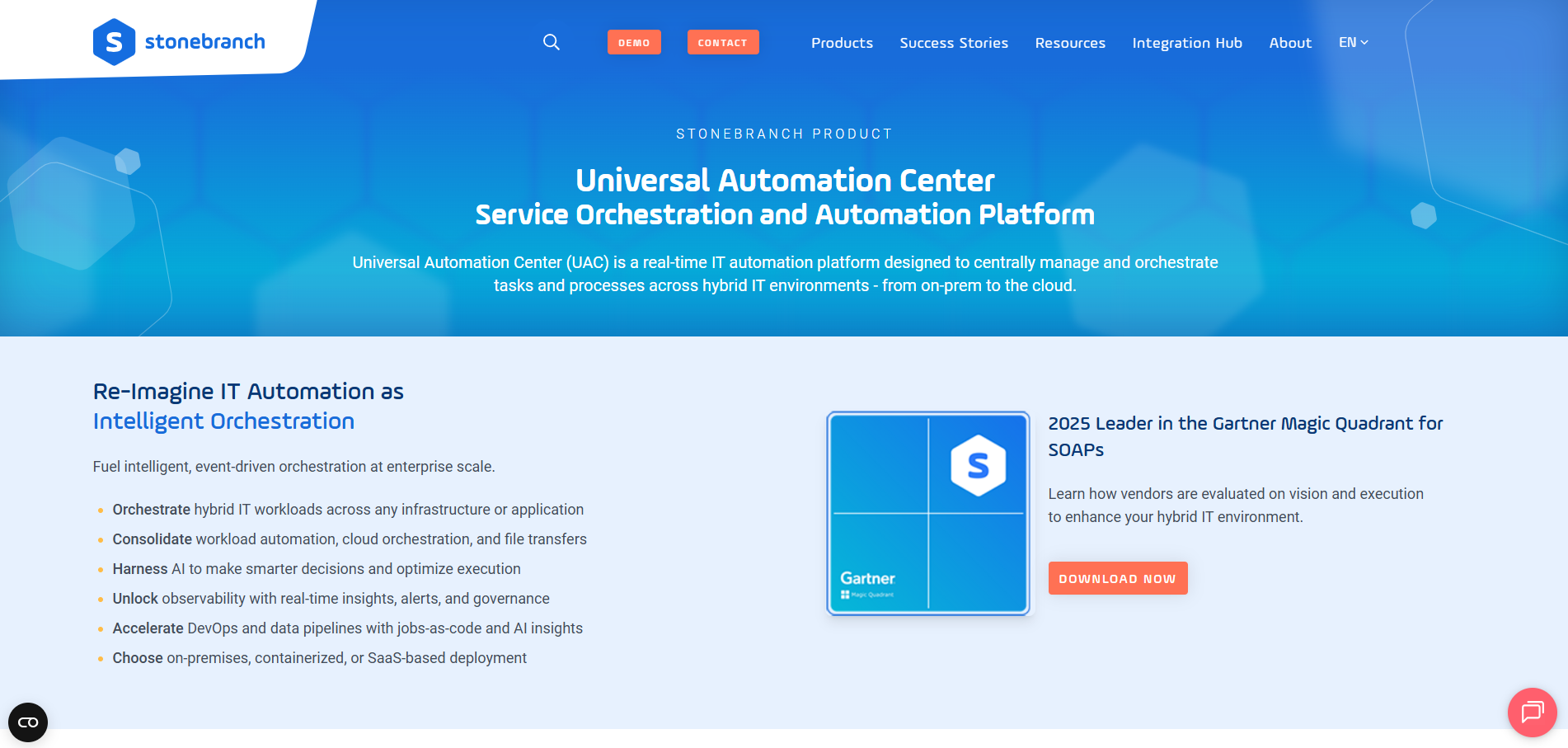
Stonebranch UAC is a capable, modern platform for enterprises evaluating AutoSys alternatives that want a purpose-built workload automation and workflow orchestration platform. Enterprises evaluating both Stonebranch and ANOW! Suite should closely examine three differentiators: observability depth, platform scalability, and cost governance.
Key Features
Universal Automation Center (UAC): Enterprise workload automation and job scheduling across distributed hybrid and cloud environments
Data Pipeline Orchestration: Dedicated capability for Snowflake, Databricks, dbt, and cloud data lake environments
Universal Portal: An add-on self-service portal via API, designed for end users of varying skill levels
Where Stonebranch Shines
Build-your-own integrations: UAC offers a flexible framework for building custom integrations, useful for organizations with niche or proprietary systems
Data pipeline orchestration: Purpose-built capability for modern data stacks (Snowflake, Databricks, dbt) is a differentiator for data-heavy enterprises
Where Stonebranch Falls Short
Vertical-only scalability: UAC supports only a single active node with passive failover, meaning it can only scale up, which can lead to potential hard hardware limits, risk of downtime during upgrades, and a single point of failure. This contrasts sharply with ANOW!'s horizontal, microservices-based scaling
Early-generation architecture: UAC runs on its original software architecture, lacking the cloud-native benefits of platforms built specifically for Kubernetes and microservices environments
Customer Reviews
Vinothkumar M. mentions, “The most valuable feature of the Stonebranch Universal Automation Center (UAC) is its superior scheduling and cross-platform integration capabilities, which have fundamentally transformed how we orchestrate our ETL workflows.Now, we have centralized, end-to-end control over every ETL job.”
Jeff V. shares some complaints, saying, “I would improve the user interface a bit to make it even more intuitive, especially for new users. I also want more out-of-the-box reporting templates so I don't have to build everything from scratch.”
Who Stonebranch is Best For
Organizations relying heavily on SAP for their workflows
Enterprises with complex data pipeline needs across Snowflake, Databricks, and dbt
5. Apache Airflow: Best for Engineering-Led Pipeline Orchestration
Apache Airflow is one of the most widely deployed open-source workflow orchestration frameworks and functions as an indirect AutoSys alternative. It’s best for engineering teams that want a modern, code-first approach to pipeline automation rather than a traditional enterprise scheduler.
Key Features
DAG-based Python Workflows: Workflows are defined as directed acyclic graphs in Python, enabling full code-level control and version management
Extensive Operator Library: Pre-built operators for AWS, GCP, Azure, Snowflake, Databricks, Spark, and dozens more
Strong Community Ecosystem: Apache Airflow has a large open-source community, abundant documentation, and wide developer adoption
Where Airflow Shines
Developer experience: Python-native DAG authoring is ideal for data engineering and DataOps teams already working in Python-first environments
Pipeline-centric orchestration: Strong fit for data pipelines and ETL workflows, particularly in cloud-native environments
Where Airflow Falls Short
Not designed for enterprise WLA: Airflow does not natively handle the cross-platform dependency management, business-critical batch job scheduling, SLA governance, or enterprise ITSM integration that AutoSys users depend on
Significant operational overhead: Self-hosted Airflow requires skilled DevOps resources to maintain, upgrade, and scale, costs that compound quickly at enterprise scale
Not a direct replacement: Organizations with complex, business-critical legacy AutoSys job chains should approach Airflow as a complementary tool or a migration destination for specific pipeline workloads, not a wholesale replacement
Note
Beta Systems ANOW! Suite includes native integration with Apache Airflow, enabling enterprises to orchestrate Airflow DAGs alongside traditional WLA workloads from a single control plane.
Customer Reviews
Salman K. praises, “What I like most about Airflow is its flexibility and number of features for building workflows using DAGs. It is very useful for managing complex pipelines with dependencies. Integration with different systems is also strong. Once setup is done, it works reliably and is used frequently in day-to-day operations.”
Akash M. warns, “For beginners, Apache Airflow can be complex to set up, especially with Docker. At times when a DAG is updated, the UI can feel slow.”
Who Airflow is Best For
Data engineering and DataOps teams building cloud-native Python-based pipeline automation
Organizations considering a phased migration strategy, using Airflow for new workloads while transitioning legacy AutoSys jobs to an enterprise WLA
6. ActiveBatch by Redwood: Best for Mid-Market or Simpler Enterprise Automation
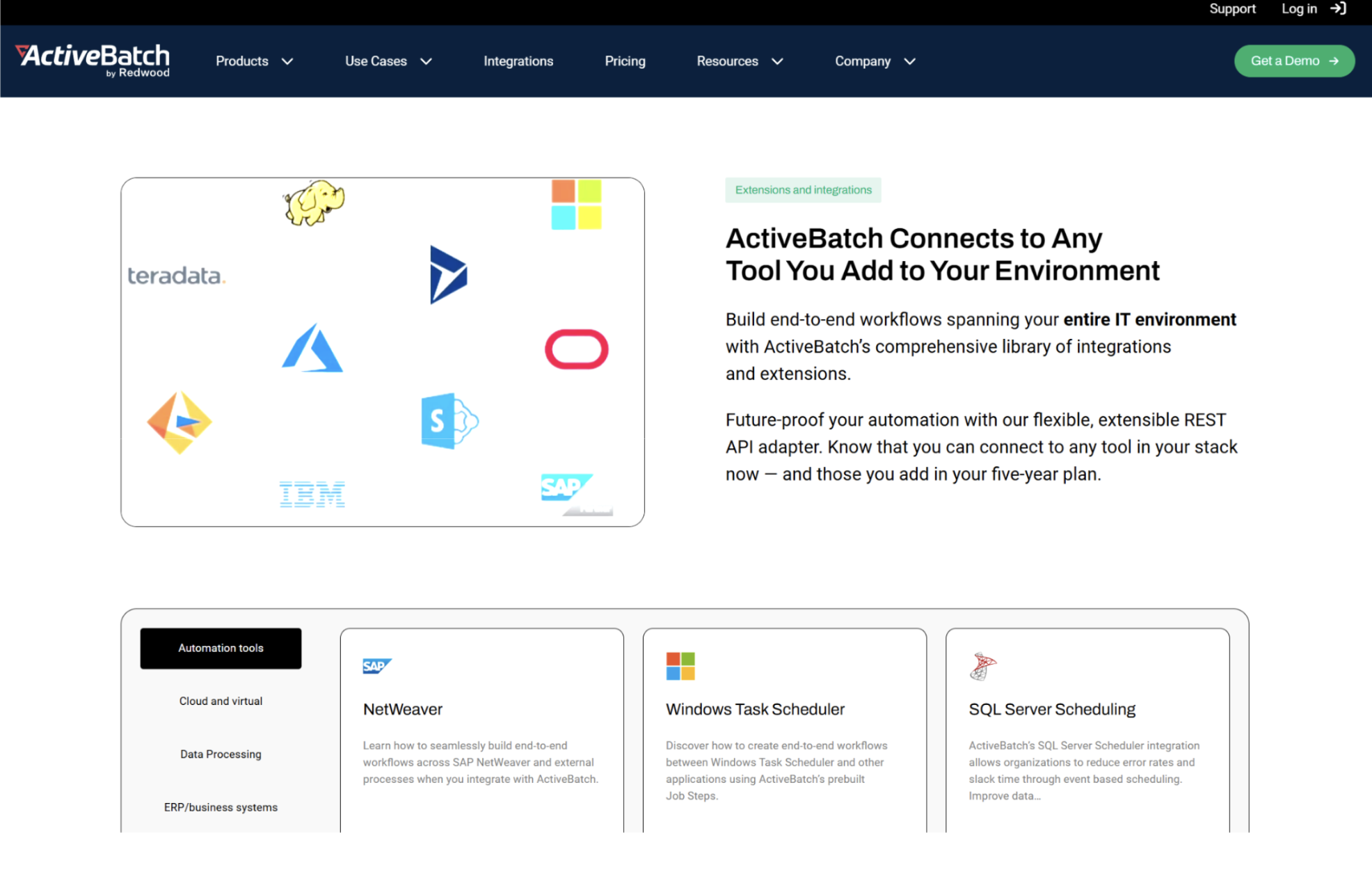
ActiveBatch is now part of the Redwood Software portfolio. It occupies a practical middle position in the market: more modern than AutoSys, with an accessible low-code interface and solid integration coverage, but less suited to the most complex demands of enterprise-scale workload automation.
Key Features
Low-Code Drag-and-Drop Workflow Designer: With pre-built job steps spanning ERP, cloud, file transfer, databases, and BI tools
Broad Platform Support: Across Windows, Linux, UNIX, macOS, and IBM iSeries AS/400
SLA Monitoring, Dependency Checking, and Notifications: All from a centralized console
Where ActiveBatch Shines
Ease of adoption: Users report ease of use, reliable performance, and strong customer support
Integration flexibility: The Super REST API adapter enables connections to practically any external system, including tools not in the standard job step library
Where ActiveBatch Falls Short
Learning curve: Despite the low-code premise, advanced configurations and initial setup can be time-consuming, particularly for teams without dedicated automation expertise
Part of a multi-product portfolio: Redwood now manages three WLA products (ActiveBatch, RunMyJobs, Tidal). Buyers should clarify Redwood's long-term product roadmap and investment prioritization for ActiveBatch specifically
Customer Reviews
Ellen R. praises, “I do like the power of cross-platforms of ActiveBatch Workload Automation. We operate important processes across Windows and Linux servers with just one console which is very effective. Its built-in job steps and the ability to handle an error is enormous advantages as well.”
Athena A. laments, “The problem that I have the most is the congestion of the workspace when numerous processes are involved. The platform has numerous capabilities, but it becomes hard to have a clear overview. This has affected my day to day work since I will have to take longer hours to verify details before effecting changes.”
Who ActiveBatch is Best For
Mid-market organizations or enterprise teams with relatively straightforward scheduling and workflow automation needs
IT operations teams that want a low-code interface without committing to the full scope of an enterprise WLA platform
Biggest Pain Points of AutoSys & Why Teams Look for Alternatives
Most enterprises evaluating AutoSys alternatives aren’t doing so because the platform is unreliable. AutoSys has a 40+ year track record in enterprise batch scheduling.
The problem is everything that surrounds the product. Here’s what's actually driving migrations in 2026.
Price Hikes Since the Broadcom Acquisition
Since Broadcom acquired CA Technologies (AutoSys's parent), enterprise customers across the market have reported significant, often unexpected price increases at renewal. Because enterprise automation and mainframe software like AutoSys represent extreme vendor lock-in, Broadcom holds immense leverage at renewal.
The broader concern is that Broadcom's multi-WLA portfolio (AutoSys, Automic, Dollar Universe) creates uncertainty about long-term product consolidation. Customers on long-term contracts may be buying into a platform whose future direction is undetermined.
Get started with your AutoSys replacement today.
How ANOW! addresses this: Beta Systems shares transparent pricing without execution-based spikes. Deployment models are fully portable (SaaS, private cloud, or on-premises), giving enterprise buyers predictable costs and genuine negotiating leverage.
Cloud and Hybrid Environment Limitations
AutoSys was built for a data center world. While it has added cloud capabilities over time, reviewers consistently flag limitations, including missing integrations with cloud computing platforms such as AWS and Azure.
Orchestrating modern hybrid environments also often requires workarounds or adjacent tooling that adds operational complexity.
How ANOW! addresses this: ANOW! was built cloud-native from inception, on a Kubernetes-based microservices architecture.
It connects natively with AWS, Azure, and GCP while orchestrating the same complex legacy dependencies AutoSys users are already managing.
→ Read more about workload automation and orchestration
Observability Blind Spots
AutoSys provides real-time status updates and monitoring, but users routinely call for richer reporting, customizable alerting, and deeper predictive analytics.
The platform was not designed for the kind of telemetry-driven, AI-informed decision-making that modern IT operations now demand.
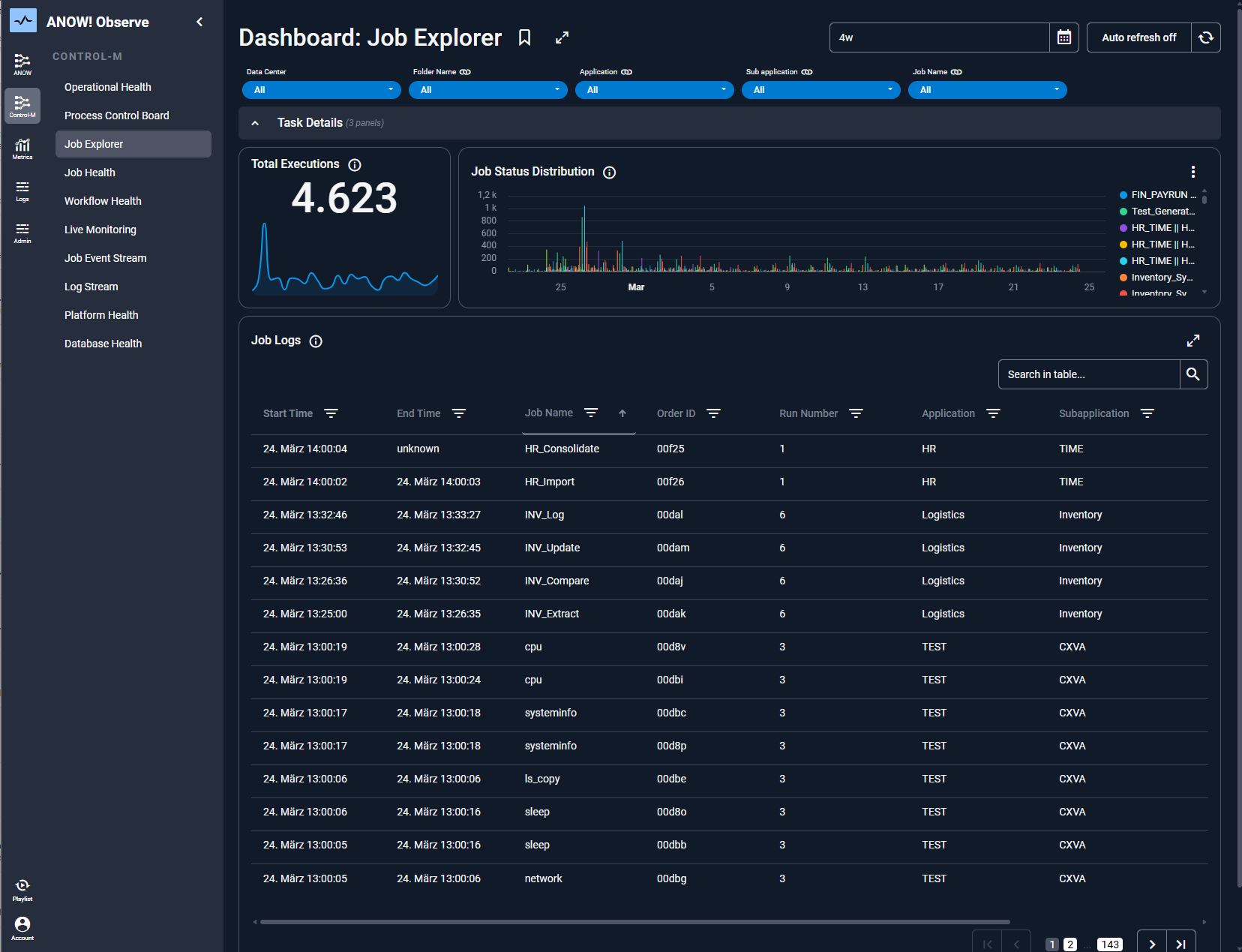
How ANOW! addresses this: ANOW! Observe embeds OpenTelemetry-native observability directly into the orchestration engine, enabling real-time anomaly detection, SLA forecasting, and automated remediation without requiring a separate monitoring platform.
Legacy Architecture and DevOps Friction
AutoSys’s Job Information Language (JIL) scripting model and event-server-centric architecture create friction for DevOps teams that want to manage automation as code, integrate with CI/CD pipelines, and apply modern version control practices
The architecture also limits horizontal scalability, which becomes a structural problem.
How ANOW! addresses this: ANOW! manages all automation artifacts as standardized JSON definitions, fully compatible with Git-based systems. It supports jobs-as-code natively, integrates with GitHub, GitLab, Bitbucket, and Azure DevOps, and enables merging, branching, tagging, and diffing, all standard DevOps practices.
→ Explore the efficiency you can unlock with event-driven automation
What’s Next for Teams Moving Away from AutoSys?
The future of workload automation is constantly changing. The SOAP market, for one, is at an inflection point.
Gartner projects that by 2029, 75% of SOAP workflows will leverage generative AI to increase troubleshooting efficiency by 50%, a shift that legacy AutoSys architecture is structurally ill-equipped to support.
Your next step depends on where your organization is in the modernization journey:
For complex, enterprise-scale hybrid environments, especially in regulated industries or European markets, Beta Systems ANOW! Suite is the most complete AutoSys replacement, combining cloud-native architecture, transparent pricing, 600+ integrations, and enterprise observability.
For SAP-native enterprises on RISE with SAP, Redwood RunMyJobs is the natural fit, though factor in renewal pricing risk carefully.
For data engineering teams looking to modernize pipeline orchestration, Apache Airflow is a viable complement, and ANOW! can orchestrate Airflow DAGs directly as part of a broader enterprise automation strategy.
Explore Beta Systems ANOW! Suite now.
Replace AutoSys Without the Risk
See how ANOW! enables a zero-downtime migration with full visibility across hybrid workloads and no vendor lock-in.
:quality(50))
:quality(50))
:quality(50))