:quality(50))
| Best For | Standout Features | |
|---|---|---|---|
Beta Systems ANOW! Automate | Enterprises that have outgrown JAMS | Native, OpenTelemetry-based observability with easy SAP automations | |
BMC Control-M | Large enterprises needing top-tier scale | Jett, BMC’s embedded GenAI advisor | |
ActiveBatch (by Redwood) | Mid-market, like-for-like JAMS replacement | Low-code, drag-and-drop workflow designer | |
Stonebranch UAC | Modernizing toward cloud-native/API-first orchestration | Universal Portal for self-service automation | |
Broadcom AutoSys | Standardizing on a long-established enterprise scheduler | Deep maturity in large, established enterprise environments |
1. Beta Systems: Best for Enterprises That Have Outgrown JAMS
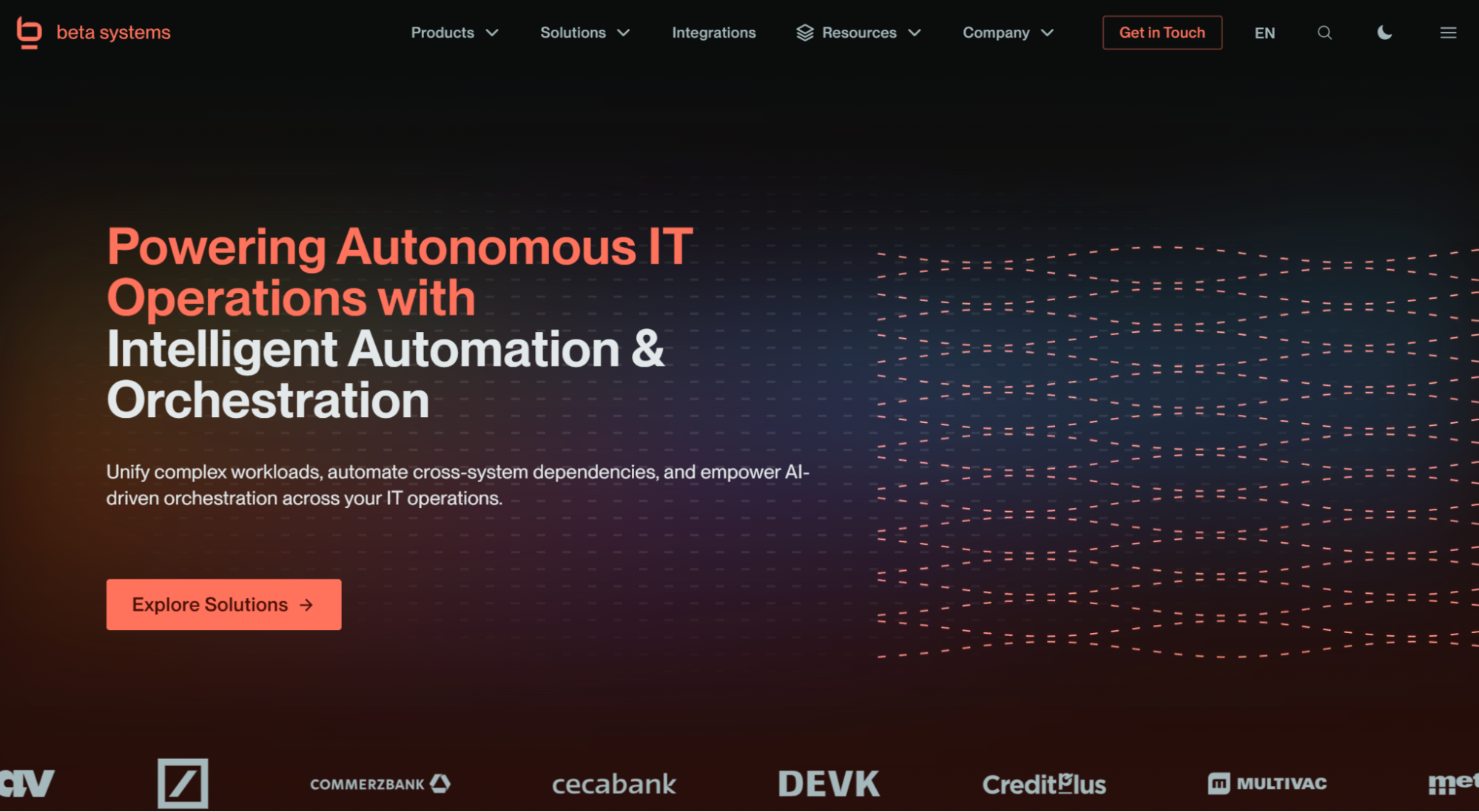
Beta Systems has spent four decades in enterprise IT automation, and its modern ANOW! Suite, anchored by ANOW! Automate, is purpose-built for the kind of complex, cross-system dependencies that JAMS was never designed to handle at scale.
Where JAMS is a self-hosted, North America-centric scheduler, ANOW! Automate is a cloud-native, deployment-agnostic platform that runs as SaaS, on-premises, or in a private cloud, and lets you move between those models without re-architecting anything.
Beta Systems’ ANOW! Automate Key Features
Here’s what makes Beta Systems’ product suite stand out.
Native Full-Stack Observability
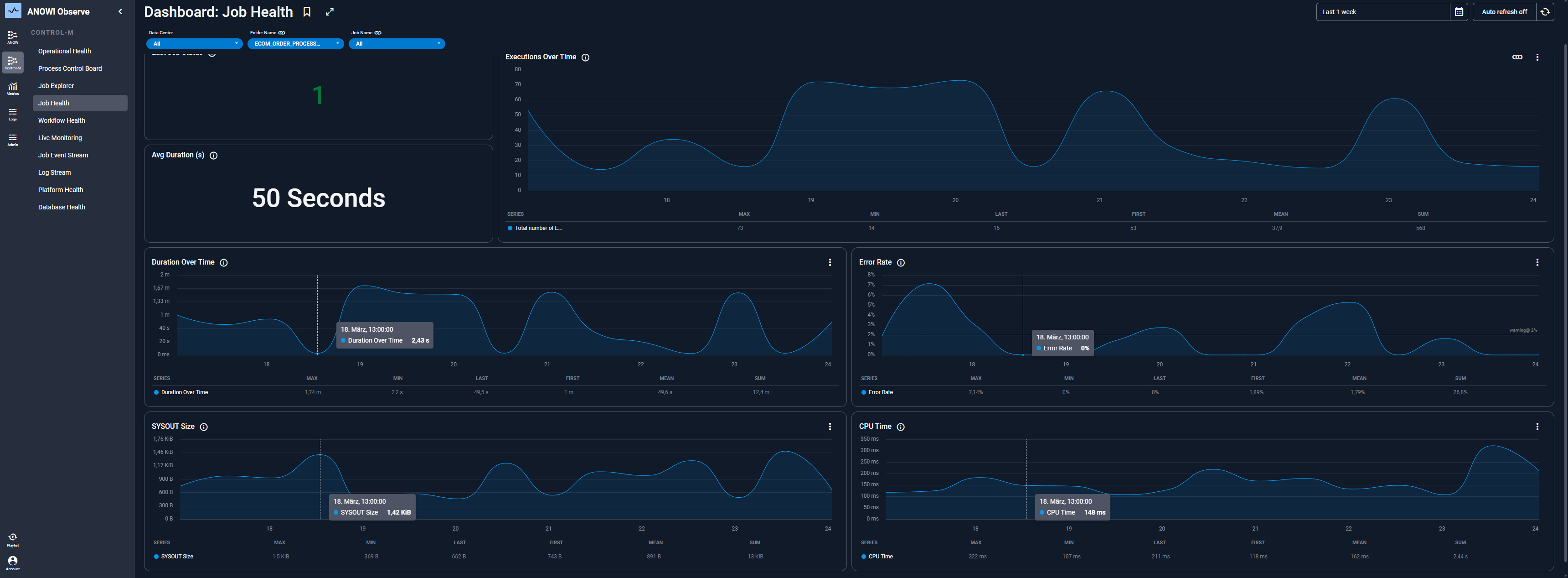
With ANOW! Automate, you have the option of purchasing ANOW! Observe as an add-on which embeds OpenTelemetry-native observability directly into the orchestration engine, so metrics, logs, and traces feed real-time SLA-risk forecasting and automated remediation. It doesn’t act as a bolted-on monitoring add-on.
SAP Automation
ANOW! Automate delivers next-generation SAP operations automation based on contextual intelligence, streamlining SAP workloads, reducing manual intervention, and optimizing performance and cost efficiency. This is a strong differentiator for BFSI and manufacturing customers running SAP-heavy environments.
Infinite Integration & Zero-Touch Migration
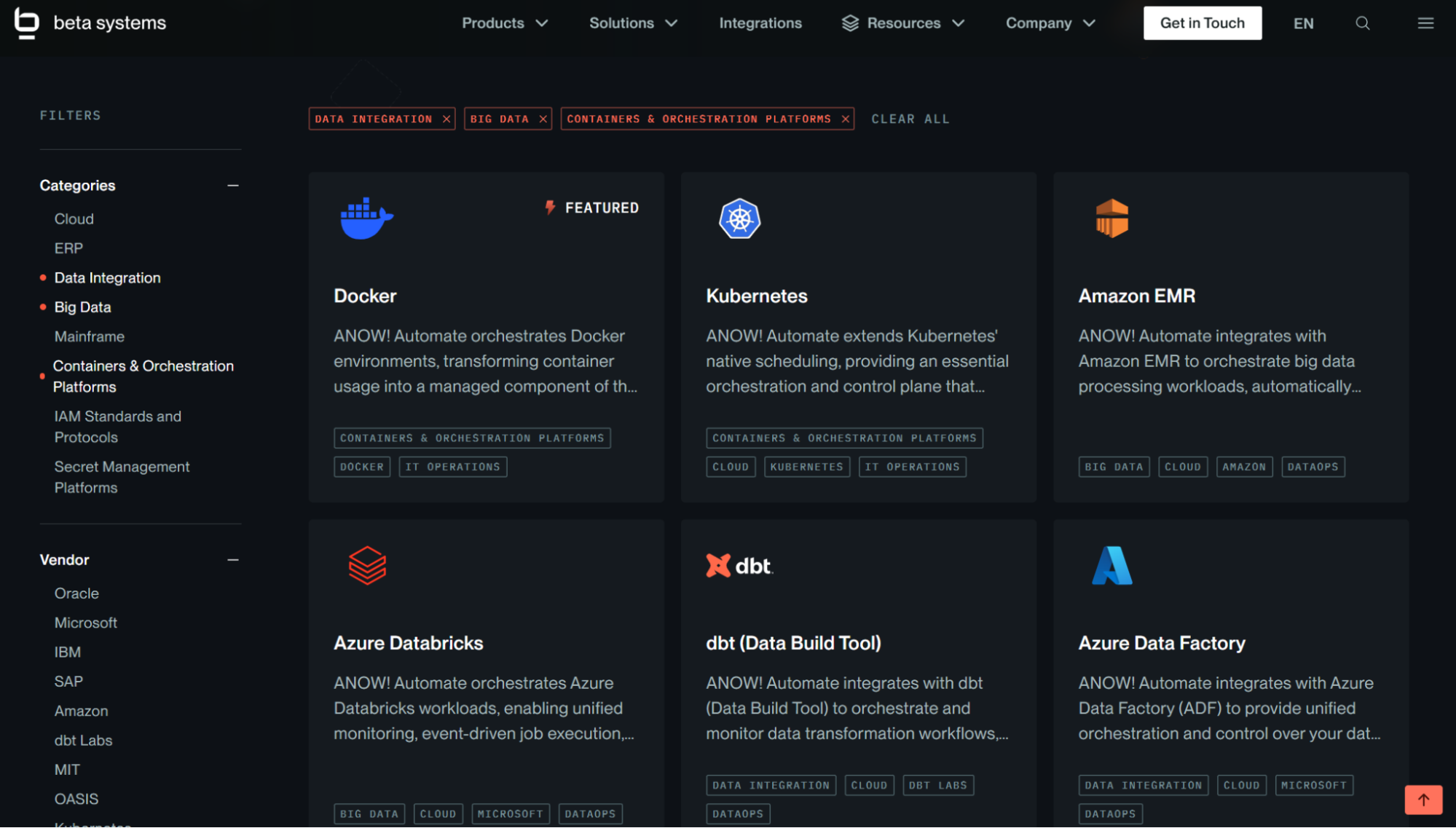
With 500+ native, out-of-the-box connectors spanning cloud, DevOps, containers, ERP, and legacy mainframe systems, plus zero-touch migration tooling, ANOW! Automate is built to absorb workloads from displaced schedulers like JAMS without a rip-and-replace project.
Where Beta Systems’ ANOW! Automate Shines
Digital sovereignty: As a European vendor, ANOW! offers data sovereignty and compliance advantages that North American-only tools like JAMS can't match which is increasingly relevant under EU regulations like DORA.
Hybrid Orchestration: Bridges modern cloud architectures (AWS, Azure, GCP) with traditional mainframe z/OS environments.
No vendor lock-in: A consistent platform across SaaS, on-prem, and private cloud means you can change deployment models without a migration project.
Where Beta Systems’ ANOW! Automate Falls Short
Regional brand awareness: ANOW!’s customer base is concentrated in Europe, so North American buyers may find fewer local reference accounts than they would with a BMC or Broadcom.
UI language coverage: The interface currently supports English, German, and Polish, and Japanese. It’s worth checking in directly with the team if you need broader localization.
Beta Systems’ ANOW! Automate Customer Reviews
A verified user shares, “I really like that everything is in one place. It gives me a “single point of control” for all my tasks and workflows, which makes it much easier to see what is happening in real-time.”
Another verified user praises, “I use ANOW! Suite as a centralized platform to manage and streamline my daily workflows. It helps me organize tasks, track progress, and maintain better visibility across ongoing activities. What I like most about ANOW! Suite is its ability to bring everything into one centralized platform. It makes task management and tracking very intuitive, improves visibility across workflows, and helps me stay organized.”
Who Beta Systems’ ANOW! Automate Is Best For
Large enterprises with hybrid, mainframe-to-cloud footprints in BFSI, manufacturing, or other regulated industries that need one platform to replace a legacy scheduler and unify observability
Pro-Tip:
Beyond the core scheduler, teams evaluating a broader automation footprint often also look at Beta Systems’s SAP orchestration, automation observability, log management, and output management solutions, which integrate with ANOW! Automate under the same security model.
2. BMC Control-M: Best for Large Enterprises Needing Top-Tier Scale and Mainframe Integration
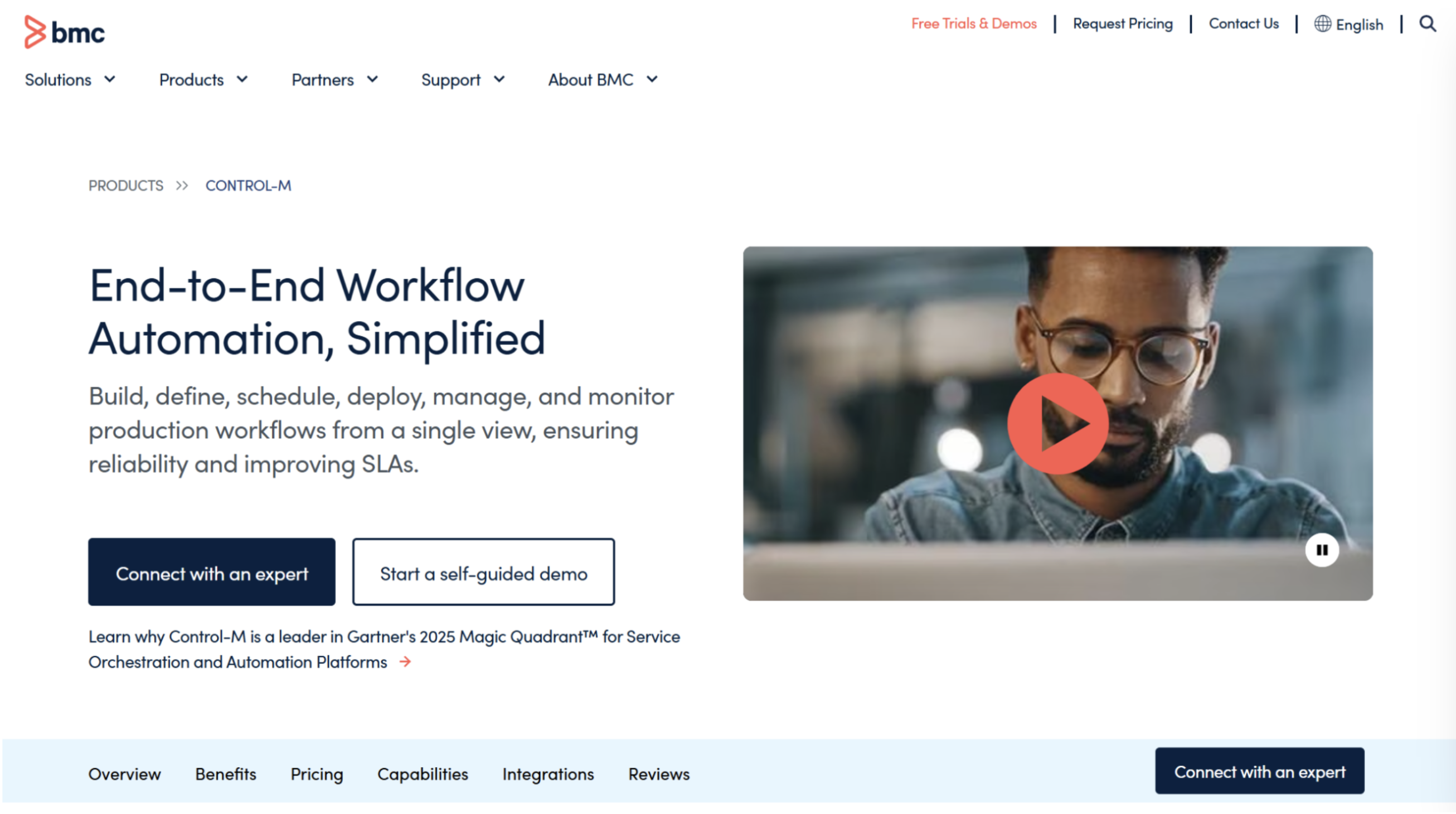
BMC Control-M is the most frequent head-to-head comparison point for JAMS switchers, and it's a natural “step up” tier alongside Beta Systems for organizations with the largest, most complex estates. Control-M orchestrates everything from mainframe to multicloud and AI/ML pipelines through a single “Unified View,” and BMC has invested heavily in Jett, its embedded GenAI advisor that answers natural-language questions about workflow health and flags anomalies.
One development worth tracking: BMC split into two independent companies (BMC and BMC Helix) in 2025, and in June 2026, BMC Helix was majority-acquired by Montagu, separating it further from BMC’s ownership structure. Some customers have expressed their concern this could complicate support continuity for organizations using products across both companies.
Key Features
Jett GenAI advisor: Natural-language troubleshooting and compliance-change tracking embedded directly in the console.
Unified View: A single interface spanning self-hosted and SaaS deployments, mainframe to cloud-native.
Deep mainframe integration: Among the most mature mainframe orchestration capabilities in the market.
Where BMC Control-M Shines
Enterprise scale: Built for organizations managing thousands of servers and the most complex, mission-critical workloads.
Regulated-industry depth: A large, geographically diversified customer base with strong support for regulated environments.
Where BMC Control-M Falls Short
Cost: Licensing plus the specialized admin talent needed to run it can be difficult to justify outside the largest enterprises.
Post-split uncertainty: The BMC/BMC Helix separation, and BMC Helix's subsequent change in ownership, adds a layer of vendor-relationship complexity to track.
Customer Reviews
Subrajit B. praises, “Mostly I like how it simplifies complex job dependencies and ensures SLA must meet and integrate with cross-cloud platforms, making operations more efficient and reliable.”
Shivaji B. warns, “The initial setup and configuration process can be somewhat complicated for new users. Additionally, the licensing costs are significantly higher compared to other tools.”
Who BMC Control-M Is Best For
Very large, mainframe-heavy enterprises with the budget and in-house expertise to manage a premium enterprise scheduler
Read more:
Compare this against how modern workflow orchestration approaches the same problem with a cloud-native, lower-friction architecture.
3. ActiveBatch (by Redwood): Best for Mid-Market Teams Wanting a Like-for-Like JAMS Replacement
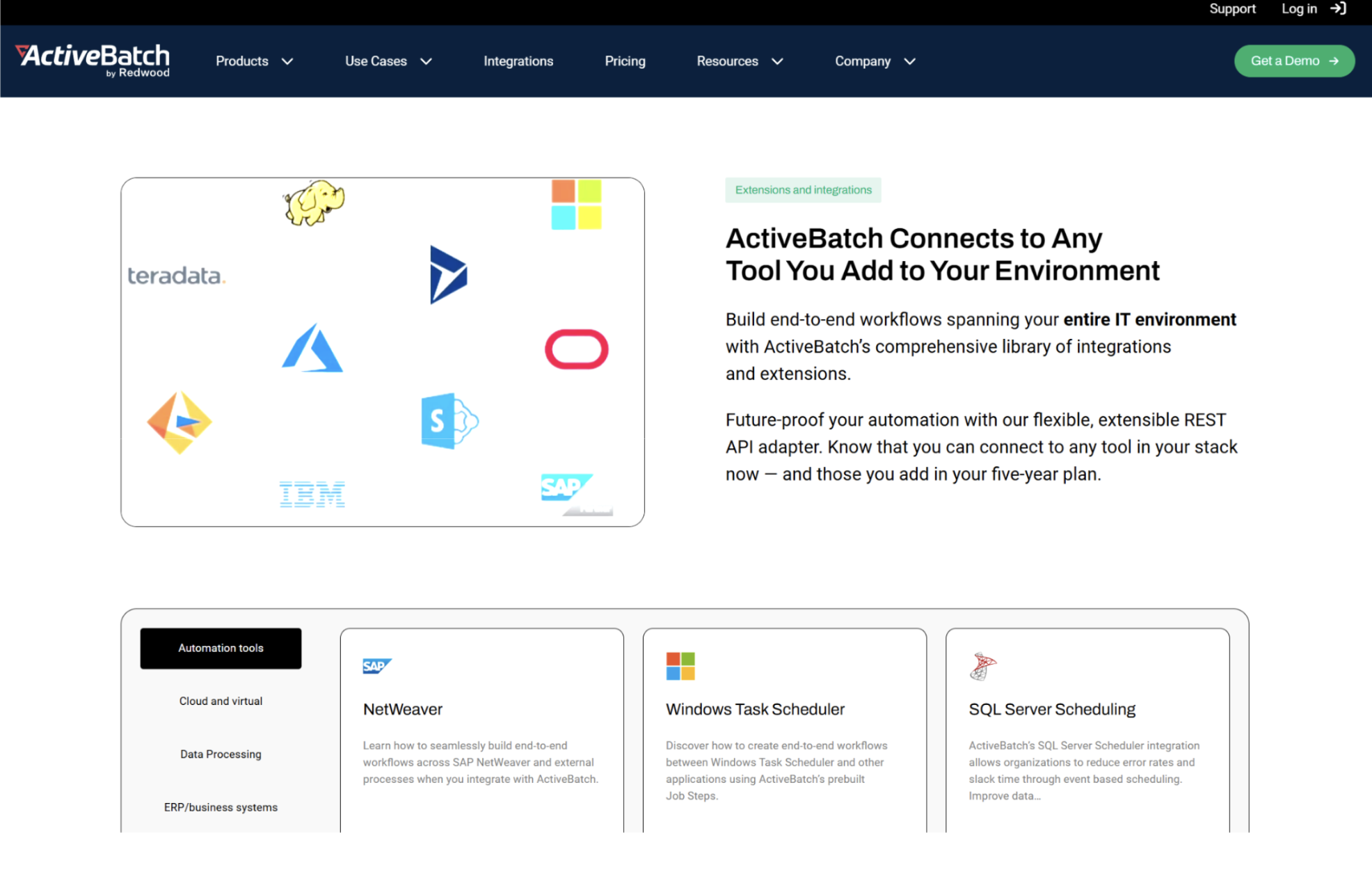
ActiveBatch is the closest peer to JAMS in both segment and UI philosophy: a low-code, drag-and-drop console with deep Windows, SQL Server, and ERP-heavy integrations.
For teams that are simply unhappy with JAMS, rather than outgrowing the category entirely, ActiveBatch is often the most directly comparable swap.
Key Features
Low-code workflow designer: Drag-and-drop job building aimed at reducing scripting dependency.
Windows and SQL-centric integrations: Strong out-of-the-box support for Microsoft-heavy stacks.
ERP connectors: Built-in support for common enterprise resource planning systems.
Where ActiveBatch Shines
Familiar migration path: The UI philosophy and scripting approach will feel close to home for teams coming directly from JAMS.
Windows/SQL depth: A strong fit for organizations whose automation footprint is concentrated on Microsoft infrastructure.
Where ActiveBatch Falls Short
Narrower cloud-native and hybrid mainframe orchestration compared with platforms built for large, heterogeneous multicloud estates.
Less differentiated observability: Doesn't offer the kind of native, telemetry-driven orchestration found in newer cloud-native platforms.
Customer Reviews
Ellen R. praises, “I do like the power of cross-platforms of ActiveBatch Workload Automation. We operate important processes across Windows and Linux servers with just one console which is very effective. Its built-in job steps and the ability to handle an error is enormous advantages as well.”
Mahesh K. warns, “There’s a steep learning curve—getting comfortable with the platform takes time, especially when you’re building advanced workflows and event-driven automations. Implementation and initial set-up can be complex and take some effort to get right.”
Who ActiveBatch Is Best For
Mid-market IT teams replacing JAMS one-to-one without a broader push into hybrid cloud or mainframe orchestration
Compare enterprise job scheduling software for your JAMS migration.
4. Stonebranch (Universal Automation Center): Best for JAMS Users Modernizing Toward Cloud-Native, API-First Orchestration
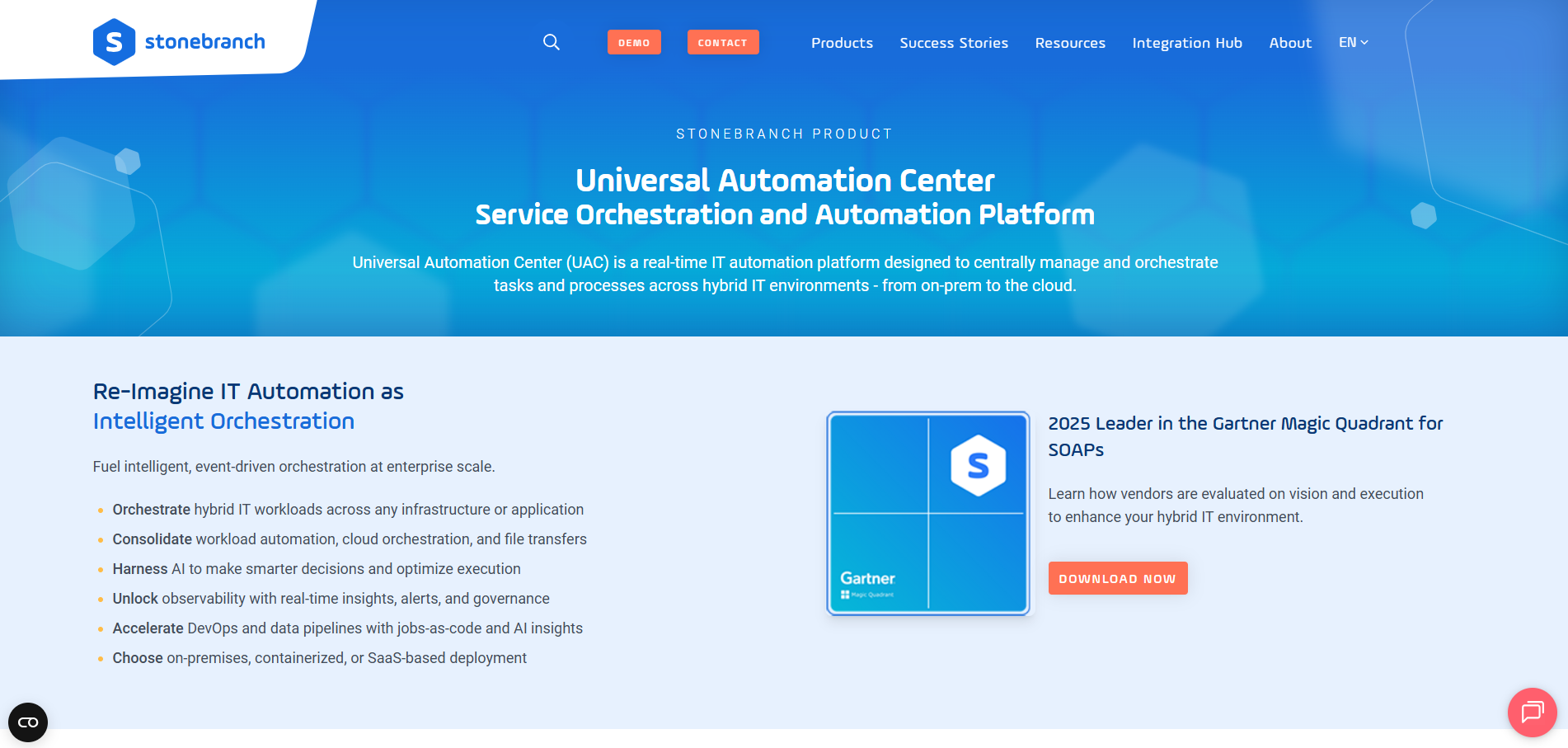
Where JAMS is Windows-centric and self-hosted only, Stonebranch's Universal Automation Center (UAC) is the go-to contrast tool for teams that want to modernize, not just switch vendors.
Gartner recognizes Stonebranch as a Leader in service orchestration and automation platforms, citing especially strong feedback on UAC's intuitive, web-based UI and low-code workflow designer, plus its dedicated Data Pipeline Orchestration capabilities for modern data stacks like Snowflake and Databricks.
Key Features
Universal Portal: A self-service automation experience for users of varying technical skill levels.
Data Pipeline Orchestration: Purpose-built tooling for designing and monitoring complex data pipelines.
Flexible deployment: Available as both self-hosted software and SaaS.
Where Stonebranch Shines
Modern UX: Frequently cited by customers as one of the more intuitive interfaces among enterprise WLA platforms.
Data pipeline depth: A strong option if data orchestration, not just job scheduling, is a growing part of your workload.
Migration services: Expert-led migration support for teams moving off legacy schedulers.
Where Stonebranch Falls Short
Early-stage AI: Its Robi AI assistant is still limited to generating documentation, task definitions, and reports, compared with more mature GenAI features elsewhere in the market.
Lower market awareness: Smaller brand footprint than some Leaders in this space, given its narrower focus purely on orchestration and automation.
Customer Reviews
Dhananjaya N. praises, “I like Stonebranch for its job scheduling, monitoring, and alert triggering for critical process chains. The conditional triggering capabilities are particularly useful, allowing for automation of complex execution models involving sequential, parallel, and time triggers. This has helped in reducing manual work significantly. The initial setup of Stonebranch was quite smooth, which was a great starting point for our team.”
Stephen E. notes, “My main problem was with the setup process. Although the knowledge base contains a lot of information, it can be somewhat difficult to navigate at times. There are definitely sections where, if you overlook something, you might find yourself stuck.”
Who Stonebranch Is Best For
JAMS users who want to modernize their architecture, particularly if data pipeline orchestration is a growing priority alongside traditional job scheduling.
Read more:
For teams weighing observability as part of that modernization, it's worth reading what observability actually means for workload automation environments specifically.
5. Broadcom AutoSys: Best for Enterprises Standardizing on a Long-Established, Widely Deployed Scheduler
AutoSys rounds out this list as another common enterprise legacy scheduler that prospects evaluate alongside JAMS, distinct from Broadcom's separate Automic Automation Engine, which targets a different orchestration use case.
AutoSys has a long history in enterprise batch scheduling and remains widely deployed, particularly among organizations that adopted it under CA Technologies before Broadcom's acquisition of the CA portfolio.
Key Features
Established batch scheduling engine: Long track record in enterprise environments running high job volumes.
Broad enterprise integrations: Mature connectors built up over decades of enterprise deployment.
Familiar administration model: Well-documented and well-understood by IT teams with long AutoSys tenure.
Where Broadcom AutoSys Shines
Maturity and stability: A long-established product with deep institutional knowledge across enterprise IT teams.
Wide existing footprint: Easy to standardize on if your organization already runs it in adjacent business units.
Where Broadcom AutoSys Falls Short
Modern architecture gaps: Fewer cloud-native, observability-first capabilities than platforms built more recently around hybrid and multicloud orchestration.
Post-acquisition cost concerns: As with several legacy schedulers absorbed into larger portfolios, customers frequently cite licensing cost increases as a factor pushing them to re-evaluate.
Customer Reviews
Vedavikas M. notes, “We use Autosys for automation of our jobs in SAP ECC, HANA, INFA, MFT environments throughout the organisation. All of the process is automated in the systems starting from triggering the job, getting the log, depending jobs etc. This helped us in reducing huge workload and manpower.”
Gaurav G. warns, “The interface feels outdated and not very intuitive, which makes onboarding new team members slower than it should be. Simple tasks often require command‑line work or digging through documentation. Integrations exist, but they’re not always smooth, and troubleshooting can feel overly technical for what should be routine scheduling work. Overall, it’s reliable, but the user experience definitely shows its age.”
Who Broadcom AutoSys Is Best For
Enterprises with existing AutoSys deployments elsewhere in the organization who want to consolidate on a familiar, established scheduler rather than adopt something new.
The Biggest Pain Points of JAMS Scheduler & Why Teams Look for Alternatives
JAMS has real strengths. Its script-agnostic approach and per-agent pricing model have made it a dependable, cost-predictable choice for years.
But several structural gaps are driving teams to look elsewhere.
Reason #1: Uncertain Vendor Backing
As of June 2025, JAMS is no longer backed by Fortra's balance sheet. It now operates as an independent company owned by PSG, 2ndWave Software, and its employees. That’s not necessarily bad news, but it’s worth flagging as something prospective customers should actively monitor; specifically, JAMS’s ability to self-fund ongoing R&D and feature development going forward.
Beta Systems, by contrast, has weathered multiple technology cycles over four decades with one of the higher customer retention rates among enterprise WLA Leaders, particularly in mission-critical BFSI and insurance environments.
Reason #2: No Built-In AI Capabilities
Unlike most other platforms evaluated by Gartner in this market, JAMS currently has no built-in AI to predictively forecast SLA breaches or flag performance anomalies. That gap matters: Gartner projects that by 2029, 75% of service orchestration and automation workflows will use generative AI to improve troubleshooting efficiency by 50%, up from under 10% in 2025.
ANOW! Automate's event-driven, telemetry-based orchestration is built with exactly this kind of AI-informed decision-making in mind.
Reason #3: No SaaS Option
JAMS is only available as self-hosted software. That means even on cloud infrastructure, your team is fully responsible for installation, patching, upgrades, and availability.
In a market that's increasingly SaaS-first (Gartner pegs the broader service orchestration and automation platform market at $3.8 billion in 2024, growing to an estimated $4.9 billion by 2028), that's an increasingly heavy operational lift.
ANOW! Automate runs as SaaS, on-premises, or private cloud, and lets teams move between those models without re-platforming.
Reason #4: Limited Geographic and Regulatory Reach
JAMS’s operations and customer base are concentrated in North America, with limited presence in EMEA and Asia/Pacific. For organizations navigating EU-specific requirements like DORA, or simply wanting digital sovereignty guarantees, that's a real constraint. As a European vendor, Beta Systems builds sovereignty and compliance into ANOW! from the ground up.
Gartner also expects workload automation itself to keep consolidating: by 2029, an estimated 90% of organizations currently running standalone workload automation will have moved to full service orchestration and automation platforms to manage workloads and data pipelines across hybrid IT and business domains.
What’s Next for Teams Moving Away from JAMS Scheduler?
If your environment spans hybrid cloud, mainframe, and complex cross-system dependencies, or if EU data sovereignty and built-in observability matter to your roadmap, Beta Systems’ ANOW! Automate is worth a serious look as your next platform.
If you’re simply looking for a like-for-like swap with minimal disruption and your footprint is mostly Windows and SQL-centric, ActiveBatch may be the simpler move, while Stonebranch suits teams prioritizing a cloud-native, API-first modernization path.
Whichever direction fits, the underlying trend is the same: standalone job schedulers are consolidating into unified orchestration platforms, and the vendors best positioned for that shift are the ones investing in observability, AI-informed automation, and deployment flexibility today.
Planning a move away from JAMS? Start with your environment
Talk with Beta Systems about your current scheduler, integrations, and migration requirements to see whether ANOW! Automate is a practical fit for your workload automation strategy.
:quality(50))
:quality(50))
:quality(50))