:quality(50))
The good news: the market for workload automation and orchestration has never been stronger, with Gartner projecting the SOAP market will grow from $3.8B in 2024 to $4.9B by 2028 at a 7.7% CAGR.
This article compares the top five alternatives to Redwood Software in 2026, with honest assessments of where each platform shines, where it falls short, and which buyer profile it fits best.
| Best For | Standout Features | |
|---|---|---|---|
Beta Systems ANOW! Suite | Enterprise WLA replacement (regulated industries) | 500+ integrations + native OpenTelemetry observability | |
BMC Control-M | Large enterprises with mainframe + multicloud needs | Broad orchestration across the full IT landscape | |
Broadcom Automic | Enterprises already in the Broadcom ecosystem | Zero Downtime Upgrades + hybrid/multicloud orchestration | |
Stonebranch UAC | Modern WLA with strong migration support | Data Pipeline Orchestration + expert migration services | |
Apache Airflow | Engineering teams building custom data pipelines | Open-source, Python-native DAG orchestration |
About Redwood Software & What It Does
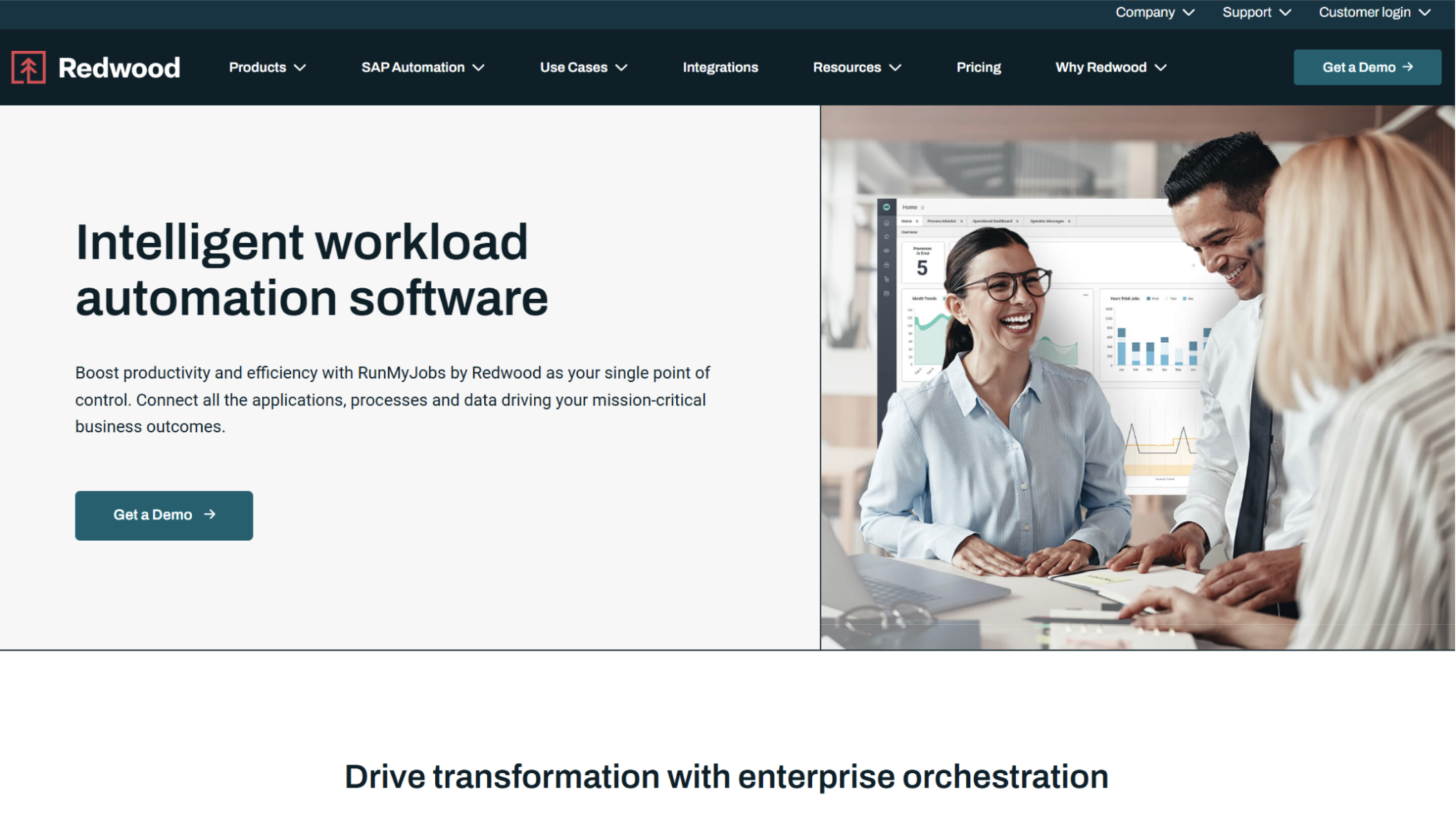
Redwood Software's flagship WLA product (RunMyJobs) is a cloud-based service orchestration and automation platform designed to automate and monitor complex IT and business processes. It is consumed primarily as a multitenant SaaS offering, with self-hosting options available.
Key capabilities include a low-code visual workflow editor, deep SAP integration, and an AI observability layer (Redwood Insights, launched in 2025) that predicts SLA misses and provides plain-language process explanations.
Where Redwood Software Falls Short Against Competitors
Despite its strengths, RunMyJobs has real limitations that push enterprise buyers toward alternatives, particularly organizations in regulated industries, European markets, or complex hybrid environments.
Data Sovereignty Gaps for Regulated Enterprises
Redwood's primary delivery model is a cloud-based, multitenant SaaS platform.
For organizations in highly regulated sectors such as BFSI, insurance, the public sector, or healthcare, with strict data residency and sovereignty rules, this architecture creates compliance friction.
On-premises and private cloud deployments are supported, but they're not the platform's native strength.
Pricing Friction at Renewal
Gartner’s 2025 Magic Quadrant documents customer frustration with Redwood’s renewal negotiations, citing significant cost increases as a recurring complaint.
 Source: G2
Enterprises locking in multi-year agreements should plan carefully for the total cost of ownership, particularly as workload volumes grow.
Limited GSI Partner Coverage
Redwood’s direct sales strategy creates procurement hurdles for large enterprises that typically engage through global system integrators (GSIs).
When issues arise between the vendor and a service provider, accountability gaps can slow resolution, posing a significant operational risk in mission-critical environments.
1. Beta Systems’ ANOW Suite!: Best Overall Redwood Alternative for Enterprises
Beta Systems ANOW! Suite is a cloud-native workload automation, orchestration, and observability platform built for large enterprises managing complex, cross-platform IT workloads. Recognized as a Leader in the 2026 Gartner Magic Quadrant for SOAP, Beta Systems stands apart from Redwood on three major points: pricing transparency, European data sovereignty, and depth of observability.
Unlike RunMyJobs' SaaS-first architecture, ANOW! Suite supports SaaS, private cloud, and on-premises deployments with full feature parity across all models, meaning you can switch deployment types without disruption. For enterprises in BFSI, manufacturing, or EU-regulated industries, this is a decisive advantage.
Pro Tip:
If your organization is already evaluating Control-M replacements or Apache Airflow replacements, ANOW! can consolidate both evaluations into a single platform assessment.
Beta Systems’ ANOW Suite! Key Features
Here are the features that make the ANOW! Suite the best Redwood alternative to consider.
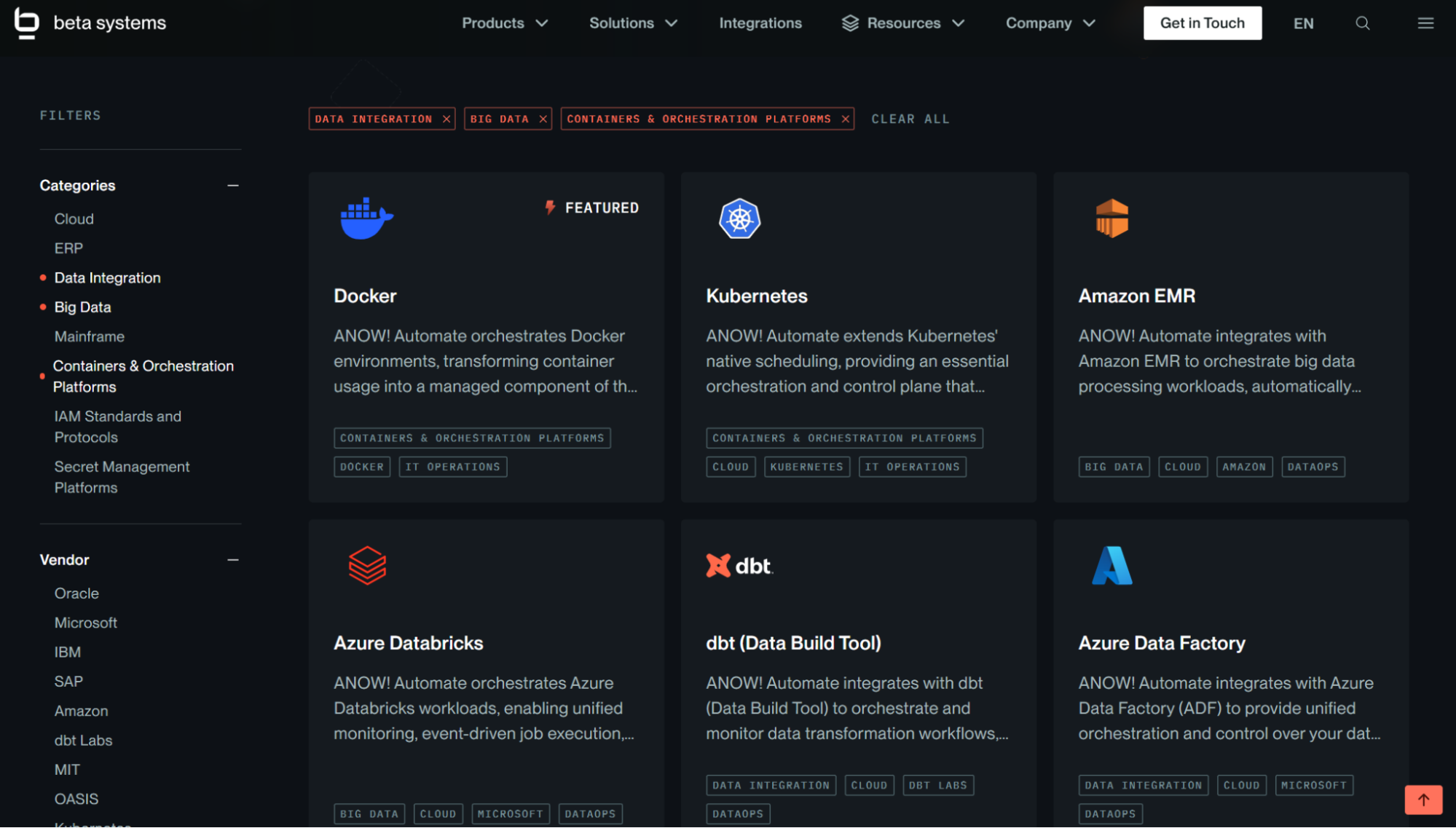
ANOW! Automate ships with more native connectors than any other WLA vendor, covering cloud hyperscalers (AWS, Azure, GCP), databases (Snowflake, BigQuery, Databricks), ERP systems (SAP), DevOps toolchains (GitHub, GitLab, Jenkins), containers (Kubernetes, Docker), and legacy schedulers.
This feature eliminates the custom integration work that frequently undermines Redwood deployments in heterogeneous environments.
AI-Powered PII Filtering & GDPR Compliance
The ANOW! Suite includes an AI-powered PII filter that automatically detects and redacts sensitive data across any workflow content.
For enterprises subject to GDPR, HIPAA, or DORA (EU financial regulation), this capability removes a significant compliance burden that Redwood's architecture does not natively address.
ANOW! Observe with Native OpenTelemetry Observability
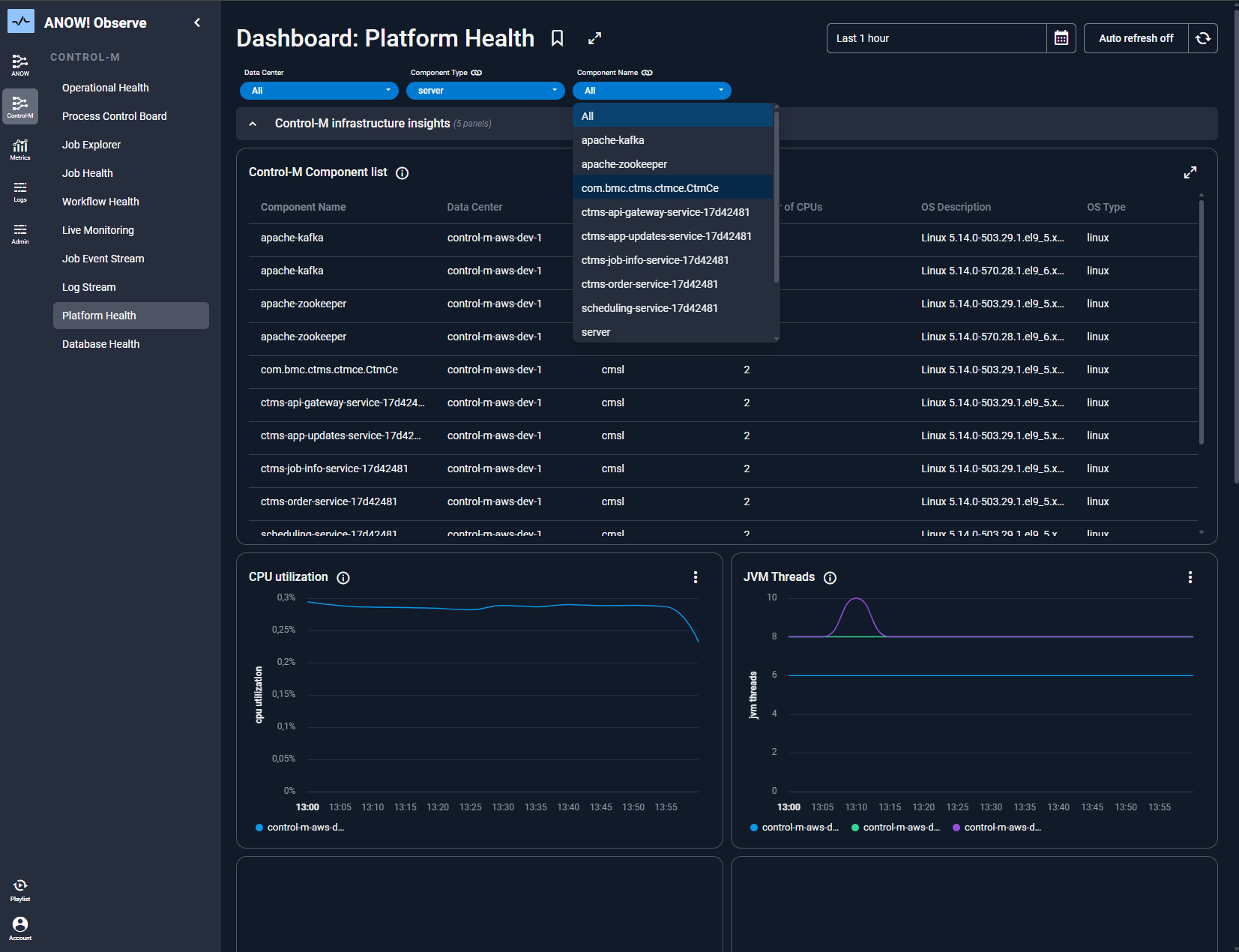
Beta Systems invested heavily in observability in 2025, embedding OpenTelemetry-native telemetry directly into its orchestration engine. This means real-time metrics, logs, and traces flow automatically, enabling AI-informed anomaly detection, SLA forecasting, and automated remediation without bolt-on tools.
Zero-Touch Migration & Flexible Deployment
ANOW!’s container-native Kubernetes architecture supports zero-downtime upgrades and zero-touch migration from legacy platforms, including BMC Control-M, Broadcom AutoSys, and Redwood itself.
Deployment is browser-based, and the platform can run on AWS, Azure, or GCP, or be deployed on-premises with no change in functionality.
Where Beta Systems’ ANOW! Suite Shines
European enterprises with data sovereignty requirements: Beta Systems is backed by a European vendor with 40 years of operational history and a higher customer retention rate than most other Gartner Magic Quadrant Leaders.
Enterprises replacing multiple legacy schedulers: ANOW! Suite’s single-platform approach consolidates workload automation, observability, and compliance tooling, eliminating point-tool sprawl that drives up TCO in Redwood deployments.
Complex hybrid environments: Native orchestration across on-premises, multi-cloud, mainframe, and SAP with a unified control plane is where ANOW! Suite outperforms Redwood’s cloud-native-first architecture.
Where Beta Systems’ ANOW Suite! Falls Short
Brand recognition outside Europe: Beta System has strong traction in EMEA but lower market visibility in North America and Asia/Pacific. Enterprises procuring via major GSIs may find ANOW! requires direct engagement with Beta Systems.
UI language coverage: The platform UI is currently available in English, Polish, and German, which may be a limitation for multinational deployments outside these language regions (a UI redesign is underway).
Customer Reviews
One user shares, “I really like that everything is in one place. It gives me a 'single point of control' for all my tasks and workflows, which makes it much easier to see what is happening in real-time.”
Another verified user praises, “I use ANOW! Suite as a centralized platform to manage and streamline my daily workflows. It helps me organize tasks, track progress, and maintain better visibility across ongoing activities. What I like most about ANOW! Suite is its ability to bring everything into one centralized platform. It makes task management and tracking very intuitive, improves visibility across workflows, and helps me stay organized.”
Who Beta Systems’ ANOW! Suite Is Best For
Enterprises in regulated industries with EU data sovereignty or GDPR/DORA compliance requirements
Organizations replacing BMC Control-M, Broadcom AutoSys/Automic, or Redwood RunMyJobs, seeking pricing transparency and no vendor lock-in
CDOs and Heads of IT Operations managing complex, cross-platform data pipelines and workloads across hybrid environments
2. BMC Control-M: Best for Enterprises With Mainframe + Multicloud Needs
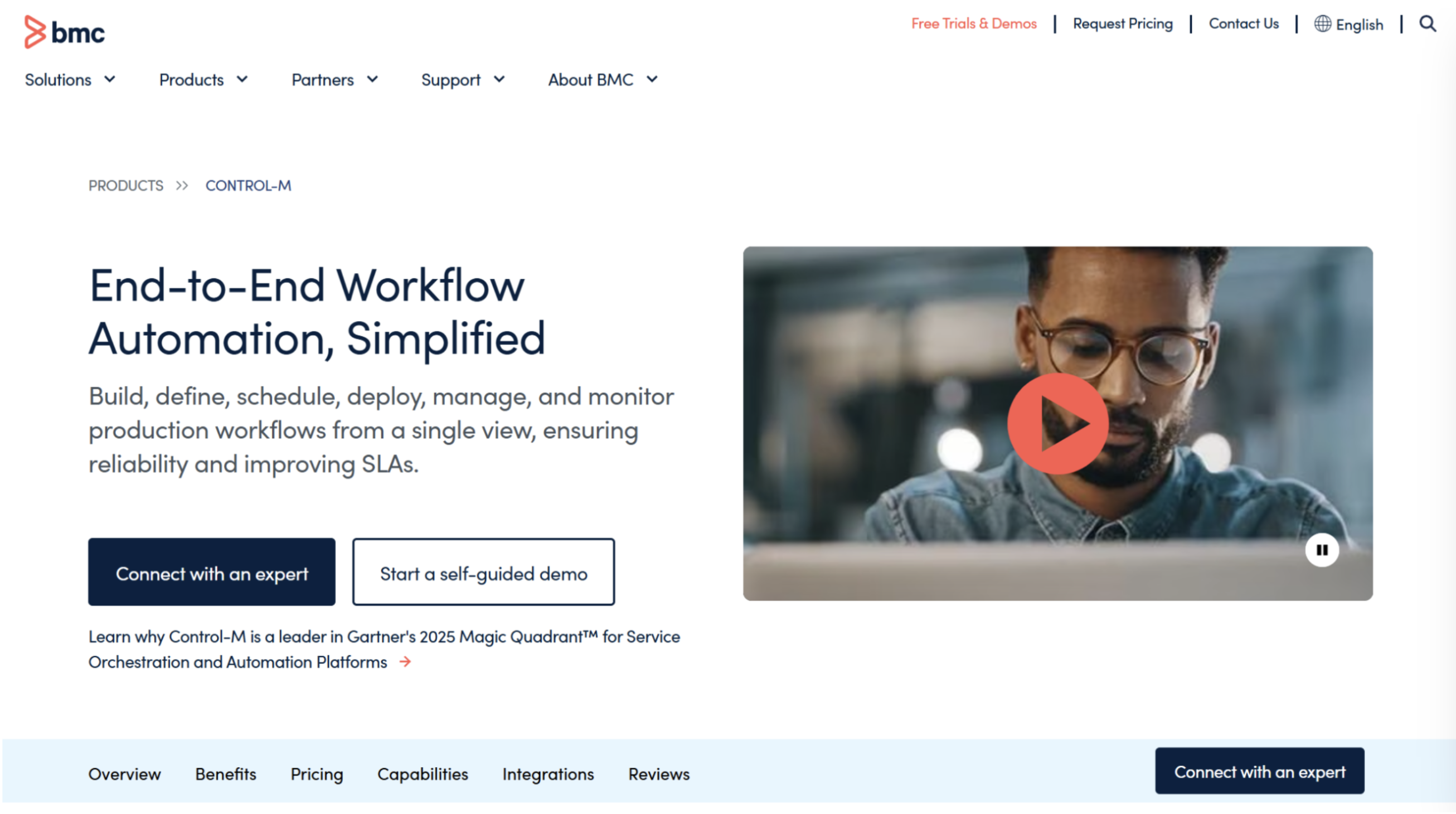
BMC Control-M is one of the most established workload automation platforms in the enterprise market. It provides orchestration across mainframes, multicloud environments, and DataOps pipelines through a unified interface, making it a natural point of comparison for any Redwood alternative evaluation.
Note:
In April 2025, BMC split into two independent companies: BMC and BMC Helix. While the transition has been relatively smooth, some customers have raised concerns about long-term integration between products across the two entities.
Key Features
Broad enterprise orchestration: Control-M’s unified view spans mainframe to multicloud, supporting mission-critical workload automation of business processes across on-premises, SaaS, and cloud environments.
Jett AI assistant: BMC’s embedded GenAI capability enables natural-language queries for workflows, anomaly detection, compliance checks, and troubleshooting.
DataOps pipeline support: Native AI/ML and DataOps pipeline orchestration capabilities are deeply integrated into Control-M's core platform.
Strong VAR and partner ecosystem: BMC serves enterprise clients worldwide through a mature partner network, including migration services for competitive replacements.
Where BMC Control-M Shines
Mainframe-to-multicloud orchestration: Control-M’s depth across legacy and modern environments is unmatched for enterprises that cannot afford a clean-slate migration.
Global enterprise support: A large, geographically diversified support and partner network means reliable coverage for complex, international deployments.
Where BMC Control-M Falls Short
High TCO: Pricing is enterprise-grade but difficult to justify for mid-market organizations or those with focused scheduling needs. Beta Systems consistently offers more competitive pricing for an equivalent scope of orchestration.
Company split uncertainty: The 2025 BMC/BMC Helix split has raised concerns about product integration and long-term support continuity, posing a risk factor for enterprises signing multi-year agreements.
AI autonomy gap: Jett provides GenAI assistance, but Control-M does not yet offer native AI agents for autonomous operational purposes, which limits its positioning for forward-looking automation strategies.
Customer Reviews
Shaik A. praises, “What I like best about Control-M is its powerful automation and centralized workflow management. It allows me to schedule, monitor, and manage jobs across multiple systems from a single interface, which makes operations much easier and more efficient.”
Shivaji B. warns, “The initial setup and configuration process can be somewhat complicated for new users. Additionally, the licensing costs are significantly higher compared to other tools.”
Who BMC Control-M Is Best For
Large enterprises with significant mainframe estates that need a unified control plane spanning legacy and modern cloud infrastructure
Organizations with existing BMC investment and mature administrator teams are comfortable with the platform's complexity and cost
3. Broadcom Automic Automation: Best for Enterprises in Broadcom Ecosystem
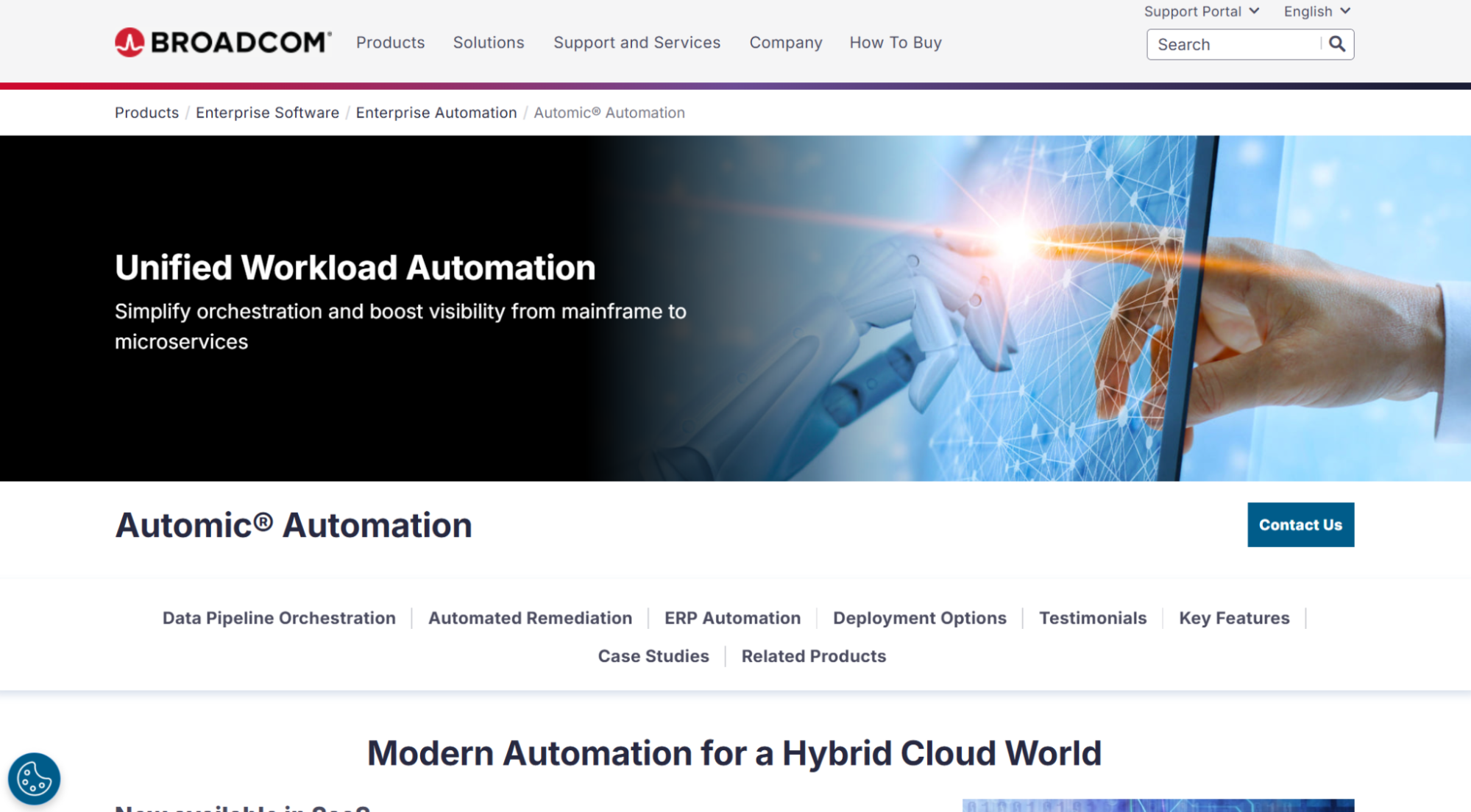
Broadcom Automic Automation (formerly CA Automic) is a full-stack workload automation and workflow orchestration platform serving enterprises across hybrid and multicloud environments. Broadcom’s 2025 investment focused on maturing automation-as-code capabilities for modern DevOps lifecycle management.
Key Features
Hybrid/multicloud orchestration: Automic supports workloads from mainframe to microservices with 100% feature parity across SaaS, on-premises, and container deployments.
AI-powered cross-vendor observability (AAI): Predictive SLA management and observability capabilities embedded across the platform.
Zero Downtime Upgrade: A notable operational feature that allows platform upgrades without disrupting running workloads, relevant for always-on enterprise environments.
Automation-as-code: Expanding jobs-as-code and CI/CD DevOps integration capabilities, with continued investment in 2025.
Where Broadcom Automic Shines
Industry vertical expertise: Dedicated expertise in financial services, retail, and manufacturing with vertical-specific sales teams and best practices.
Broad geographic support: Global sales and support across North America, EMEA, Asia/Pacific, and Latin America with 24/7 professional services coverage.
Where Broadcom Automic Falls Short
Renewal and licensing friction: Customer experience with Broadcom has been inconsistent, noting concerns about renewal negotiations and licensing flexibility. This is precisely the pain point driving many enterprises toward the ANOW! Suite which offers transparent pricing and no vendor lock-in by design.
Slower integration expansion: Broadcom has been relatively slow to add out-of-the-box support for emerging cloud services and DevOps tools compared to other Leaders like Beta Systems, which has 500+ native integrations, significantly outpacing Automic's current library.
High TCO barrier: The combination of licensing costs and operational overhead makes Automic difficult to justify outside large enterprise environments with existing Broadcom investment.
Customer Reviews
Sridhar K. praises Automic after 10 years of use, saying, “The workflow editor is user-friendly and flexible to build complex designs.”
Alfredo C. notes many pain points, including that “The debugger could be more analytical and descriptive. Dashboard-building features should offer more flexibility and options. Some processes could be more intuitive, and above all, troubleshooting could be more guided.”
Who Broadcom Automic Is Best For
Large enterprises currently running CA AutoSys or CA-7 that are evaluating a modernization path within the Broadcom ecosystem
Organizations with existing Broadcom licensing agreements where consolidation within the vendor portfolio is a priority
4. Stonebranch Universal Automation Center (UAC): Best Modern Commercial WLA Alternative
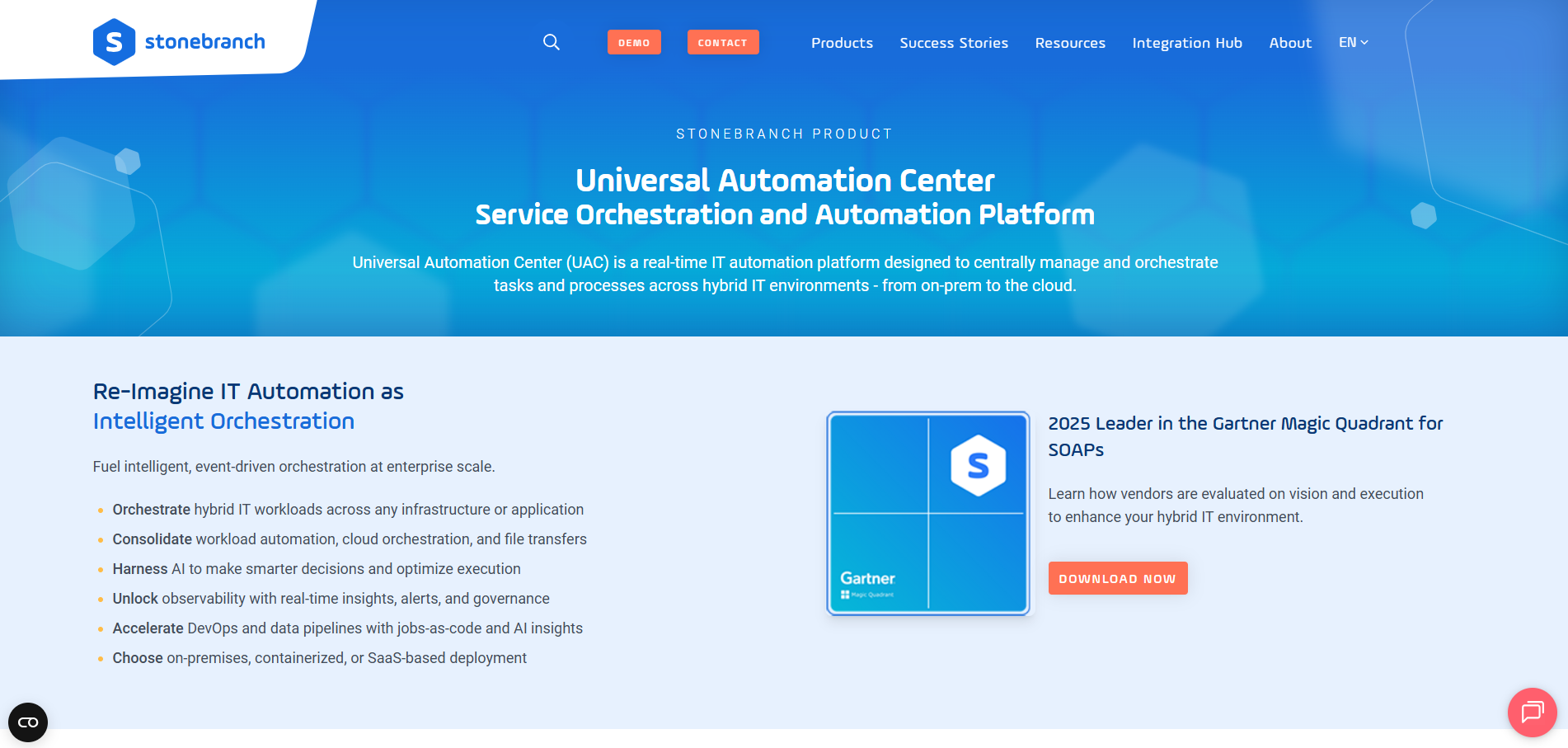
Stonebranch Universal Automation Center is a full-featured, cloud-native workload automation and workflow orchestration platform. Organizations already running Stonebranch UAC are unlikely to need to look elsewhere, as it covers most of what modern enterprise WLA demands.
Where Stonebranch becomes part of this comparison is in active replacement evaluations, where prospects comparing Redwood alternatives often include UAC on their shortlist alongside the ANOW! Suite.
Key Features
Intuitive low-code UI: UAC's web-based interface and drag-and-drop workflow designer enable non-developer teams to build complex automations without deep scripting knowledge.
Universal Portal: Launched in 2025, this self-service automation portal extends UAC access to end users across skill levels on any device.
Integration Capabilities: Stonebranch offers around 100 integrations available via Integration Hub
Where Stonebranch Shines
Migration from legacy platforms: Expert-led migration services are a genuine strength with customers transitioning from Redwood, Control-M, or AutoSys.
Modern data pipeline orchestration: The 2025 addition of dedicated data pipeline orchestration capabilities strengthens Stonebranch's positioning for DataOps-heavy environments.
Where Stonebranch Falls Short
EU data sovereignty: Stonebranch does not have the same European vendor positioning as Beta Systems. For organizations with strict EU data residency requirements, ANOW!'s native European sovereignty is a clear differentiator.
Native observability depth: While UAC provides monitoring capabilities, it does not match ANOW!'s native OpenTelemetry observability layer, which embeds real-time telemetry, SLA forecasting, and AI-powered PII filtering directly into the orchestration engine.
Early-generation architecture: UAC currently runs on its original software architecture, lacking the cloud-native benefits of more modern platforms.
Customer Reviews
Vinothkumar M. mentions, “The most valuable feature of the Stonebranch Universal Automation Center (UAC) is its superior scheduling and cross-platform integration capabilities, which have fundamentally transformed how we orchestrate our ETL workflows. Now, we have centralized, end-to-end control over every ETL job.”
Stephen E. notes, “My main problem was with the setup process. Although the knowledge base contains a lot of information, it can be somewhat difficult to navigate at times. There are definitely sections where, if you overlook something, you might find yourself stuck.”
Who Stonebranch Is Best For
Enterprises in active replacement evaluations comparing multiple modern WLA platforms alongside ANOW! and Control-M
DataOps-heavy organizations needing dedicated data pipeline orchestration alongside core WLA capabilities
5. Apache Airflow: Best for Engineering Teams Building Custom Data Pipelines
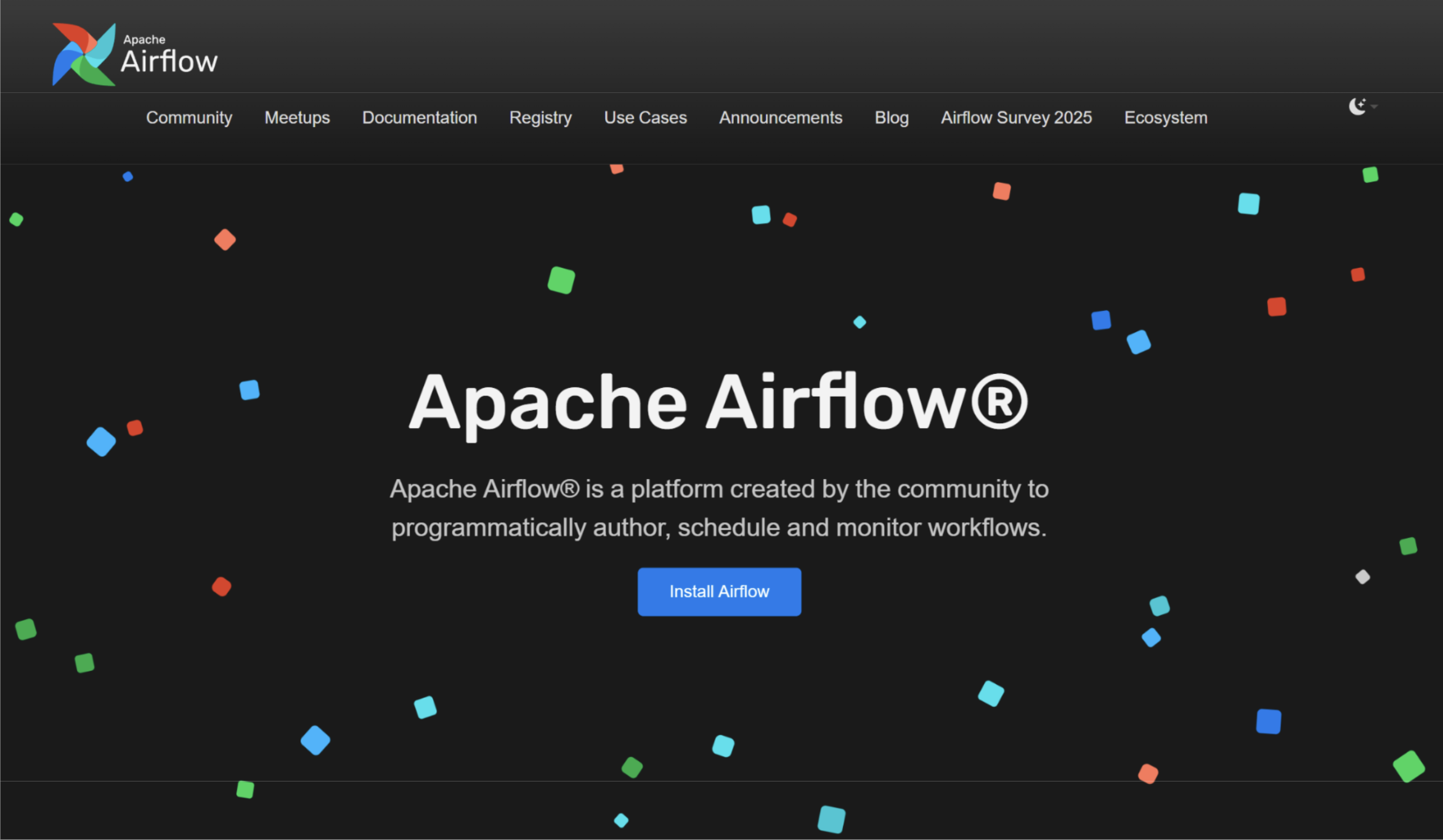
Apache Airflow is the most widely used open-source workflow orchestration framework in the data engineering community. It enables teams to define, schedule, and monitor data pipelines as Python-native Directed Acyclic Graphs (DAGs).
For teams with strong Python expertise, mature DevOps practices, and a focused data pipeline use case, Airflow is a serious tool. For enterprises with broader cross-platform workload automation needs, it's a different story.
Key Features
Python-native DAG definition: Workflows are defined as code, enabling full version control, testability, and CI/CD integration, which is a natural fit for engineering-first organizations.
Rich integration ecosystem: A large community of providers and operators covers most major cloud services, databases, and data processing frameworks.
Scalable distributed execution: Celery and Kubernetes executors support distributed task execution at scale.
Managed Airflow options: AWS MWAA, Google Cloud Composer, and Astronomer offer managed Airflow deployments that reduce infrastructure overhead.
Where Apache Airflow Shines
Data engineering and ML pipeline orchestration: Airflow excels at coordinating data ingestion, transformation, and ML training workflows, especially in cloud-native, Python-first environments.
No licensing cost: For teams with the engineering capacity to build and maintain Airflow infrastructure, the absence of licensing costs can be compelling.
Where Apache Airflow Falls Short
Not a workload automation platform: Airflow is built for data pipelines, not enterprise workload automation. It lacks native support for complex cross-system job scheduling, SLA management, event-driven automation, or mainframe/legacy integration, capabilities that define the WLA category.
Operational overhead at enterprise scale: Managing Airflow infrastructure, upgrading DAG dependencies, and maintaining production reliability requires dedicated engineering resources. For enterprises replacing Redwood, this overhead often exceeds the cost of a commercial platform.
No enterprise SLA or support: Open-source Airflow comes with no vendor SLA, support contract, or compliance certification, a disqualifier for regulated industries.
Limited visibility and observability: Airflow's native monitoring is basic by enterprise standards. Tools like ANOW! Observe with OpenTelemetry-native telemetry and AI-driven SLA forecasting to address use cases that Airflow cannot.
Customer Reviews
Salman K. praises, “What I like most about Airflow is its flexibility and the number of features for building workflows using DAGs. It is very useful for managing complex pipelines with dependencies. Integration with different systems is also strong. Once setup is done, it works reliably and is used frequently in day-to-day operations.”
Akash M. warns, “For beginners, Apache Airflow can be complex to set up, especially with Docker. At times when a DAG is updated, the UI can feel slow.”
Who Apache Airflow Is Best For
Engineering-led data teams with strong Python skills and focused data pipeline orchestration needs
Organizations not yet at enterprise WLA scale who want to start with open-source before evaluating commercial platforms
Reasons to Consider an Alternative to Redwood Software
Here are the main reasons you should consider switching from Redwood to another solution.
Strict Data Sovereignty and Compliance Requirements
Redwood's primary delivery model (multitenant SaaS) creates real friction for organizations subject to EU data residency rules, DORA (Digital Operational Resilience Act), or GDPR. Self-hosted options exist, but they're not the platform's native architecture.
Beta Systems’ products were designed from the ground up for European digital sovereignty, with deployment flexibility that puts your data exactly where it needs to be.
Pricing Predictability at Renewal
Customers have expressed frustration with Redwood’s renewal negotiations and cost increases. For enterprises with growing workloads, Redwood’s consumption-based pricing can lead to budget surprises at renewal.
The ANOW! Suite’s enterprise pricing model is built for transparency, with no per-job ratcheting and no surprise uplift at renewal.
Hybrid and Legacy Integration Depth
Redwood’s RunMyJobs is a strong cloud-first platform. Still, enterprises with significant on-premises infrastructure, mainframe workloads, or deeply heterogeneous IT landscapes often find their integration depth insufficient for full hybrid orchestration.
On the other hand, the ANOW Suite’s 500+ native connectors (including deep support for SAP, IBM Z, legacy schedulers, and modern cloud services) directly address this gap. For enterprise workload automation at scale, breadth of integration is a critical differentiator.

Integration Architecture
Discover Your Integration Possibilities
Connect your Beta Systems platform with the enterprise applications, APIs, and services that you already use. Streamline data exchange and orchestrate end-to-end workflows across your IT landscape.
Observability Built for Automation
Redwood's AI observability offering (Redwood Insights) was introduced in 2025 and is a promising step forward.
ANOW! Observe, however, is purpose-built for workload automation environments, embedding OpenTelemetry-native telemetry directly into the orchestration engine and offering AI-powered SLA forecasting, anomaly detection, and automated PII filtering.
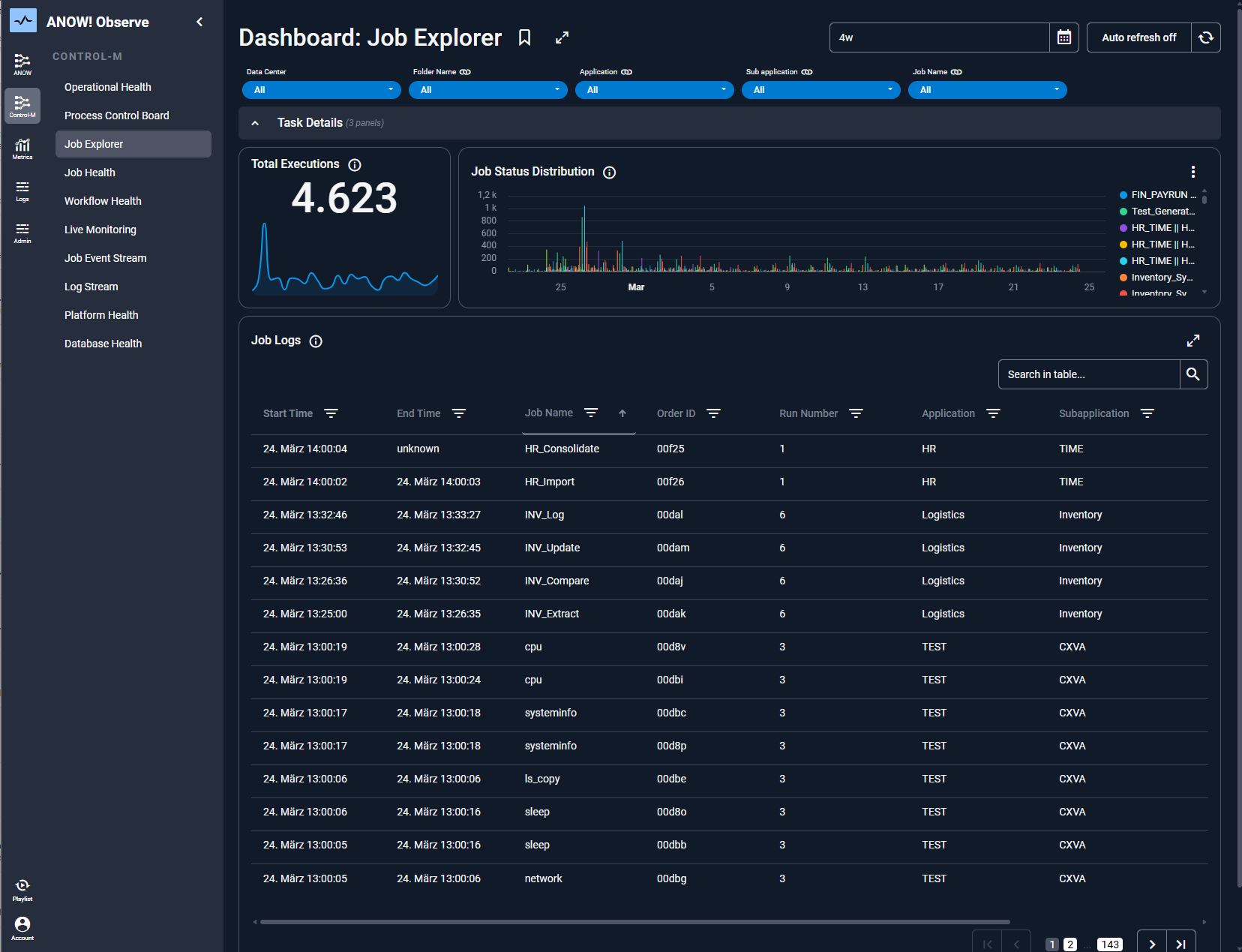
For enterprises that need real observability and not just surface-level dashboards, the architectural difference truly matters.
What's Next?
The workload automation market is at an inflection point. By 2029, Gartner projects that 75% of SOAP workflows will leverage generative AI to increase troubleshooting efficiency by 50%, a trajectory that makes platform selection in 2026 a strategic decision, not just a procurement exercise.
If you're evaluating Redwood Software alternatives:
Enterprises in regulated industries with EU data residency requirements or GDPR/DORA obligations → Beta Systems’ ANOW! Suite is the natural fit, with native European sovereignty, transparent pricing, and above-average customer retention.
Enterprises replacing BMC or Broadcom on their way to ANOW! → The CA replacement pathway and zero-touch migration tooling make ANOW! the fastest path to modernization.
Engineering teams outgrowing Airflow → Evaluate ANOW!'s Apache Airflow replacement resources before committing to a commercial platform shortlist.
Book a demo with Beta Systems to see where the ANOW! Suite fits against your specific environment, and find out whether the platform delivers what Redwood couldn’t.
Replace Redwood Without the Risk
See how ANOW! enables a zero-downtime migration with full visibility across hybrid workloads and no vendor lock-in.
:quality(50))
:quality(50))
:quality(50))