Video

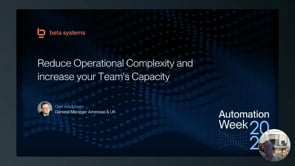
Reducing Operational Complexity and Increasing your Team's Capacity

gert-adolphsen-portrait.jpg
Gert Adolphsen
General Manager Americas

Artificial Intelligence (AI), Machine Learning, and accelerated digital transformation initiatives are driving a substantial increase in IT workloads. As staffing levels remain constrained, IT leaders are under growing pressure to optimize operations and improve efficiency.

To successfully manage this shift, organizations must proactively reduce operational complexity and free up internal resources. This session presents a practical, results-oriented approach, supported by real-world use cases, demonstrating how to streamline processes and effectively manage growing demands with ANOW! Automate.

Video Information:

  • Language: English

  • Subtitles: English, German

Video thumbnail

Author

gert-adolphsen-portrait.jpg
Gert Adolphsen
General Manager Americas

Gert is a senior manager with more than 30 years of practical experience in workflow automation. He has developed strategies and driven innovation in leading companies. He has established and expanded branches throughout Europe and the United States, developing automation solutions that streamline business processes and increase operational efficiency in medium-sized and large companies. At Beta Systems, he leads the business development and sales teams in North, Central and South America, helping companies benefit from state-of-the-art automation, orchestration and observability platforms.

Further Resources

Blog Article
beta-systems-featured-images-1.png

DevOps Automation Guide: What It Is & How It Works (2026)

How do you bridge the gap between “working faster” and achieving true enterprise-scale agility? While the principles of DevOps haven’t changed, the complexity of 2026’s hybrid environments has. Writing scripts is just one element. DevOps also goes even further and into creating a seamless, self-healing ecosystem. Let’s dive into what DevOps automation looks like today and how modern orchestration is redefining the boundaries of the software development lifecycle.
Blog Article
blog-post-hybrid-cloud-orchestration.png

Hybrid Cloud Orchestration: Complete Guide (2026)

Managing workloads across private clouds, public clouds, and on-premises infrastructure without a unified control layer is like running a logistics operation across five countries with no shared dispatch system. Every team moves fast but nothing moves together. Hybrid cloud orchestration solves exactly this. It coordinates workloads, data pipelines, and services across your entire hybrid environment, so execution is consistent, dependencies are tracked, and teams have full visibility in real time. Keep reading to learn more about what hybrid cloud orchestration is, why it’s difficult to get right at enterprise scale, how it works in practice, and which platforms are built to handle it.
Blog Article
blog-post-workflow-automation.png

Enterprise Workflow Tools: 7 Best Platforms (2026)

If your organization runs hundreds of automated jobs across cloud, on-premises, and mainframe systems, you need more than a basic scheduler. You need an enterprise workflow automation platform that manages complex dependencies, enforces SLA compliance, and gives your operations team real-time visibility into every process. The tools in this list range from purpose-built workload automation platforms to ITSM-native engines and data pipeline orchestrators. Each is included for the unique value add each brings to the table.