:quality(50))
The market is growing fast. According to the Gartner Magic Quadrant report, the SOAP market reached $3.8 billion in revenue in 2024 and is projected to hit $4.9 billion by 2028 at a 7.7% CAGR. By 2029, Gartner projects that 90% of organizations delivering workload automation will be using service orchestration and automation platforms to manage workloads and data pipelines across hybrid environments.
This guide compares the best cloud scheduling software available in 2026, covering enterprise job scheduling software that goes far beyond basic job scheduling, including orchestration, observability, and hybrid cloud support.
5 Best Cloud Scheduling Software: A quick overview
| Deployment | Best For | Cloud-Native | Hybrid Support | Pricing Model | |
|---|---|---|---|---|---|---|
Beta Systems ANOW! Suite | SaaS, On-Prem, Private Cloud | Enterprise WLA replacement |
|
| Custom enterprise | |
BMC Control-M | SaaS, On-Prem | Large enterprise scheduling |
|
| High TCO, complex | |
Broadcom AutoSys | SaaS, On-Prem, Container | BFSI, large enterprise |
|
| Enterprises already in the Broadcom ecosystem | |
Apache Airflow | Self-hosted / Managed | Data engineering teams |
|
| Open-source + infra | |
AWS EventBridge / Batch | SaaS (AWS-only) | AWS-native workflows |
|
| Consumption-based |

 Partial
1. Beta Systems ANOW! Suite: Best Overall Cloud Scheduling Platform for Enterprise
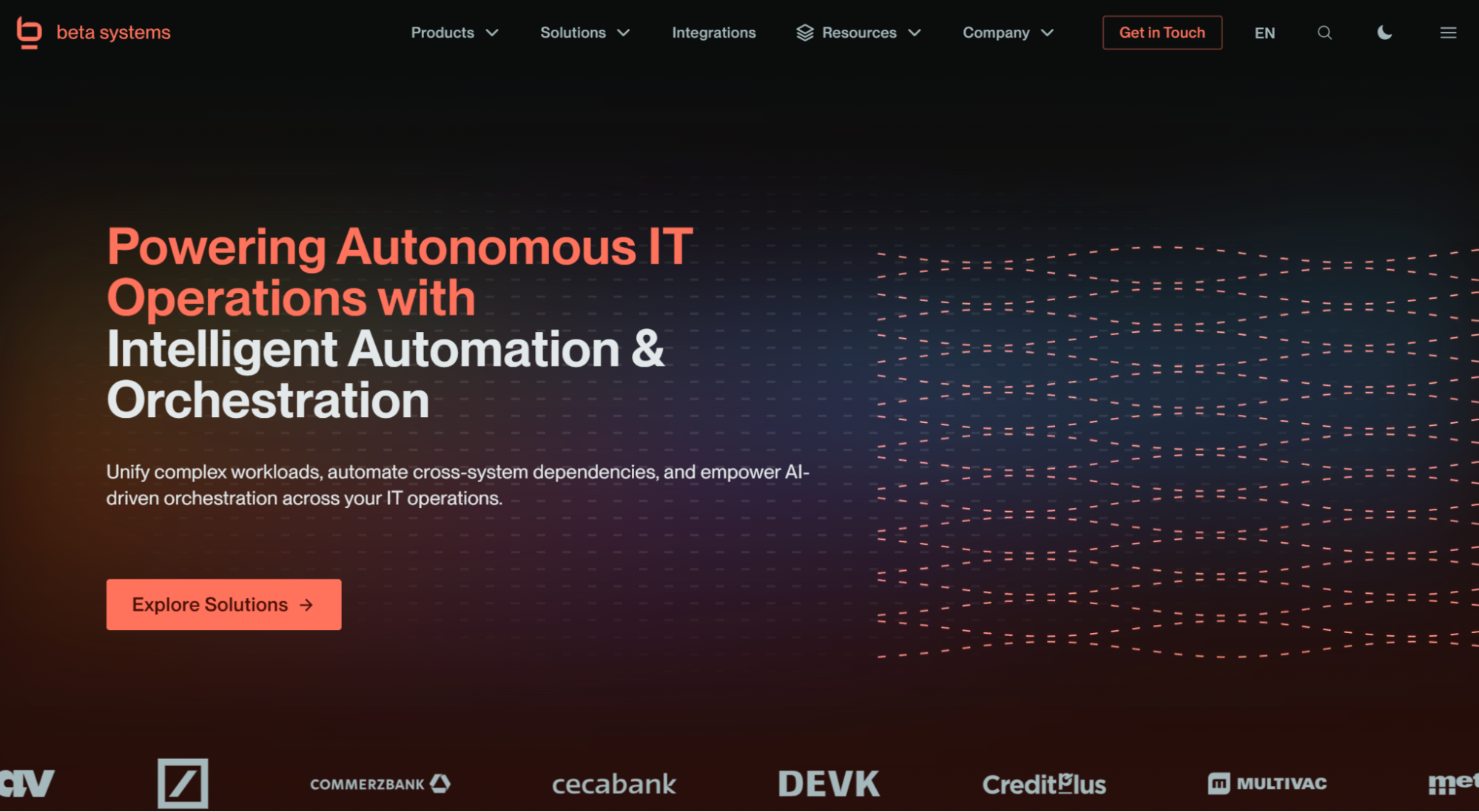
Beta Systems ANOW! Suite is a cloud-native workload automation and orchestration platform purpose-built for enterprises running complex, hybrid, and multi-cloud environments.
Unlike legacy schedulers that bolt cloud features onto decades-old architecture, ANOW! was designed from inception as a microservices-based, container-native platform, meaning scalability, zero-downtime upgrades, and event-driven execution are architectural realities, not marketing claims.
Recognized as a Leader by Gartner’s Magic Quadrant, Beta Systems stands out for its higher-than-average customer retention rate, particularly in mission-critical sectors like finance, government, and insurance. That's a meaningful signal for risk-averse enterprise buyers evaluating long-term platform stability.
The ANOW! Suite combines workload automation (ANOW! Automate) with built-in observability (ANOW! Observe), delivering a unified platform that eliminates the need for separate monitoring tools layered on top of your scheduler.
Beta Systems’ ANOW! Suite Key Features
Here are the top features to know.
500+ native out-of-the-box integrations
Beta Systems offers the most of any WLA vendor, spanning Cloud (AWS, Azure, GCP), DevOps (GitHub, GitLab, Azure DevOps), Data (Snowflake, Databricks, BigQuery, DBT, Airflow), ERP (SAP S/4HANA, S/4 HANA Cloud, R/3), ITSM (ServiceNow, Jira), Containers (Kubernetes, Docker), and legacy systems.
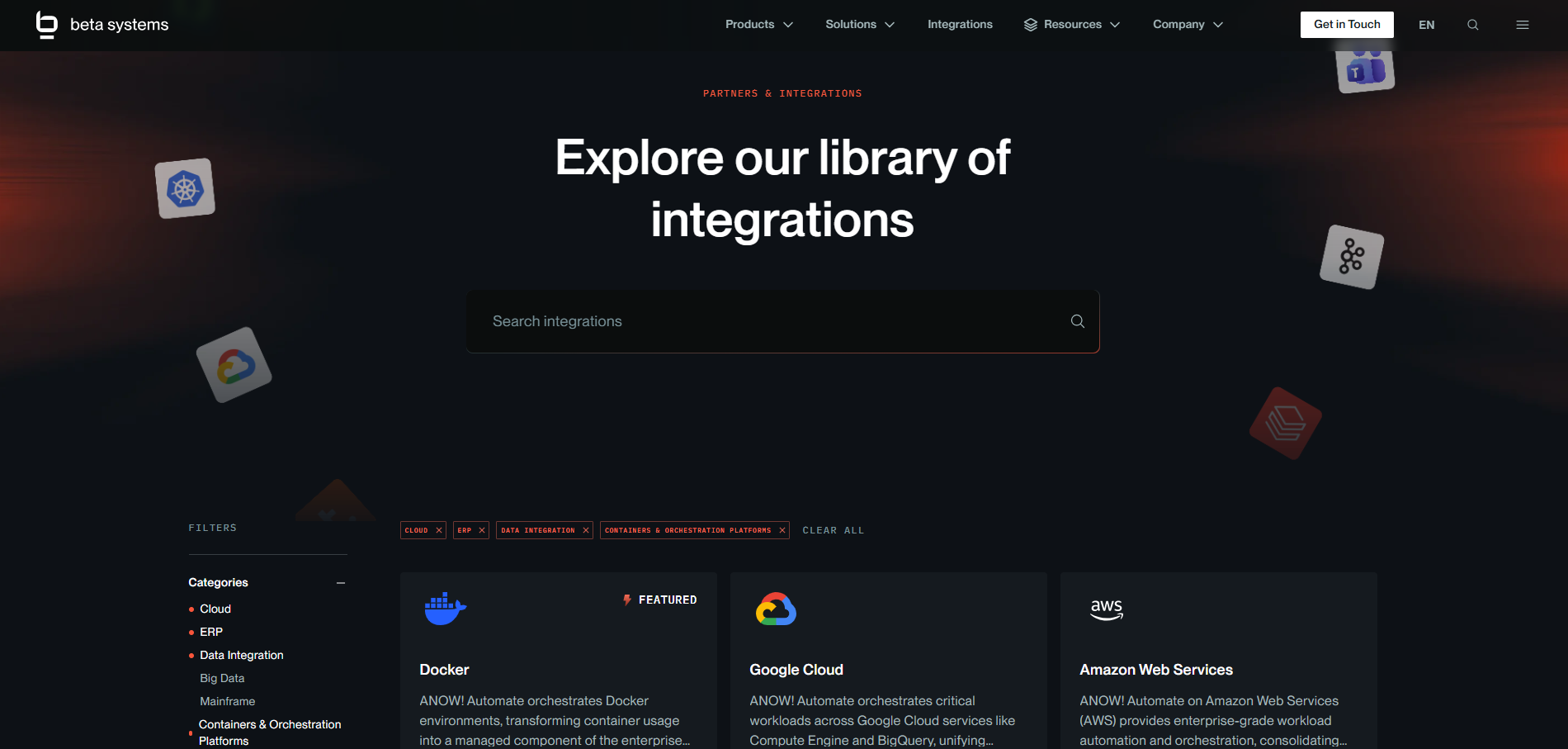
Infinite Integration capability
Beyond standard connectors, ANOW! supports APIs, CLI, scripting, and JavaScript-based integration logic to connect virtually any commercial, open-source, or proprietary system.
Various Scheduling Options with Contextual Intelligence
Beta Systems offers event-driven, time-based, and dependency-based scheduling across on-premises, cloud, and hybrid environments from a single control plane. You can also unlock multi-level dynamic variables and sensor-driven inputs that adapt workflows to real-time conditions, generating hundreds of thousands of unique workflow definitions with minimal configuration.
OpenTelemetry-native Observability
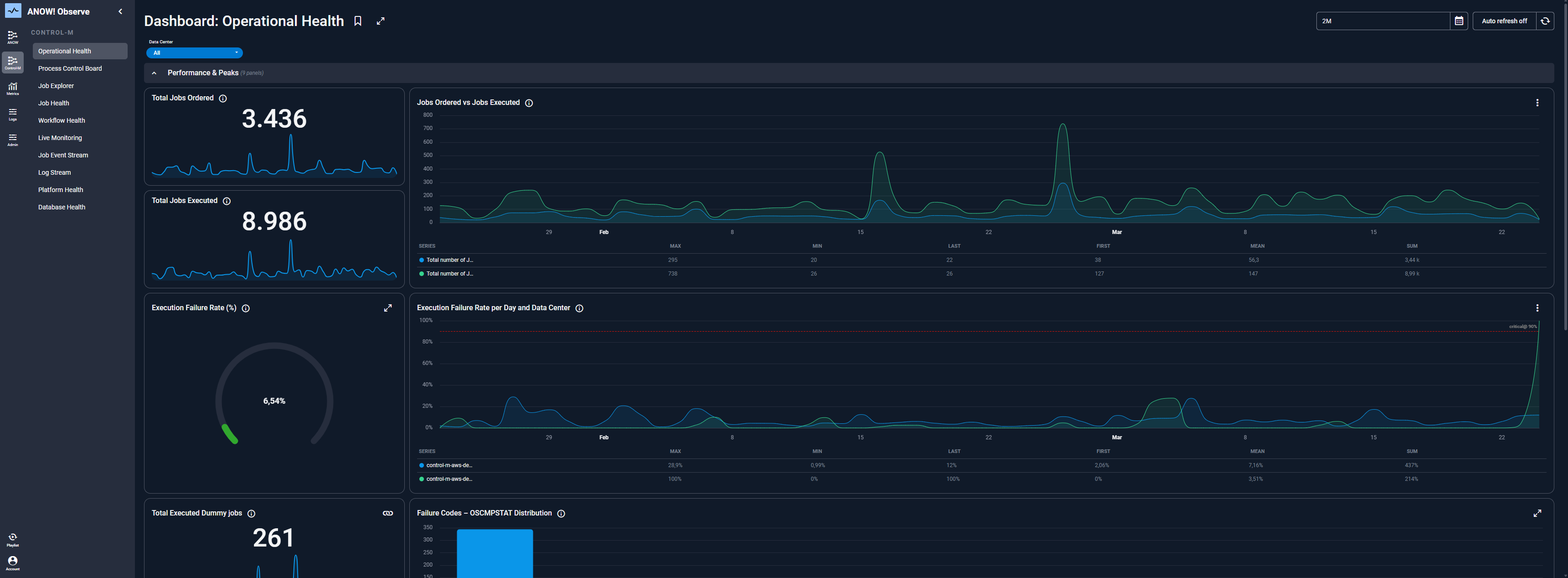
With ANOW! Observe, vendors unlock real-time metrics, logs, and traces (MLT) embedded directly into the orchestration engine, enabling AI-informed anomaly detection and SLA risk forecasting.
Enterprise-Grade Security
Take advantage of multi-level access control (domain, module, action, row-level tag-based security), Principle of Least Privilege enforcement, four-eyes approval for high-risk actions, ISO 27001-compliant infrastructure, and automated SBOM via CI/CD.
Where Beta Systems’ ANOW! Suite Shines
Enterprise legacy replacement: The ANOW! Suite is designed explicitly for organizations migrating from BMC Control-M, Broadcom AutoSys, or Redwood. Zero-touch migration capabilities and dedicated migration toolkits dramatically reduce time-to-value.
Hybrid and multi-cloud orchestration at scale: A single platform that coordinates workloads spanning mainframe, on-premises, AWS, Azure, and GCP without cloud vendor lock-in. The ANOW! Suite is certified as an AWS and Azure co-sell partner, with native alliances covering Google Cloud as well.
Data sovereignty and European compliance: As a European vendor with dedicated, localized deployment options, Beta Systems is the natural choice for organizations subject to DORA, GDPR, or sovereignty mandates, areas where US-headquartered vendors cannot match the structural guarantees.
→ Explore the workload automation and orchestration hub for migration resources.
Where Beta Systems’ ANOW! Suite Falls Short
Global brand recognition is still growing, but Beta Systems' customer base and brand awareness remain concentrated in Europe. Organizations in North America or Asia/Pacific will find a smaller local partner ecosystem and less publicly available community content compared to vendors like BMC or Broadcom, though active expansion is underway.
Less suited for SMEs with simple needs: ANOW! is engineered for large enterprises managing thousands of servers and complex, interconnected workflows. Organizations with basic or narrow scheduling requirements may find the platform has more capabilities than they need.
Customer Reviews
A verified user praises, “I use ANOW! Suite as a centralized platform to manage and streamline my daily workflows. It helps me organize tasks, track progress, and maintain better visibility across ongoing activities. What I like most about ANOW! Suite is its ability to bring everything into one centralized platform. It makes task management and tracking very intuitive, improves visibility across workflows, and helps me stay organized.”
Another user shares, “I really like that everything is in one place. It gives me a 'single point of control' for all my tasks and workflows, which makes it much easier to see what is happening in real-time.”
Who Beta Systems’ ANOW! Suite Is Best For
Enterprise IT Operations and I&O leaders replacing legacy WLA platforms (BMC, Broadcom, Redwood) due to price increases or inadequate cloud support.
CIOs and CDOs in BFSI, manufacturing, and retail who need a single orchestration plane across hybrid IT with built-in compliance and observability.
European enterprises with data sovereignty, DORA, or GDPR requirements that demand a trusted European vendor with localized deployment options.
2. BMC Control-M: Best for Large Enterprises Already in the BMC Ecosystem
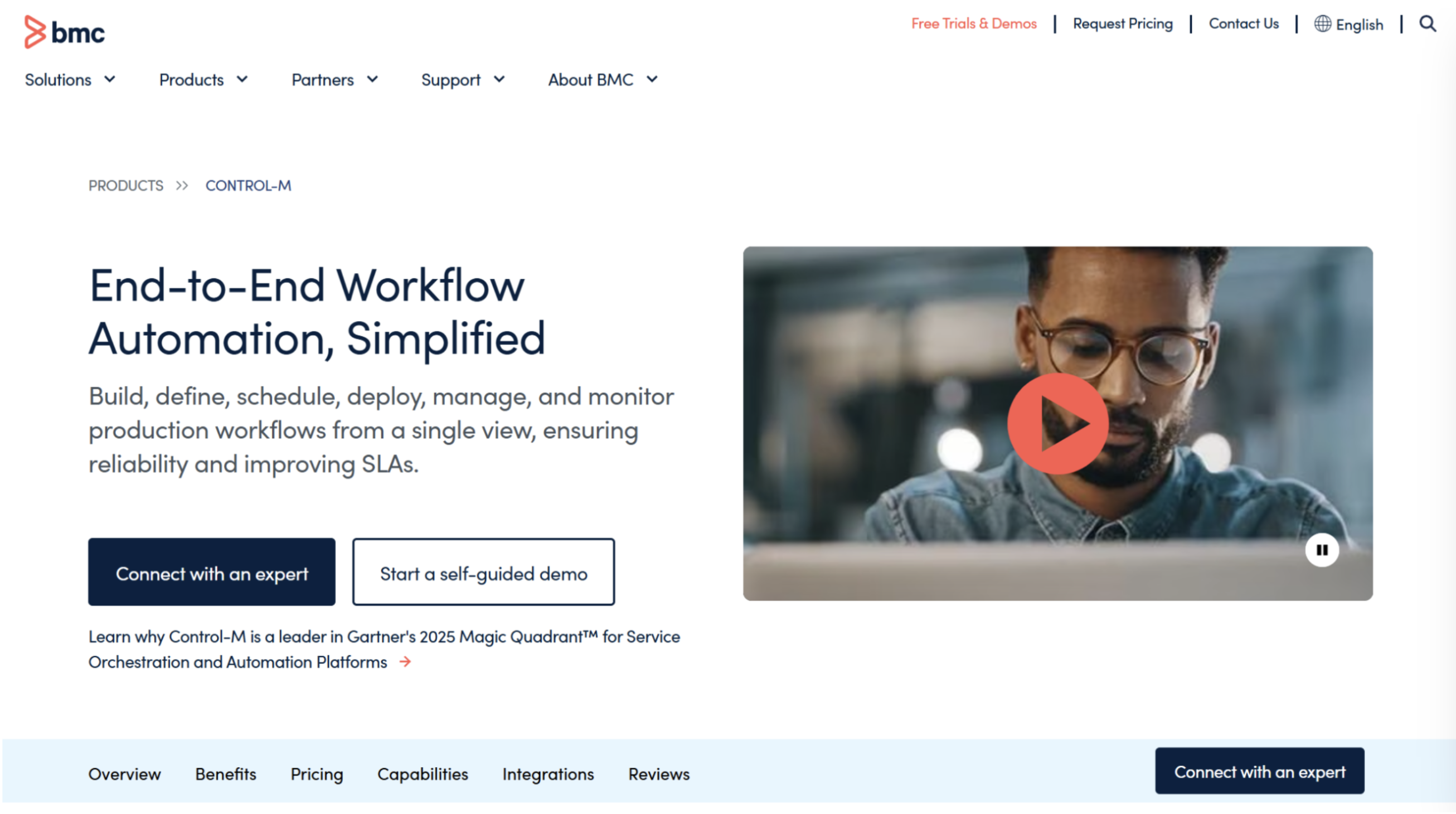
BMC Control-M is one of the longest-established enterprise workload automation platforms on the market, available as self-hosted software or SaaS. It offers broad scheduling capabilities spanning mainframe, multicloud, and AI/ML DataOps pipelines, and is backed by a large global partner network and regional support teams.
If you're a current Control-M customer evaluating alternatives, Beta Systems has a dedicated BMC Control-M replacement guide that outlines the migration path to ANOW!.
Key Features
Unified View: Building, running, and managing workloads across self-hosted and SaaS deployments
Jett AI assistant: Embedded GenAI for natural language workflow queries, anomaly detection, and compliance auditing
Broad integration library: For mainframe, cloud-native services, and AI/ML pipelines
Enterprise-grade geographic support: With a global VAR and partner program
Where BMC Control-M Shines
Proven scale: Trusted by some of the world's largest enterprises across highly regulated industries.
Comprehensive orchestration breadth: Mainframe to multicloud workloads managed from a unified interface.
Where BMC Control-M Falls Short
High TCO: Licensing and skilled administrator costs are significant. Can be difficult to justify for organizations with less complex scheduling needs.
Post-split uncertainty: The 2025 split of BMC into BMC and BMC Helix has raised customer concerns about future support integration between products from the two entities.
No native AI agents: Control-M's Jett offers GenAI Q&A assistance but does not yet provide autonomous operational AI agents.
Customer Reviews
Subrajit B. praises, “Mostly I like how it simplifies complex job dependencies and ensures SLA must meet and integrate with cross-cloud platforms, making operations more efficient and reliable.”
Shivaji B. warns, “The initial setup and configuration process can be somewhat complicated for new users. Additionally, the licensing costs are significantly higher compared to other tools.”
Who BMC Control-M Is Best For
Large enterprises with existing BMC investments and a preference to stay within that ecosystem
Organizations with mainframe-to-cloud hybrid requirements that need proven, cross-platform scheduling support
3. Broadcom Automic Automation: Best for Enterprises with Existing Broadcom Contracts
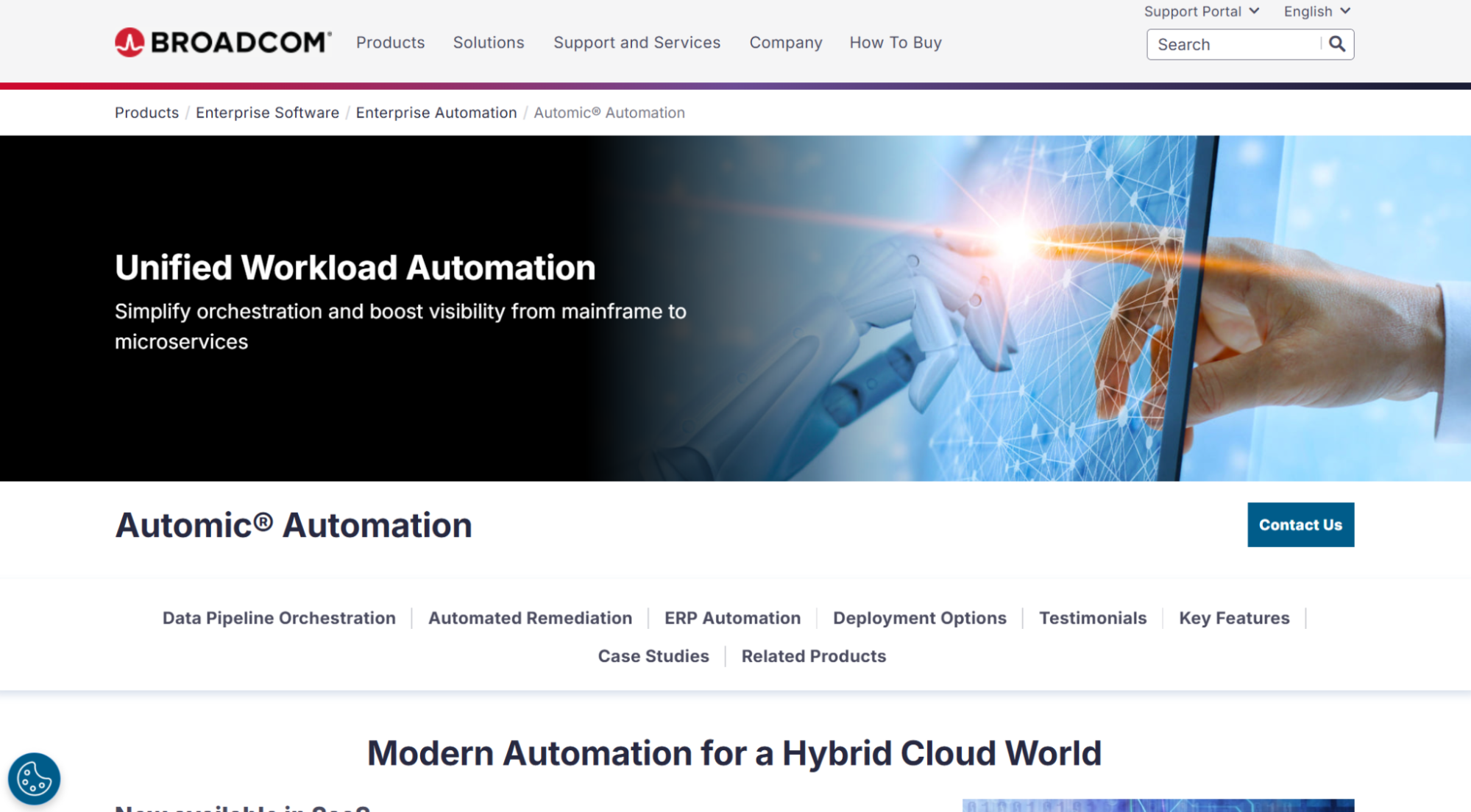
Broadcom Automic Automation provides workload automation and workflow orchestration for digital businesses across distributed, hybrid environments. It can be deployed on-premises, as containers, or as SaaS, with full feature parity across all three.
However, customers have consistently flagged pricing opacity and inconsistent post-acquisition support experiences as significant pain points.
Key Features
Zero Downtime Upgrade: Great for continuous availability during platform updates
AAI (Automic AI): For cross-vendor observability, predictive SLA management, and anomaly detection
Broad hybrid orchestration: From mainframe to microservices within a single platform
Action Pack Builder: For custom integrations where official connectors don't exist
Where Broadcom Automic Shines
Established BFSI and manufacturing footprint: Deep vertical expertise and dedicated sales teams for regulated industries.
Zero Downtime Upgrades: Genuine architectural strength for enterprises requiring always-on availability.
Where Broadcom Automic Falls Short
Customer experience friction: Gartner reports inconsistent renewal negotiations and variable licensing flexibility. Broadcom recorded a lower 12-month retention rate than other Leaders in the 2025 MQ.
Slow integration expansion: Broadcom lags peers in adding official out-of-the-box support for emerging cloud services and DevOps tools. Custom integrations via Action Pack Builder shift maintenance burden to customers.
If those integration and customer experience issues are a concern, AutoSys alternatives are worth comparing.
Customer Reviews
Sridhar K. praises Automic after 10 years of use, saying, “The workflow editor is user-friendly and flexible to build complex designs.”
Sowmya G. laments, “The server interface is a little hard to use in the beginning. Sometimes it is so slow that the technician has no idea what is happening. Sometimes it's hard to find the error because it will not stop execution even if one job fails in the whole workflow. We need to capture everything from the last report, as we were unable to see the user interface.”
Who Broadcom Automic Is Best For
Large enterprises in DACH and BFSI with existing Broadcom contracts and deeply embedded AutoSys or Automic deployments.
Organizations with near-term hybrid orchestration needs that are tolerant of high TCO in exchange for architectural breadth.
4. Apache Airflow: Best for Data Engineering Teams Running Python-Native Pipelines
Apache Airflow is the most widely used open-source workflow orchestration framework in data-heavy engineering environments. Originally developed at Airbnb and now an Apache Software Foundation project, it is the de facto standard for teams building Python-native data pipelines using Directed Acyclic Graphs (DAGs).
Note:
Airflow appears on virtually every cloud scheduling evaluation list because of its ubiquity across cloud ecosystems, not because it is best in class for enterprise workload automation. The distinction matters.
For organizations running Airflow today and evaluating a broader WLA platform, Beta Systems has published a detailed analysis of Apache Airflow alternatives.
Key Features
Python-native DAG-based workflow definitions: Familiar and flexible for data engineers
Broad integration ecosystem: This is secured via community-maintained providers (AWS, GCP, Azure, Databricks, Snowflake, etc.)
Managed Airflow available: Via AWS MWAA, Google Cloud Composer, and Astronomer
Active open-source community: Offering extensive documentation and public operator libraries
Where Apache Airflow Shines
Data pipeline orchestration: Strong fit for data engineering teams that own their pipelines end-to-end and are comfortable with Python-based configuration.
Community and ecosystem: A massive library of publicly maintained integrations and operators built by the global data engineering community.
Where Apache Airflow Falls Short
Operational overhead at enterprise scale: Airflow requires dedicated engineering resources to manage, monitor, upgrade, and scale, costs that are often underestimated during initial adoption.
No native enterprise WLA features: No built-in SLA management engine, no mainframe connectivity, no ITSM integration, no enterprise security model beyond basic RBAC, and no hybrid cloud orchestration spanning non-cloud workloads.
Scheduling model limitations: Airflow's DAG-based model is optimized for batch data pipelines, not the complex job dependency chains, event-driven triggers, or real-time orchestration that enterprise IT environments demand.
Customer Reviews
Sachin G. praises, “The UI is also incredibly detailed; when a complex pipeline fails at 3:00 AM, the tree view and the ability to dig directly into the logs of a specific failed task save us an immense amount of troubleshooting time. The open-source community is massive, so if you are trying to connect Airflow to a database or a cloud service, chances are a robust provider package already exists.”
Akash M. warns, “For beginners, Apache Airflow can be complex to set up, especially with Docker. At times when a DAG is updated, the UI can feel slow.”
Who Apache Airflow Is Best For
Data engineering teams building and owning Python-native ETL and ELT pipelines, with the engineering resources to manage platform operations.
Organizations that need Airflow's flexibility but want managed hosting should evaluate Astronomer or cloud-native managed Airflow offerings.
5. AWS EventBridge / AWS Batch: Best for Teams Running AWS-Only Workloads
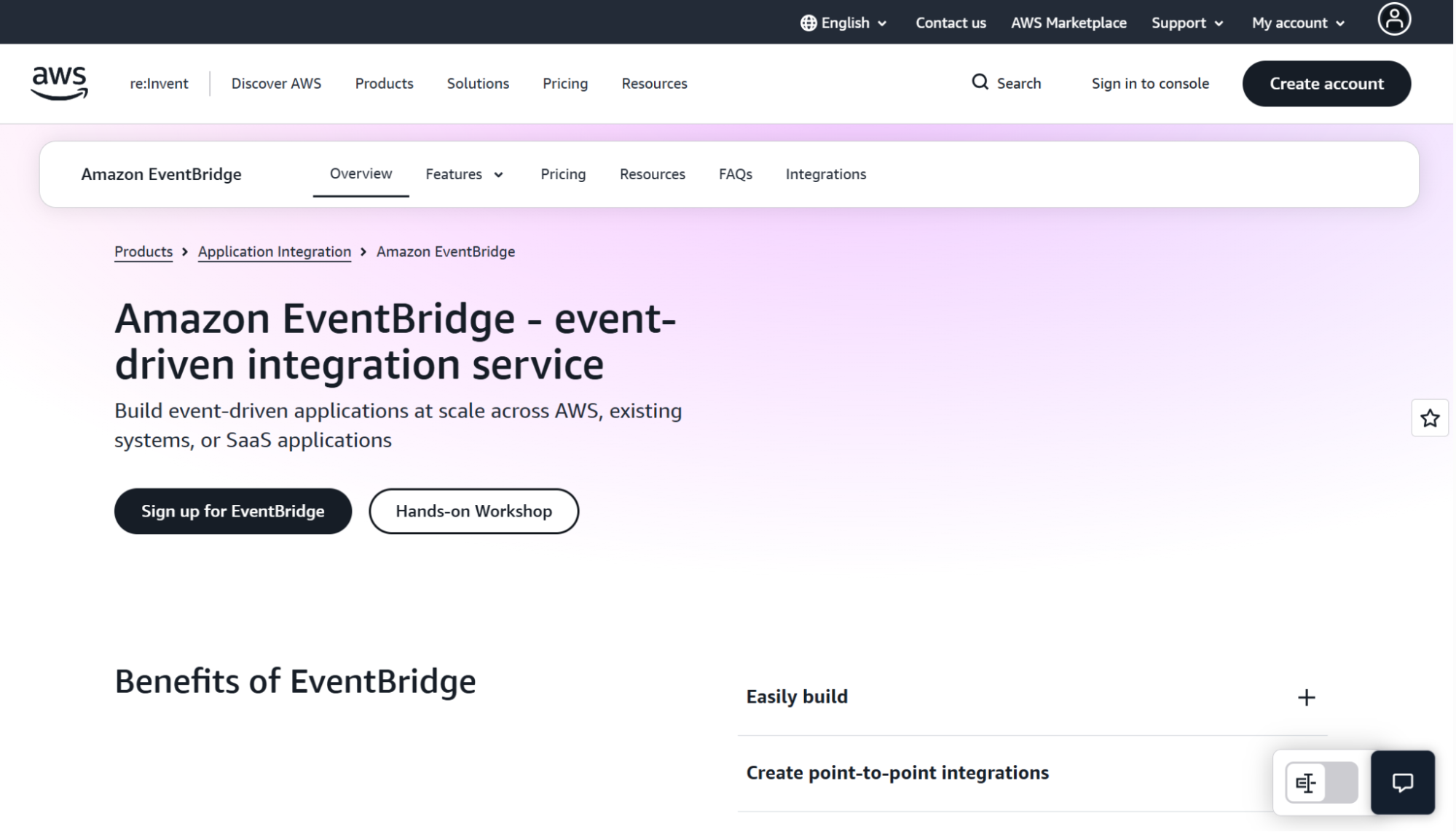
AWS offers two primary cloud scheduling services for different use cases: AWS EventBridge (event-driven rules and scheduling) and AWS Batch (managed batch computing workloads). Together, they cover basic cloud scheduling needs for teams deeply embedded in the AWS ecosystem.
The critical constraint is that these are single-cloud tools by design. They are engineered to orchestrate AWS services, and integrating non-AWS systems requires significant custom development work.
Pro Tip:
You don’t have to choose between AWS Batch and enterprise-grade orchestration. ANOW! Automate natively integrates with AWS Batch, allowing teams to keep their existing AWS Batch jobs while gaining cross-system dependency management, observability, and hybrid orchestration on top without re-platforming workloads already running there.
Key Features
EventBridge Scheduler: Fully managed cron and rate-based scheduler for AWS services; event-driven rules trigger Lambda, Step Functions, ECS, and other AWS targets
AWS Batch: Fully managed batch job execution on EC2, Fargate, or Spot instances; automatic compute scaling based on job queue demand
Native AWS service integration: Deep connectors for the full AWS service catalog with minimal configuration
Pay-as-you-go pricing: Consumption-based model with no upfront licensing
Where AWS EventBridge / Batch Shines
AWS-native simplicity: For teams running entirely within AWS, EventBridge and Batch are fast to configure with minimal overhead and no licensing complexity.
Cost efficiency at AWS scale: Pay-as-you-go pricing works well for variable batch workloads running on AWS infrastructure.
Where AWS EventBridge / Batch Falls Short
Single-cloud by design: No native support for on-premises systems, mainframe workloads, Azure, or GCP. Cross-cloud orchestration requires building and maintaining custom bridges.
No enterprise WLA capabilities: No cross-system dependency management, no SLA prediction, no ITSM integration, no observability across non-AWS platforms, and no enterprise audit trail spanning hybrid environments.
Vendor lock-in: Deep coupling to AWS services makes future migration or multi-cloud diversification structurally difficult.
Customer Reviews
Atharva P. praises, “What I like most about Amazon EventBridge is how easily it supports event-driven architectures across AWS services and applications. It makes it straightforward for different systems to communicate without needing tightly coupled integrations or custom polling mechanisms. I also appreciate the overall simplicity of building event-driven workflows: services can communicate asynchronously without directly depending on one another, which helps improve scalability and flexibility.”
Ram D. warns, “The only drawback I’ve noticed is the limited visibility into the failure events. At times, debugging issues can be a bit challenging, making it harder to pinpoint the root cause of a problem.”
Who AWS EventBridge / Batch Is Best For
Teams with AWS-only workloads and no requirement for cross-platform or hybrid orchestration.
Engineering teams that are comfortable building custom integrations for any non-AWS systems they need to connect.
How to Choose the Best Cloud Scheduling Software
The market is saturated with options, ranging from basic cloud schedulers to full enterprise service orchestration platforms. Before evaluating vendors, make sure you consider these five criteria.
Hybrid and Multi-Cloud Coverage
Modern enterprise environments are rarely single-cloud. Most organizations run workloads across on-premises infrastructure, one or more public clouds, and legacy systems like mainframes and SAP. Your cloud scheduling software needs to orchestrate it all, not just the cloud-native portion.
ANOW! Automate is built explicitly for this: cloud-agnostic by architecture, it manages workloads across AWS, Azure, GCP, on-premises, and mainframe environments from a single control plane. It's certified as an AWS and Azure co-sell partner, with native alliances across all three major hyperscalers.
→ Learn more about ANOW!'s hybrid cloud orchestration capabilities
Total Cost of Ownership and Pricing Transparency
Legacy vendors like BMC and Broadcom are notorious for opaque licensing models that inflate over the contract cycle, often the primary reason enterprises begin replacement evaluations. Evaluate not just the license cost but the full operational burden: administrator headcount, professional services requirements, upgrade complexity, and the cost of missing integrations.
ANOW! Automate uses transparent, enterprise-grade pricing with no per-job licensing traps. Its zero-touch migration capabilities and zero-downtime upgrades significantly reduce the hidden operational costs that accumulate with legacy platforms.
Integration Depth
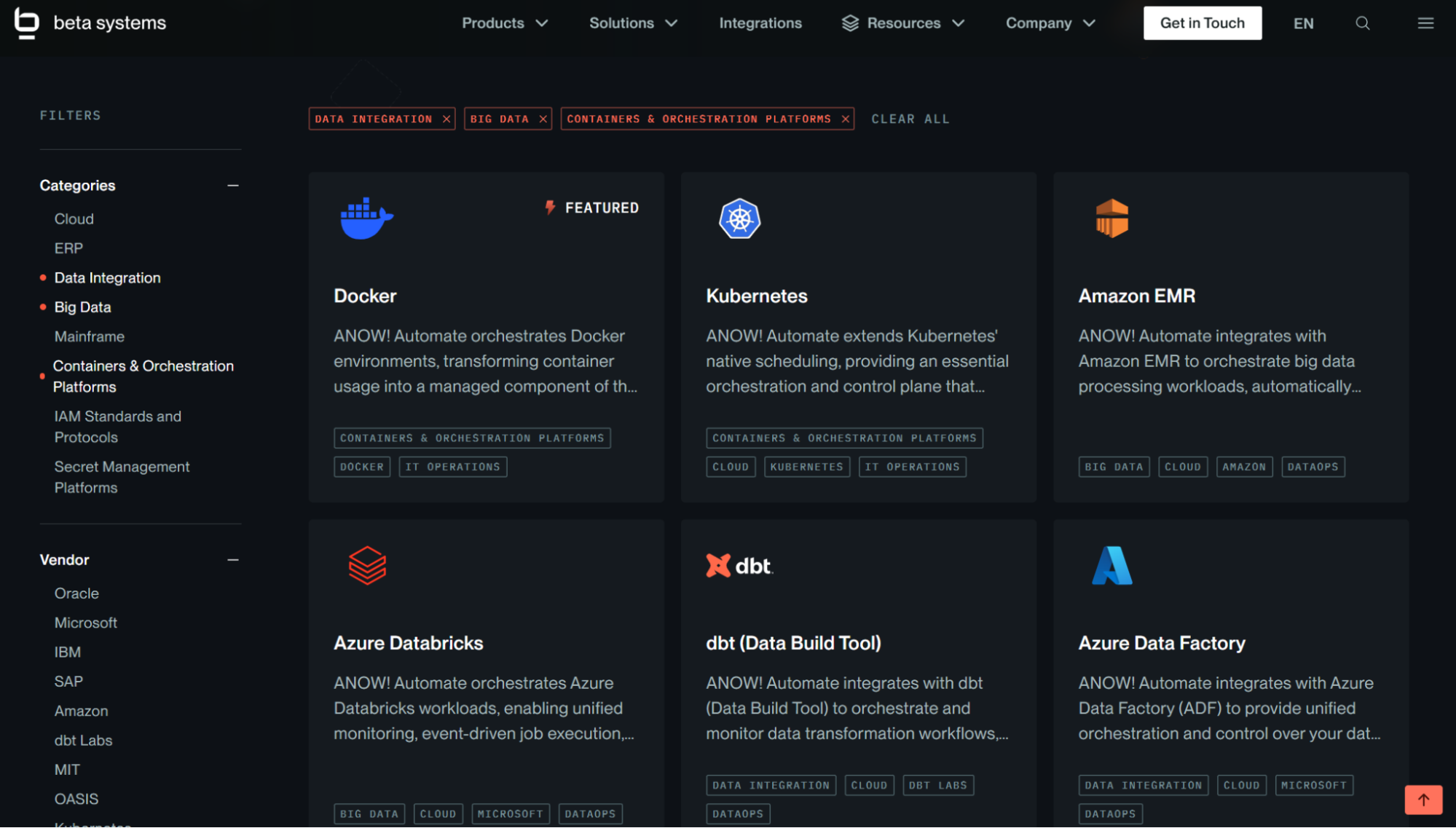
The breadth and quality of native integrations directly determine how much custom development your team carries. Evaluate whether the platform has out-of-the-box connectors for your current stack and the extensibility to connect systems beyond standard connector libraries.
The ANOW! Suite ships with 600+ native integrations, the most of any WLA vendor, plus its Infinite Integration capability for connecting any custom, proprietary, or emerging system via APIs, CLI, or JavaScript-based integration logic.

Integration Architecture
Discover Your Integration Possibilities
Connect your Beta Systems platform with the enterprise applications, APIs, and services that you already use. Streamline data exchange and orchestrate end-to-end workflows across your IT landscape.
Observability and SLA Management
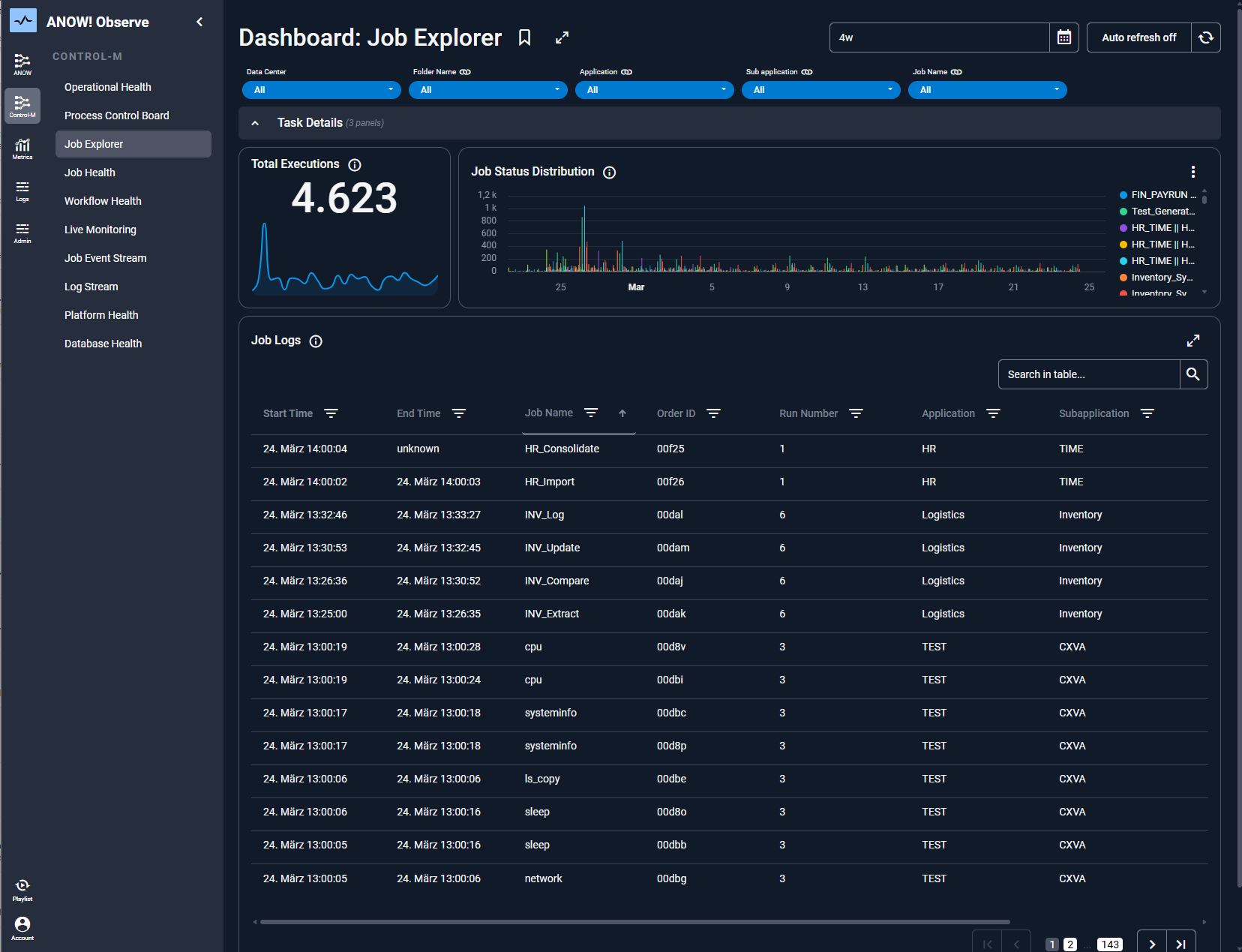
Cloud scheduling without observability is scheduling blind. Your platform should provide real-time visibility into workflow execution, proactive detection of SLA risks, and the ability to trigger automated remediation before issues affect business operations.
Looking ahead, Gartner projects that by 2029, 75% of SOAP workflows will leverage generative AI, increasing troubleshooting efficiency by 50%.
ANOW!'s built-in observability layer, powered by OpenTelemetry, emits standardized metrics, logs, and traces across your entire hybrid landscape. Its AI-powered PII filter automatically detects and redacts sensitive data, simplifying GDPR and HIPAA compliance without manual configuration.
Ready to Simplify Scheduling With Beta Systems?
If your organization is running on legacy scheduling infrastructure, whether that's BMC Control-M, Broadcom AutoSys, or a patchwork of cloud-native schedulers, the operational and financial cost of staying the course is increasing every year. The SOAP market is consolidating around platforms that unify orchestration, observability, and AI-driven automation in a single cloud-native layer.
The ANOW! Suite was built for exactly this moment: a modern, enterprise-grade replacement for legacy workload automation that delivers faster deployment, broader integration, and full transparency on pricing and data sovereignty.
For data engineering teams running Airflow at scale and encountering its enterprise limitations, ANOW!'s native data pipeline orchestration capabilities (including out-of-the-box support for Snowflake, Databricks, BigQuery, DBT, and AWS Glue) offer a credible upgrade path without having to rebuild from scratch.
Discover ANOW! Automate
Schedule a demo with Beta Systems to see ANOW! Automate in action across your specific environment.
:quality(50))
:quality(50))