:quality(50))
7 Best Enterprise Workflow Tools: A Quick Overview
Platform | Best For | Standout Feature | |
|---|---|---|---|
Beta Systems ANOW! Suite |
| 500+ integrations + ANOW! Observe | |
BMC Control-M | Legacy mainframe-to-cloud hybrid workloads | Unified View across self-hosted & SaaS | |
Broadcom Automic Automation | Enterprises with existing Broadcom licensing | Zero Downtime Upgrade | |
Stonebranch UAC | Modern WLA for multi-vendor evaluations | Data Pipeline Orchestration module | |
ServiceNow Workflow | ITSM-heavy enterprises | IntegrationHub + bidirectional ITSM | |
Microsoft Power Automate | Microsoft-stack business process automation | Native M365/Azure integration | |
Apache Airflow | Data engineering teams, Python-based pipelines | Extensible DAG architecture |
1. Beta Systems ANOW! Suite: Best for Enterprise Workload Scheduling and Automation
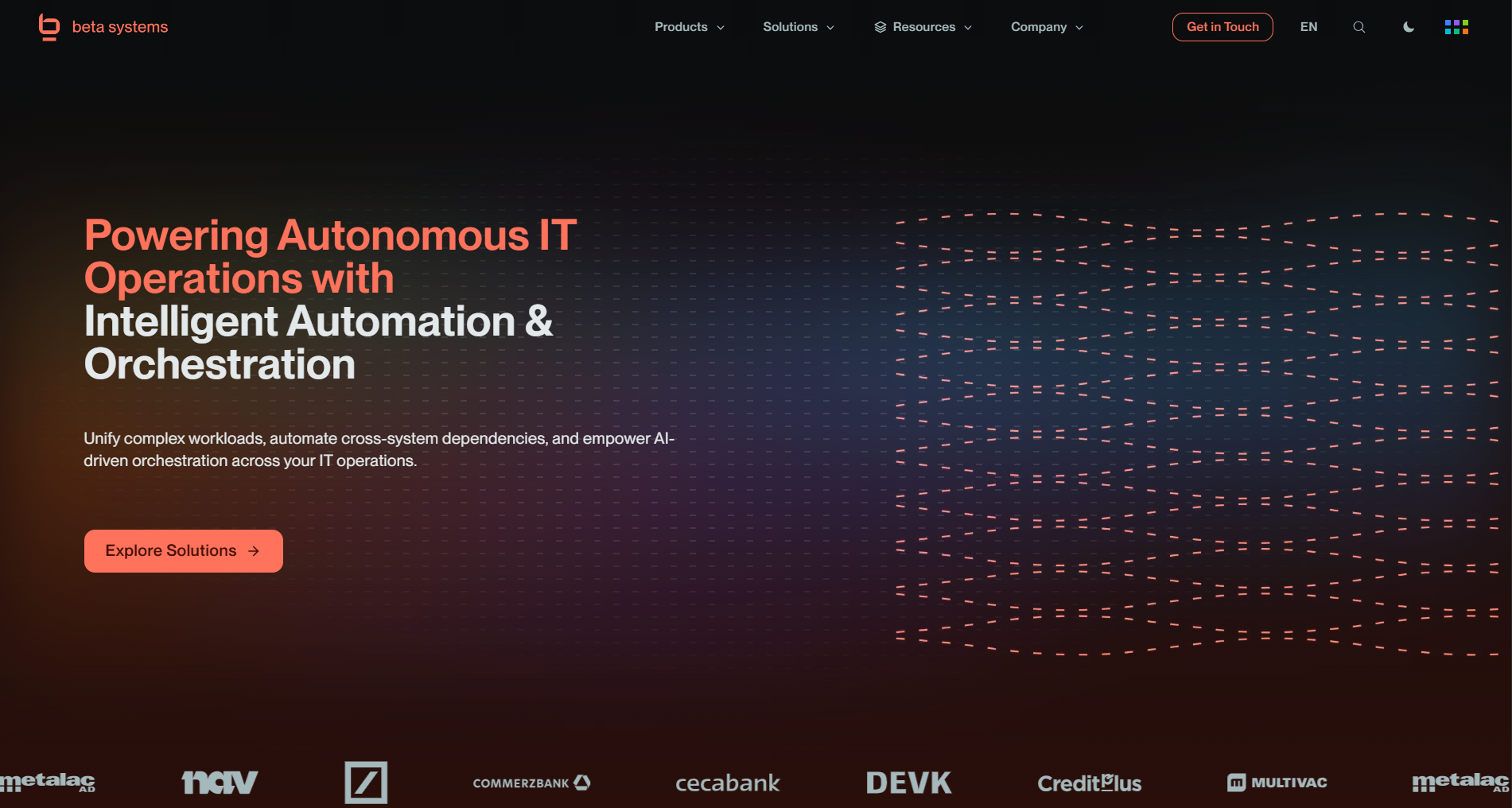
Beta Systems is named a Gartner Magic Quadrant Leader for Service Orchestration and Automation Platforms and its ANOW! Suite is the flagship cloud-native platform for enterprise workload automation and orchestration, and observability.
Built for large enterprises managing business-critical workflows across hybrid and multi-cloud environments, ANOW! targets the exact pain points that drive organizations away from BMC and Broadcom.
ANOW! also supports both multitenant SaaS and dedicated private cloud deployments with full deployment portability. You can switch models at any time without disrupting operations.
Key Features
500+ Native Integrations
The largest out-of-the-box connector library of any WLA vendor, covering AWS, Azure, GCP, Snowflake, Databricks, BigQuery, SAP S/4HANA, ServiceNow, Jira, GitHub, GitLab, Kubernetes, and more. The Infinite Integration framework supports custom connectors via APIs, CLI, or JavaScript for anything outside the standard library.ANOW! Observe for Native Workload Observability
ANOW! embeds OpenTelemetry-native observability directly into its orchestration engine. Real-time telemetry (metrics, logs, traces) feeds back into the platform for AI-driven anomaly detection, SLA forecasting, and automated remediation without the need for separate monitoring tools.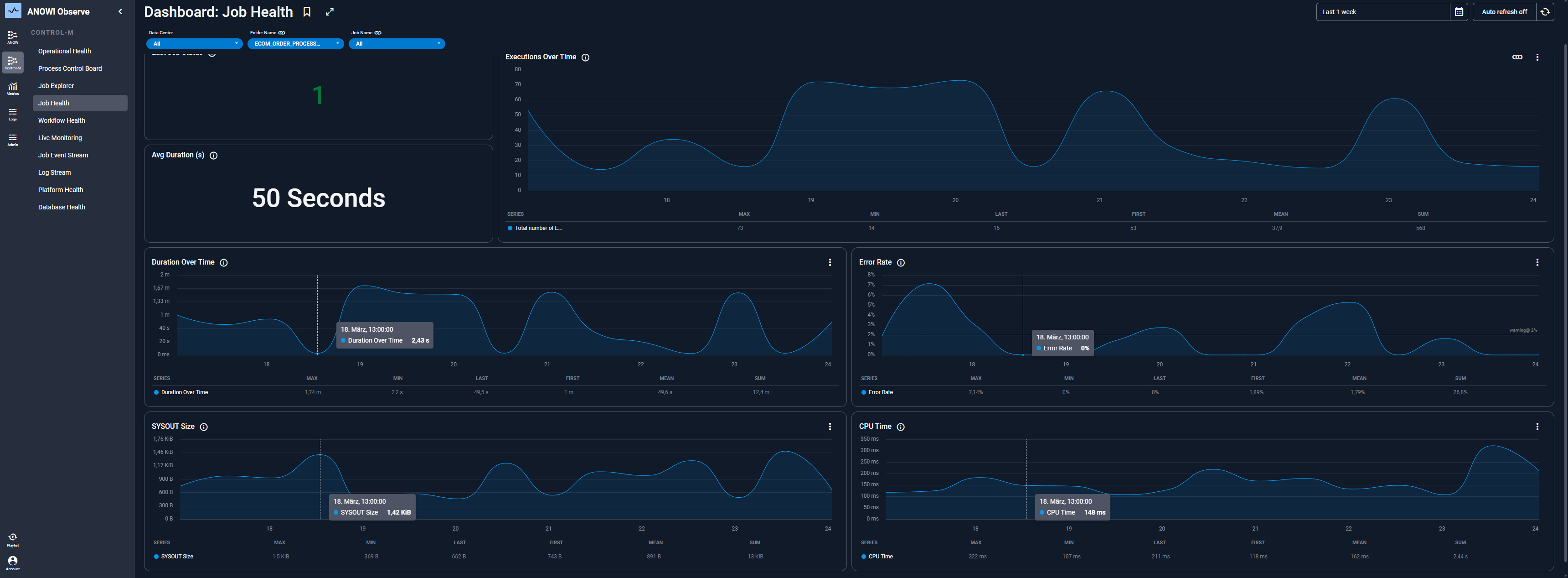
Contextual Intelligence and Dynamic Workflows
Multi-level dynamic variables adapt workflows to real-time inputs, enabling hundreds of thousands of unique workflow variants from minimal definitions. This level of adaptive execution is far beyond traditional schedulers.Zero-Downtime, Container-Native Architecture
Built on Kubernetes-native microservices, ANOW! supports rolling upgrades, on-demand horizontal scaling, and zero-touch migration. You unlock browser-based access, with no client installation required.Jobs-as-Code / DevOps Integration
All automation artifacts are managed as standardized JSON, fully compatible with Git and CI/CD pipelines (GitHub, GitLab, Bitbucket, Azure DevOps).
Where Beta Systems ANOW! Suite Shines
Hybrid and multi-cloud orchestration at scale: Certified for AWS and Azure cosell; runs natively on GCP, AWS, and Azure, or fully on-premises. Scales via microservices without rearchitecting.
Native observability without bolt-on tooling: ANOW! Observe is a core suite component, giving ops teams a single pane of glass for workload health, SLA status, and automated anomaly response
EU digital sovereignty: ANOW! offers EU-region deployments meeting GDPR, DORA, and national data residency requirements, backed by a German-headquartered vendor with 40 years of financial-sector trust.
Where Beta Systems ANOW! Suite Falls Short
Limited UI language coverage: Interface currently available in English, German, and Polish. Organizations with large global user bases in other languages may face early adoption friction.
Enterprise-scale platform: ANOW! is designed for complex cross-system enterprise environments. Organizations needing only a basic point scheduler may find the platform's full breadth exceeds their current scope.
Customer Reviews
A verified user praises, “I really like that everything is in one place. It gives me a “single point of control” for all my tasks and workflows, which makes it much easier to see what is happening in real-time.”
Another verified user says, “I use ANOW! Suite as a centralized platform to manage and streamline my daily workflows. It helps me organize tasks, track progress, and maintain better visibility across ongoing activities. What I like most about ANOW! Suite is its ability to bring everything into one centralized platform. It makes task management and tracking very intuitive, improves visibility across workflows, and helps me stay organized.”
Who Beta Systems ANOW! Suite is Best For
CIOs and I&O Heads seeking a single control plane across hybrid IT with SLA governance
CDOs and Data Platform Directors orchestrating multi-cloud data pipelines from ingestion to analytics
Enterprise Automation CoE Managers consolidating multiple legacy schedulers
SAP/ERP Operations Managers requiring deep, bidirectional SAP orchestration
European enterprises in BFSI, manufacturing, and regulated industries requiring EU data sovereignty
One Platform. Every Workflow. Fully Orchestrated.
Eliminate disconnected tools and manage your entire automation landscape with built-in observability and enterprise-grade orchestration.
2. BMC Control-M: Best for Legacy Mainframe-to-Cloud Hybrid Workloads
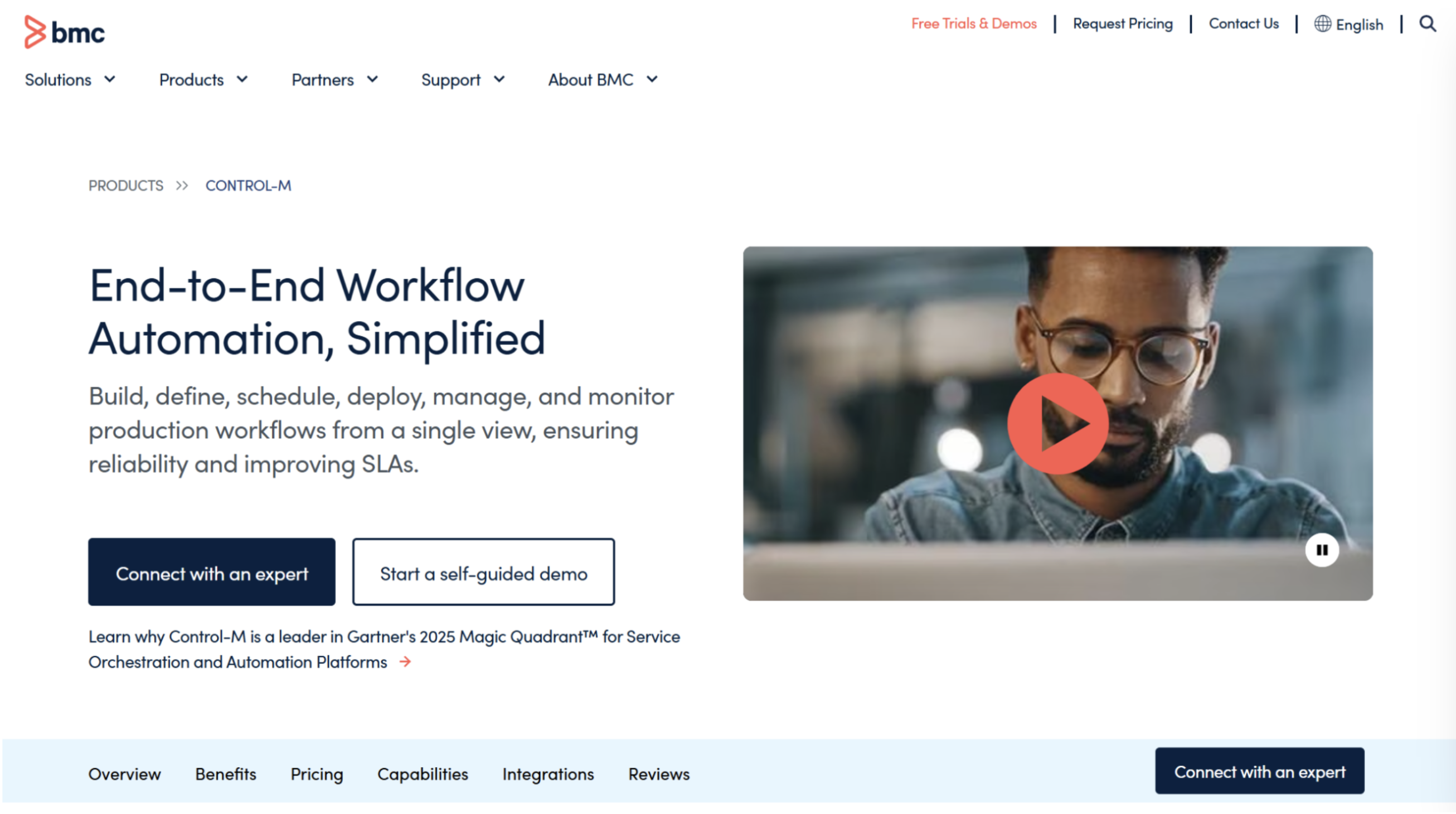
BMC Control-M is a Leader in the 2025 Gartner Magic Quadrant, supporting orchestration across mainframe, multicloud, and AI/ML/DataOps pipelines via a Unified View interface available as self-hosted and SaaS.
BMC split into two independent companies in April 2025: BMC and BMC Helix. Verify which entity supports Control-M and what support continuity implications the split carries for your contracts.
Key Features
Unified View: Single interface for complex workloads across self-hosted and SaaS deployments
Jett AI Advisor: Embedded GenAI for natural language workflow queries, anomaly detection, and compliance auditing
DataOps and ML Pipeline Support: Native orchestration for cloud data platforms and LLM ecosystems
Deep z/OS mainframe integration for mission-critical batch workloads
Where BMC Control-M Shines
Proven depth: Especially for large-scale mainframe-to-cloud hybrid environments
Strong global professional services: Including a VAR partner network for complex enterprise deployments
Looking at cloud scheduling software for hybrid environments? Compare enterprise scheduling approaches before deciding.
Where BMC Control-M Falls Short
High TCO: Makes it increasingly difficult to justify against modern, leaner alternatives
Post-split uncertainty: The BMC/Helix split has raised concerns about support continuity and cross-product integration among existing customers
Customer Reviews
Shaik A. says, “What I like best about Control-M is its powerful automation and centralized workflow management. It allows me to schedule, monitor, and manage jobs across multiple systems from a single interface, which makes operations much easier and more efficient.”
Shivaji B. laments, “The initial setup and configuration process can be somewhat complicated for new users. Additionally, the licensing costs are significantly higher compared to other tools. What I find most frustrating is the column width and sizing in the self-service section. While many features have been carried over from CCM to the web version, the configuration windows remain quite small, making them difficult and frustrating to use.”
Who BMC Control-M is Best For
Large enterprises with deep mainframe investments requiring mainframe-to-cloud bridging
Organizations already embedded in the BMC ecosystem with existing licensing relationships
3. Broadcom Automic Automation: Best for Existing Broadcom Licensing Environments
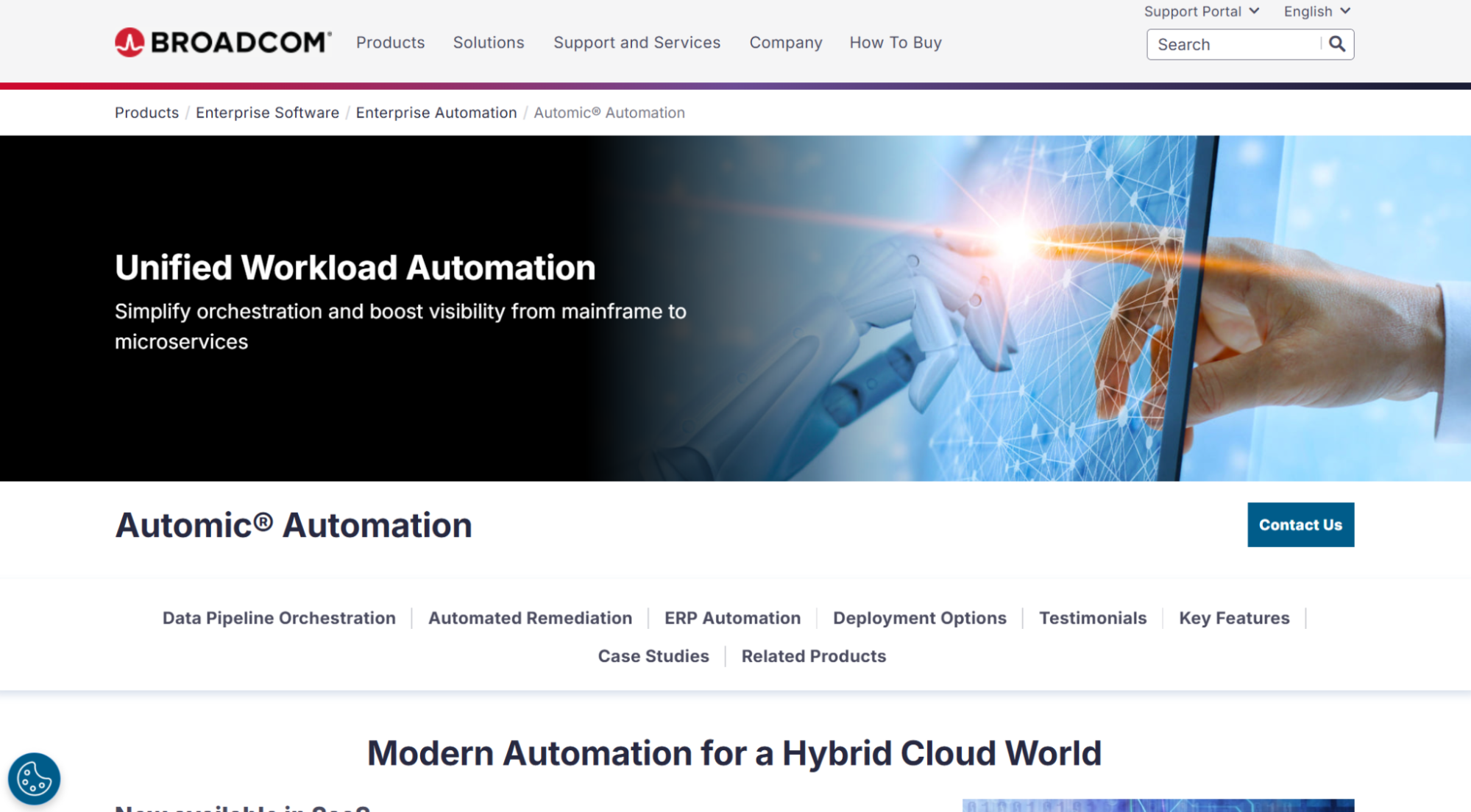
Broadcom Automic Automation is another Leader in the 2025 Gartner Magic Quadrant, with hybrid orchestration across on-premises, container, and SaaS deployments. It has particular depth in financial services and manufacturing vertical markets.
Key Features
Zero Downtime Upgrade: Full version upgrades without service interruption
AAI Observability: AI-powered, cross-vendor observability for predictive SLA management
Automation-as-Code: Mature DevOps lifecycle management for automation workflows
Vertical industry expertise in financial services, retail, and manufacturing with dedicated sales teams
Where Automic Shines
Enterprise-scale stability: Proven track record in large, complex IT environments and enterprise DevOps automation systems
Strong network: Especially across cross-region professional services
Where Automic Falls Short
Customer experience issues: Gartner-flagged retention concerns and difficult renewal dynamics
Slow integration expansion: Broadcom “lags in adding official, out-of-the-box support for emerging cloud services” compared to ANOW!'s 500+ native connectors. Customers may need to build and maintain their own integrations for cutting-edge use cases
Customer Reviews
Sridhar K. praises, “Automic as a company has got fresh blood and brain in Development. Hence its growth in future will re reliable. As a tool, it is easy to integrate with all environments.”
Shreyash R. warns, “Integrations with other applications is challenging and requires Web services to be available for the same. The UI was quite outdated, which recently was converted into a Web based application.”
Who Broadcom Automic is Best For
Large enterprises deeply invested in the Broadcom/CA technology stack with existing licensing commitments
Organizations evaluating a modernization path within the Broadcom ecosystem
4. Stonebranch Universal Automation Center: Best for Modern WLA Evaluations
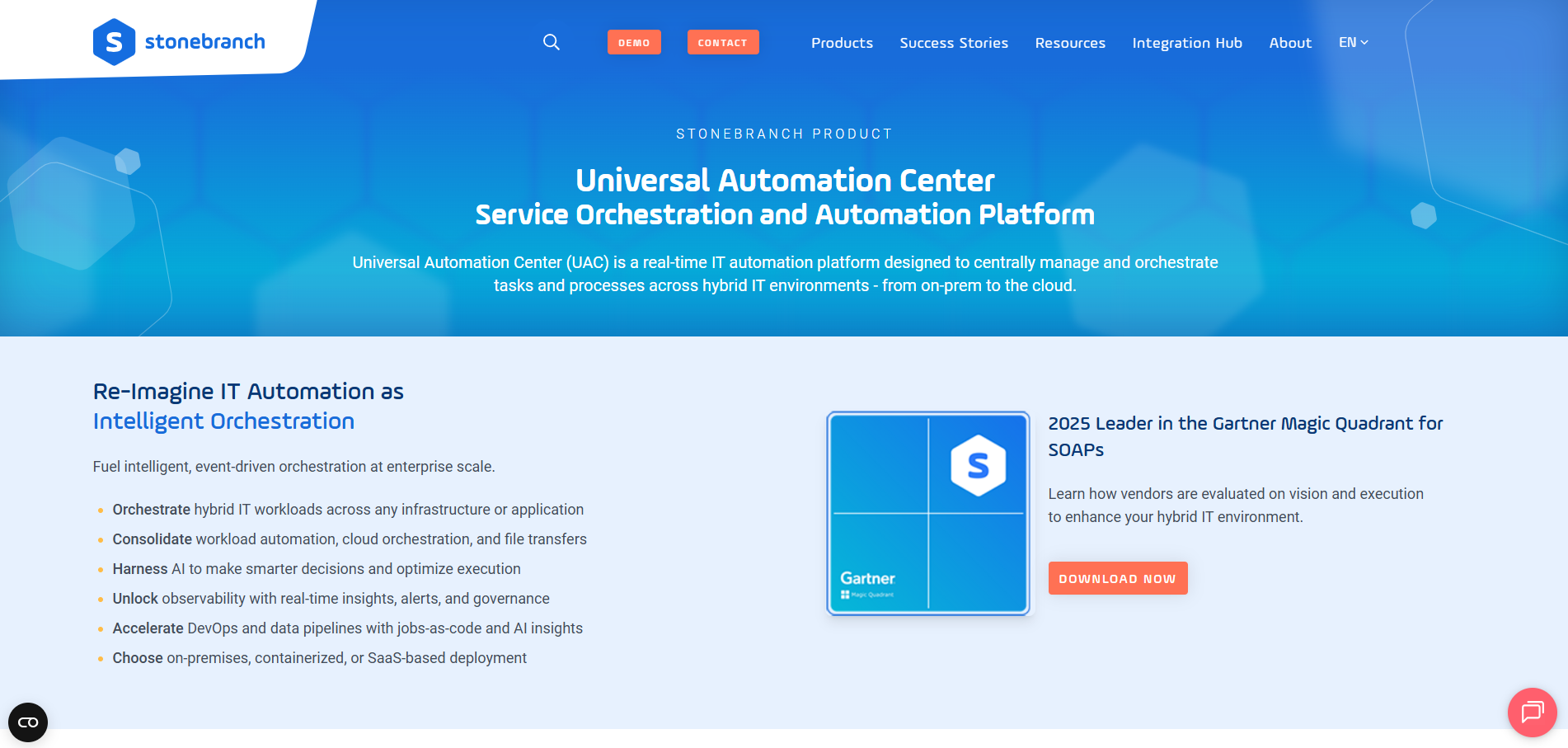
Stonebranch UAC is also a Leader in the Gartner Magic Quadrant. UAC provides workload automation and workflow orchestration across distributed hybrid and cloud environments.
Stonebranch is a capable, modern platform. Enterprises evaluating both Stonebranch and ANOW! should closely examine three differentiators: observability depth, platform scalability, and cost governance.
Key Features
Universal Automation Center (UAC): Enterprise workload automation and job scheduling platform
Integration Capabilities: Around 100 integrations available via Integration Hub
Universal Portal: An add-on self-service portal via API
Mainframe Capabilities: Mature mainframe automation features
Where Stonebranch Shines
Build-your-own integrations: UAC offers a flexible framework for building custom integrations
Self-service portal availability: While it's an add-on, UAC does offer a dedicated self-service portal as a separate UI
Where Stonebranch Falls Short
Vertical-only scalability: UAC supports only a single active node (with passive failover), meaning it can only scale up leading to hitting hard hardware limits, risking downtime during upgrades, and creating a single point of failure
Complex, less predictable pricing: Multiple cost metrics (agents, cluster nodes, tasks, connectors, self-service portal) plus extra charges for non-production environments.
Early generation architecture: UAC is running on its original software architecture, lacking the cloud-native benefits of more modern platforms.
Customer Reviews
Vinothkumar M. mentions, “The most valuable feature of the Stonebranch Universal Automation Center (UAC) is its superior scheduling and cross-platform integration capabilities, which have fundamentally transformed how we orchestrate our ETL workflows.Now, we have centralized, end-to-end control over every ETL job.”
Stephen E. warns, “My main problem was with the setup process. Although the knowledge base contains a lot of information, it can be somewhat difficult to navigate at times. There are definitely sections where, if you overlook something, you might find yourself stuck.”
Who Stonebranch is Best For
Organizations relying heavily on SAP for their workflows
Enterprises with complex data pipeline needs across Snowflake, Databricks, and dbt
5. ServiceNow Workflow Automation / IntegrationHub: Best for ITSM-Centric Enterprises
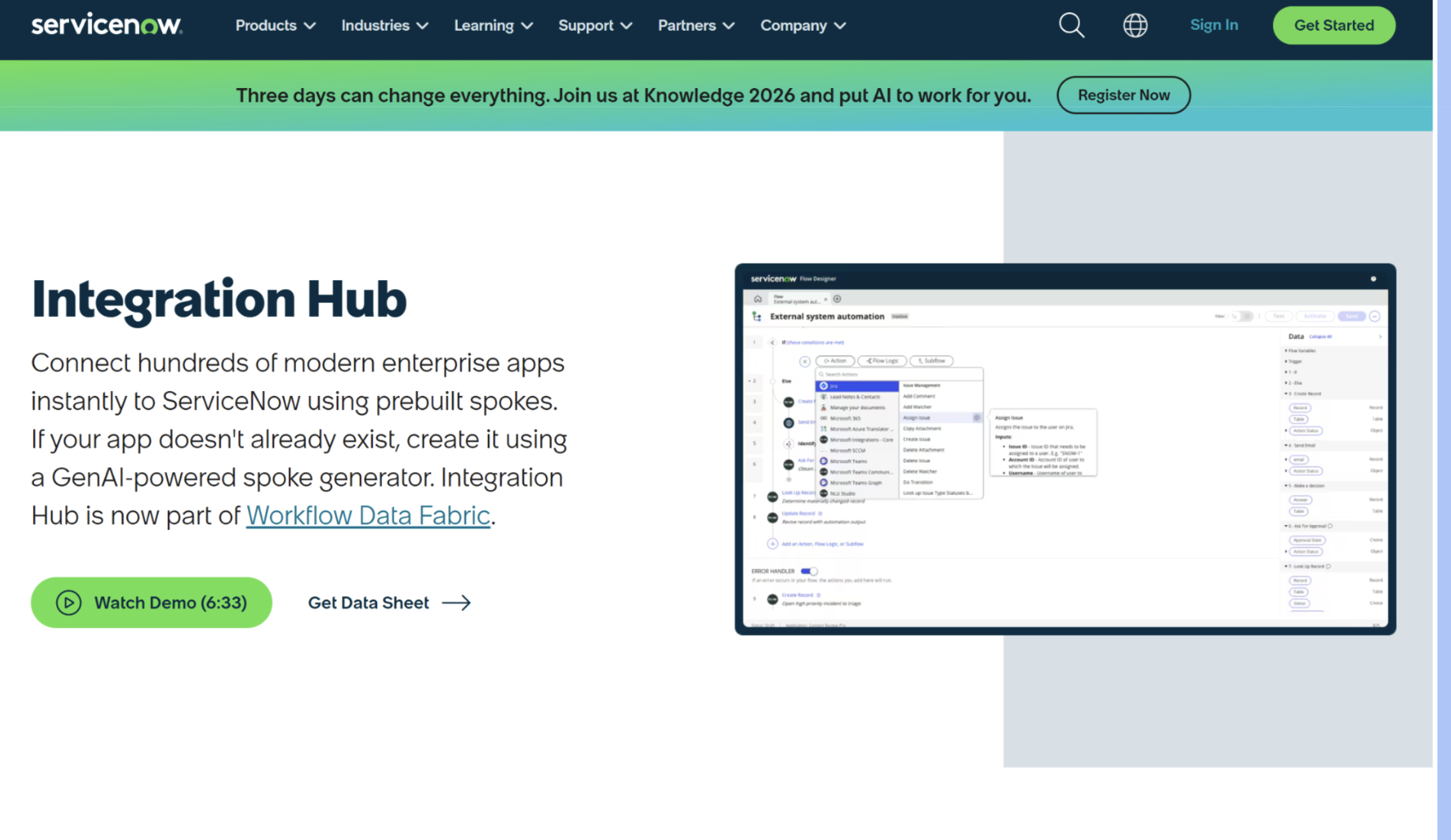
ServiceNow dominates enterprise ITSM, and its Workflow Automation and IntegrationHub capabilities extend into service request management, change management, and employee onboarding workflows.
Importantly, ANOW! Automate integrates bidirectionally with ServiceNow. This means both platforms can coexist, with ANOW! serving as the orchestration layer above ServiceNow for IT operations.
ServiceNow excels at human-centric service workflows but is not designed for complex IT batch workload automation, dependency-based scheduling, or data pipeline orchestration.
Best for: IT operations and ITSM teams automating service requests, incident management, change approvals, and cross-departmental workflow automation, and not as a replacement for dedicated WLA platforms.
6. Microsoft Power Automate: Best for Microsoft-Stack Business Process Automation
Microsoft Power Automate is the go-to tool for Microsoft 365 and Azure-centric organizations automating business processes such as invoice processing, approval workflows, document collaboration. It offers a no-code drag-and-drop builder with native Microsoft ecosystem integration.
Key Distinction: Power Automate handles simple, linear business task chains. It is not designed for complex IT batch dependencies, cross-platform enterprise scheduling, or hybrid workload automation at scale.
Features include M365/Teams/Azure integration, AI-powered Copilot automation, automated triggers, conditional logic, and role-based access control.
Best for: Microsoft-stack organizations automating business process workflows, approval chains, and document collaboration that don’t require enterprise IT workload automation.
7. Apache Airflow: Best for Data Engineering Teams
Apache Airflow is the open-source standard for Python-based data pipeline orchestration, enabling data engineering teams to define, schedule, and monitor workflows as code using Directed Acyclic Graphs (DAGs).
ANOW! offers a native Airflow integration, so organizations can preserve existing Airflow pipelines while layering on enterprise-grade scheduling, SLA management, and cross-platform orchestration where Airflow falls short.
Airflow is excellent for data pipelines but lacks native SLA monitoring, SAP/ERP integration, mainframe scheduling, and the enterprise governance controls that I&O teams require.
Best for: Data engineering and DataOps teams building Python-native pipelines. Not suitable for those seeking IT operational scheduling or enterprise-level functionality.
How to Choose the Best Enterprise Workflow Tool
Before you make the choice on which enterprise workflow tool to go with, here are the factors and core automation capabilities to consider.
Hybrid and Multi-Cloud Orchestration Depth
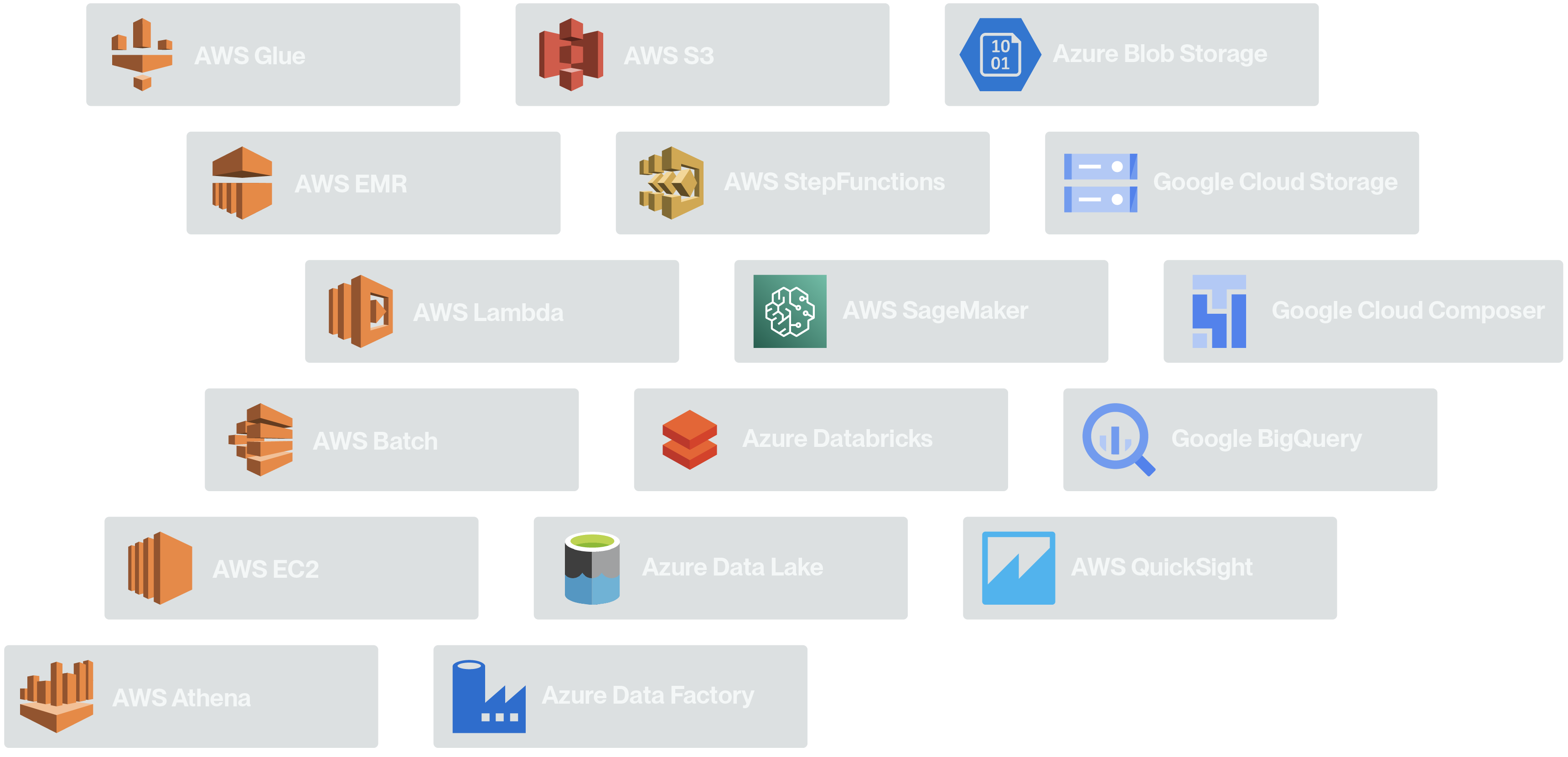
Your platform must orchestrate jobs across on-premises, cloud, SaaS, and legacy systems simultaneously with full dependency management.
Basic tools handle linear workflows only.
True enterprise WLA platforms like ANOW! Automate support event-driven, dependency-based scheduling across your entire hybrid estate, from mainframe to Kubernetes.
→ Read more: How data center evolution is reshaping automation requirements
Observability and SLA Intelligence
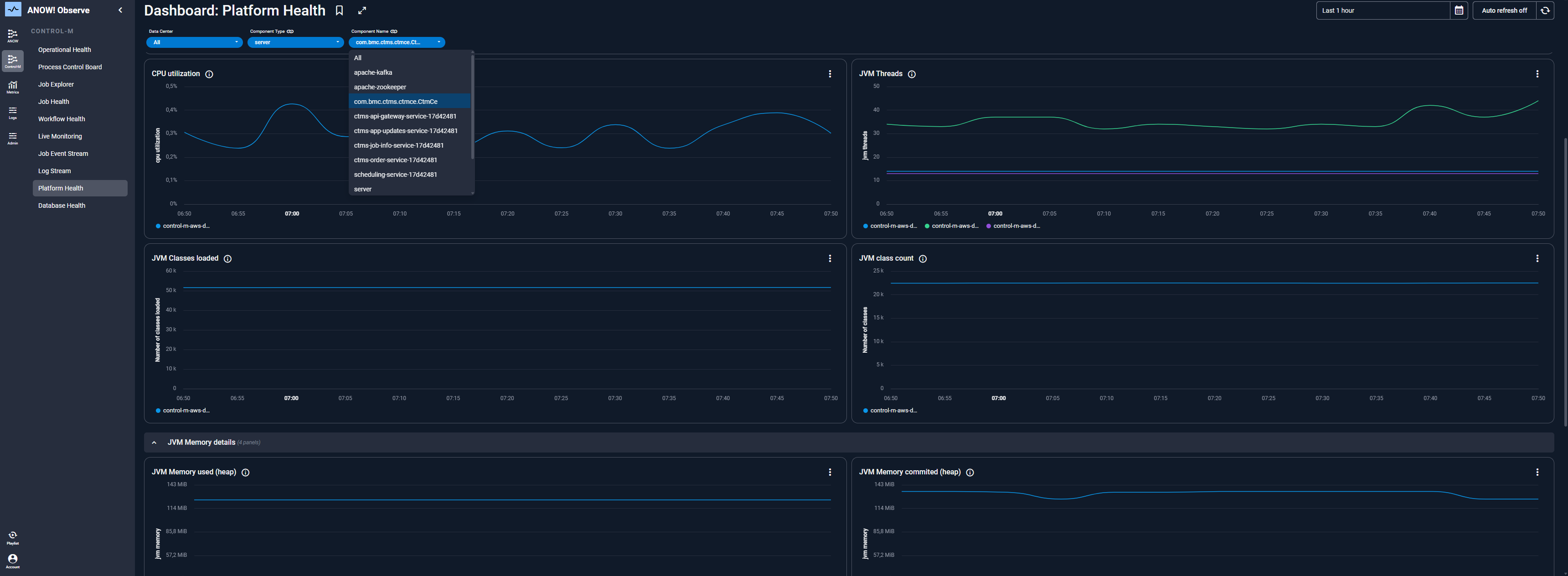
Knowing a job ran is not enough. You need to know why a job failed, whether an SLA is at risk before it breaches, and what automated remediation to trigger.
Look for platforms with native observability, that is, integrated telemetry, anomaly detection, and AI-driven SLA forecasting.
ANOW! Observe is purpose-built for workload automation environments, providing real-time health dashboards and closed-loop remediation without a separate monitoring tool.
Pro Tip
When evaluating observability claims, ask: Is it native or a third-party integration? Does it cover workload-level SLA tracking, or only infrastructure-level metrics?
Migration Path and Vendor Risk
Migrating from Control-M or AutoSys is a multi-year project.
You must evaluate:
Migration tooling
Parallel-run capability
Structured migration methodology
Pricing transparency
Deployment flexibility
Vendor financial stability
Beta Systems offers a migration-without-regret framework for essential reading before any final platform decision is made.
Start Optimizing Your Enterprise Workflows Today with Beta Systems
If you’re running legacy workload automation from BMC or Broadcom and facing rising costs, limited cloud support, or insufficient observability, ANOW! Suite is purpose-built for your situation.
As a Gartner Magic Quadrant Leader with the industry’s largest native integration library, built-in observability, zero-downtime architecture, and proven EU sovereignty, ANOW! delivers what legacy platforms promised but never fully delivered: a single, scalable, sovereign orchestration platform for the modern enterprise.
If you’re comparing enterprise workflow automation tools, see how ANOW! Suite unifies orchestration, observability, and automation in one platform.
Explore our products and book a personalized ANOW! demo today!
Move Beyond Legacy Schedulers.
Consolidate fragmented workflow tools into a cloud-native platform built for hybrid and multi-cloud orchestration at scale.
:quality(50))
:quality(50))
:quality(50))