:quality(50))
What are Data Center Automation Tools?
Data center automation tools are software platforms that manage, schedule, and orchestrate the execution of IT workloads across on-premises, private cloud, hybrid cloud environments, and public clouds.
They reduce manual intervention, enforce compliance, and provide real-time visibility into operational infrastructure.
Unlike simple job schedulers or no-code workflow tools, enterprise-grade data center automation platforms handle:
Complex multi-system dependencies and event-driven triggers
Data pipeline orchestration across multi-cloud environments
Integration with ERP systems (SAP), ITSM platforms, DevOps CI/CD tools, and Kubernetes clusters
Compliance, digital sovereignty, and audit trails
Self-healing workflows and AI-driven anomaly detection
Pro Tip
Pro-Tip: Data center automation is not the same as Robotic Process Automation (RPA). RPA handles repetitive, rules-based UI tasks. Data center automation manages complex IT workloads, server provisioning, data pipelines, and cross-system workload automation and orchestration at enterprise scale.
According to the 2025 Gartner Magic Quadrant for Service Orchestration and Automation Platforms (SOAP), 90% of organizations currently delivering workload automation will be using SOAP platforms to orchestrate workloads and data pipelines in hybrid environments by 2029.
Additionally, Gartner projects that 75% of SOAP workflows will leverage generative AI by 2029 to boost troubleshooting efficiency by 50%. This is up from less than 10% in 2025.
5 Best Data Center Automation Tools: A quick overview
Here are the 5 top data center automation tools in the market today.
Tools | Best For | Standout Feature | ||||||
|---|---|---|---|---|---|---|---|---|
|
|
| ||||||
|
|
| ||||||
|
|
| ||||||
|
|
| ||||||
|
|
|
1. Beta Systems: Best Data Center Automation Tool for Enterprises
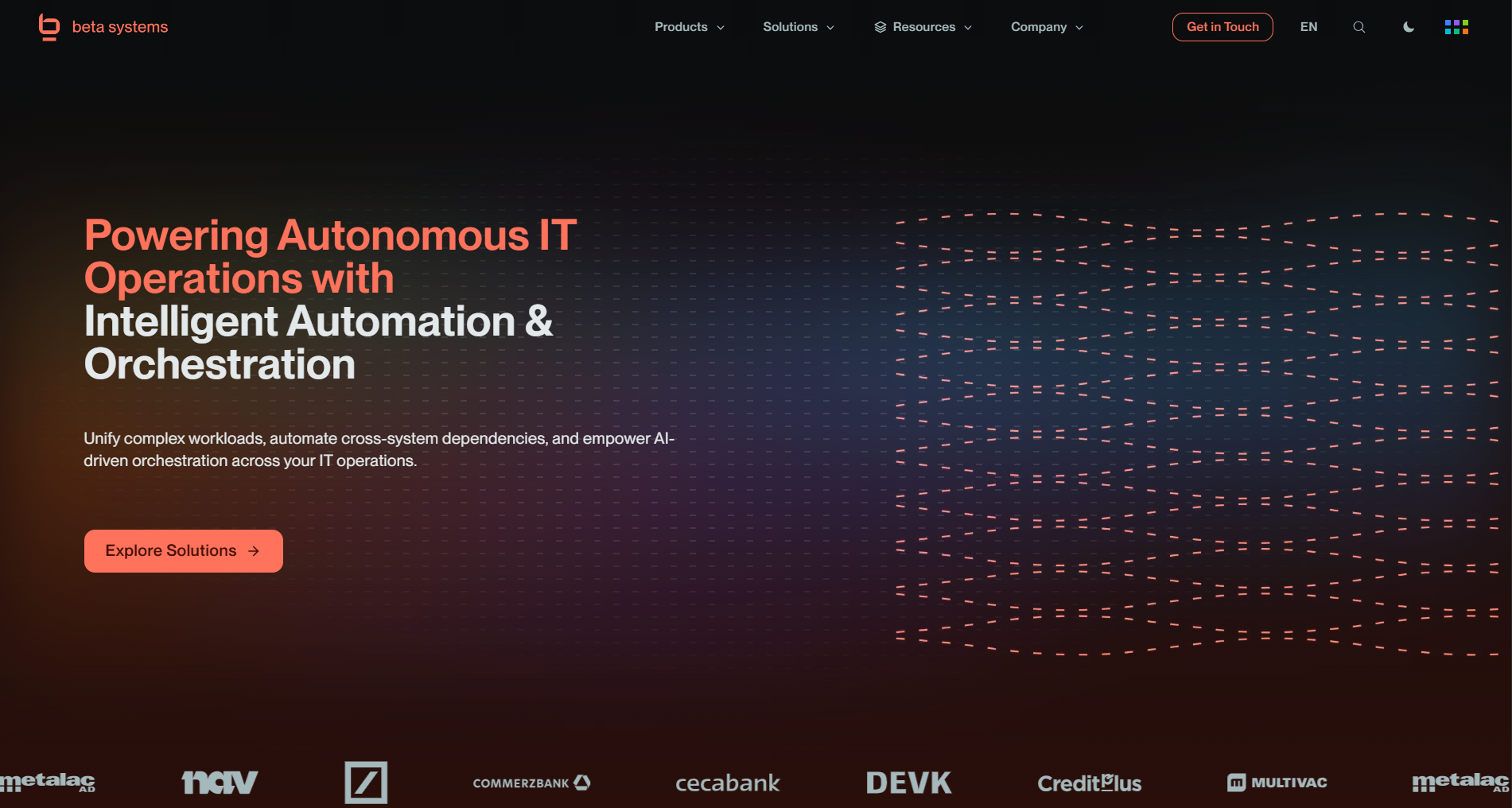
Beta Systems ANOW! Suite is a cloud-native, unified platform combining workload automation, observability, AI-driven insights, and compliance in a single solution. Built for large enterprises running complex, mission-critical workloads across hybrid and cloud environments, ANOW! is equally suited to greenfield automation initiatives and to organizations modernizing away from legacy platforms like BMC Control-M, Broadcom AutoSys, or Redwood.
Gartner specifically highlights ANOW!'s observability capabilities and vendor viability as key competitive strengths, noting that Beta Systems has a higher customer retention rate than most other Leaders in the Magic Quadrant.
Key Features
Here’s what makes Beta Systems stand out.
600+ Native Integrations
ANOW! Automate offers the most out-of-the-box integrations of any data workflow automation vendor, spanning cloud hyperscalers (AWS, Azure, GCP), DevOps tools, Kubernetes clusters, Snowflake, Databricks, SAP, ERP, ITSM platforms including ServiceNow and Jira, and legacy schedulers.
An ‘Infinite Integration’ capability enables teams to connect virtually any custom, proprietary, or open-source system via APIs, CLI, or JavaScript-based logic.
Unified Observability with OpenTelemetry
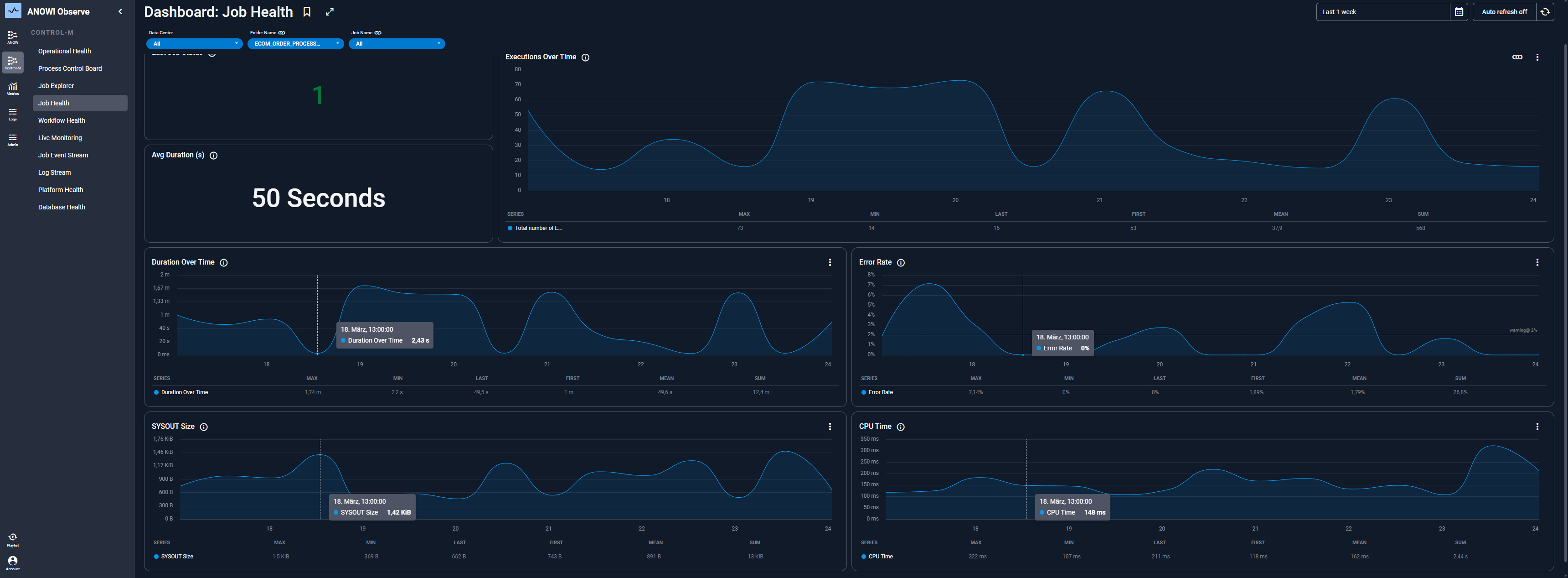
ANOW! Observe is the only workload automation-native observability layer built on OpenTelemetry. It delivers real-time telemetry across hybrid environments, enabling proactive SLA monitoring, anomaly detection, and automated remediation.
Zero-Downtime, Container-Native Architecture
Built on Kubernetes with a microservices foundation, the ANOW! Suite supports zero-downtime upgrades, on-demand scaling, and requires no client installation.
Zero-touch migration toolkits simplify transitions from legacy platforms without disrupting live operations.
Contextual Intelligence and Dynamic Workflows
ANOW! Automate’s multi-level dynamic variable engine can generate hundreds of thousands of unique workflows from minimal definitions.
Event-driven triggers, sensor inputs, and dataset queries allow workflow orchestration to adapt in real time to changing business conditions.
Where Beta Systems ANOW! Shines
Replacing legacy vendors with minimal disruption: Beta Systems' zero-touch migration toolkit and battle-tested pathways from BMC, Broadcom, and Redwood make it the go-to platform for enterprise replacement projects. Migration without regret is a real deliverable and not just a marketing promise.
European enterprises with data sovereignty requirements: ANOW! offers full digital sovereignty with data residency options and DORA/GDPR compliance built in.
Complex hybrid and multi-cloud data pipelines: With native connectors for Azure Data Factory, AWS Glue, Databricks, Snowflake, and more, ANOW! orchestrates end-to-end data pipelines in hybrid cloud environments with anomaly detection and SLA enforcement out of the box.
Where Beta Systems Falls Short
Limited UI language options: The platform interface is currently available in English, Polish, and German. Organizations requiring broader multilingual UI support may face limitations.
Purpose-built for complex enterprise environments: ANOW! is designed for large enterprises with intricate, multi-system workflows. Teams looking for a lightweight scheduler for a single cloud environment may find its full capabilities exceed their immediate needs.
Customer Reviews
A verified user praises, “I really like that everything is in one place. It gives me a "single point of control" for all my tasks and workflows, which makes it much easier to see what is happening in real-time.”
Rohan P. mentions, “I like the speed of ANOW! Suite. Its fast processing really saves me time. The initial setup was quicker than I expected, which was a pleasant surprise.”
Who Beta Systems is Best For
CIOs and Heads of I&O seeking a modern, scalable replacement for BMC Control-M, Broadcom AutoSys, or Redwood with transparent pricing and 25 to 40% better TCO
Chief Data Officers needing reliable, observable multi-cloud data pipeline orchestration with AI/ML workflow support
European enterprises prioritizing digital sovereignty, DORA compliance, and a trusted long-term vendor relationship
Ready to modernize your data center automation?
Chat with Beta Systems to see how ANOW! can replace your legacy workload automation platform.
2. BMC Control-M: Best for Multicloud Enterprise Workload Management
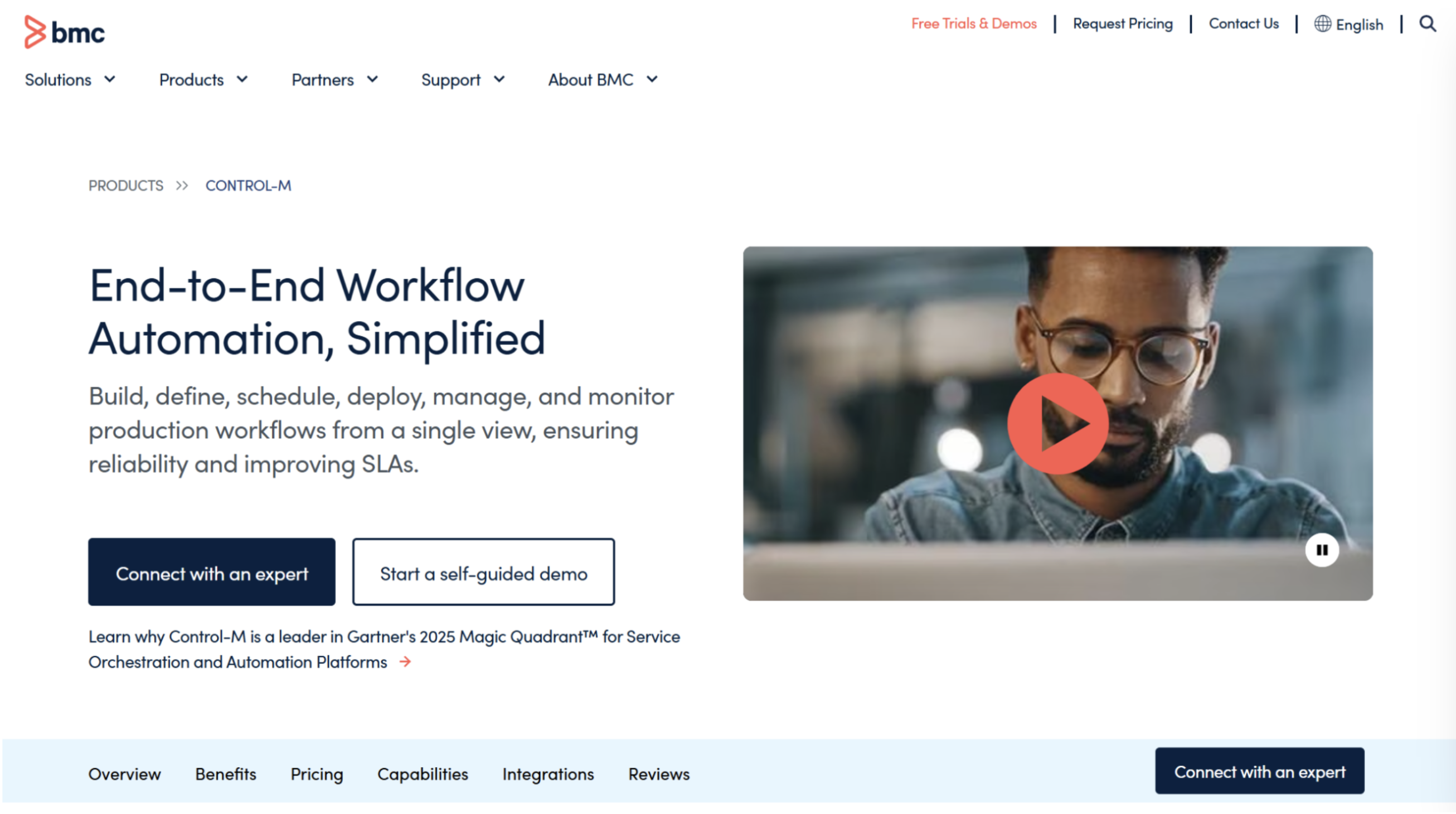
BMC Control-M offers a workload automation platform that supports mainframe, multicloud, and AI/ML/DataOps pipelines, and serves a large, geographically diversified enterprise customer base.
In April 2025, BMC split into two independent companies, BMC and BMC Helix, which may affect product roadmap clarity for prospective buyers evaluating long-term commitments.
Key Features
Unified View: A single interface for managing workloads across self-hosted and SaaS deployments, spanning mainframe to multicloud
GenAI and jobs-as-code investment: BMC continues investing in LLM ecosystem integration, enterprise-grade SaaS, and GenAI capabilities in 2025
Strong VAR and partner network: Extensive global partner coverage for implementation and support
Where BMC Control-M Shines
Mainframe-to-multicloud breadth: Few platforms match Control-M’s depth across IBM Z mainframe and modern cloud-native environments in a single interface.
Regulated industry credentials: Control-M has strong reference accounts in banking, insurance, and government across major global regions
Where BMC Control-M Falls Short
Pricing and contract friction: BMC Control-M's licensing is widely flagged as expensive relative to competitors. G2 reviewers also consistently cite costs as "high," "steep," or "expensive," with per-task and scaling costs adding up in large environments.
Post-split uncertainty: BMC’s April 2025 restructuring introduces product roadmap and support uncertainty that risk-averse buyers should evaluate carefully before committing
Customer Reviews
Shivaji B. praises, “Control-M makes complex job scheduling simple. I love its intuitive interface, strong automation capabilities, and the way it integrates seamlessly with multiple platforms.”
Rittam D. warns, “Control-M’s interface can feel complex for beginners, setup requires expertise, troubleshooting sometimes lacks clarity, and licensing costs can be relatively high.”
Who BMC Control-M is Best For
Existing Control-M customers with complex mainframe-plus-cloud environments not yet ready to migrate. If you're comparing cloud scheduling software, explore our guide to BMC Control-M replacement options
3. Broadcom AutoSys: Best for Enterprises Already on the Broadcom Stack
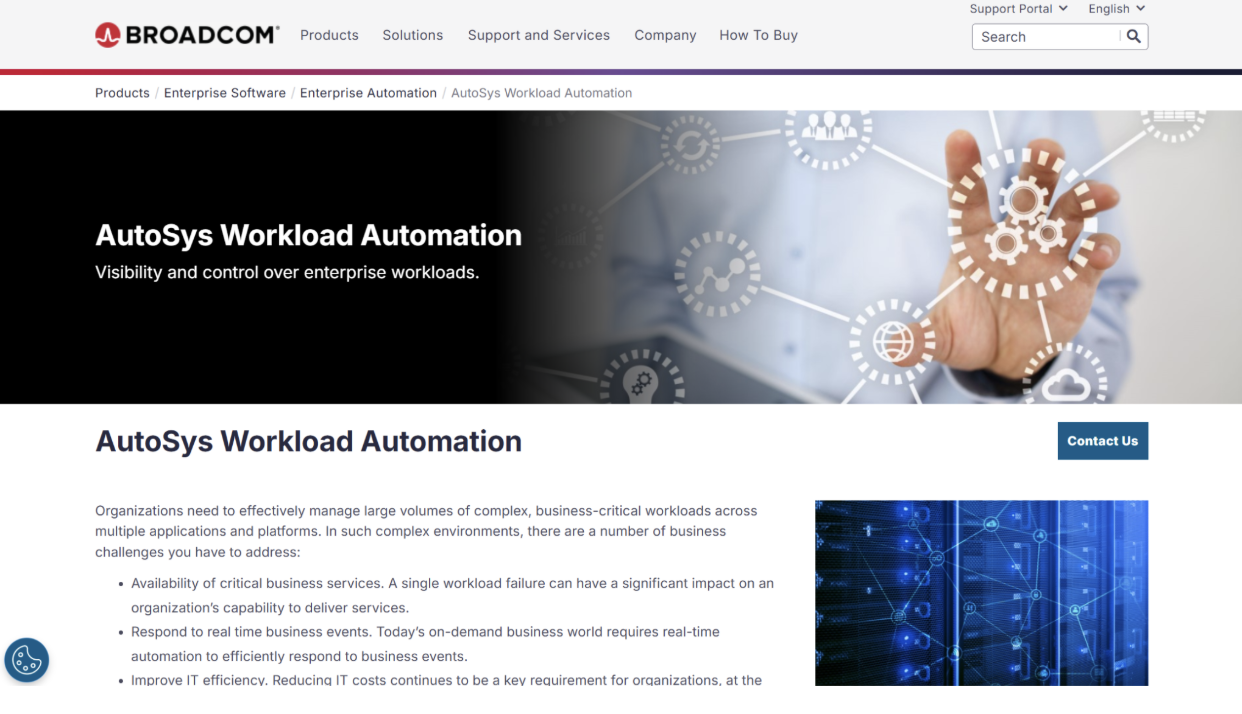
Broadcom AutoSys (formerly CA AutoSys) is one of the most widely deployed legacy workload automation platforms in enterprise IT. It supports cross-platform scheduling at scale and remains embedded in many large organizations’ operational infrastructure.
Key Features
Cross-platform job scheduling: AutoSys manages thousands of jobs across diverse server environments, including virtual machines and legacy on-premises systems
Broadcom suite integration: Deep interoperability with other Broadcom portfolio products for organizations standardized on that vendor stack
Where Broadcom AutoSys Shines
Stability for legacy environments: AutoSys handles very large job volumes on established infrastructure configurations with proven reliability
Best for Broadcom ecosystem users: It offers deep integrations with other Broadcom products
Where Broadcom AutoSys Falls Short
Legacy architecture: AutoSys lacks the cloud-native design and modern observability capabilities found in platforms like ANOW!
Vendor lock-in and price hikes: Broadcom’s pricing model and reduced support quality post-acquisition are the top complaints. Teams planning an AutoSys replacement or CA-7 replacement will find modern alternatives offer significantly better TCO
Customer Reviews
Vedavikas M. notes, “We use Autosys for automation of our jobs in SAP ECC, HANA, INFA, MFT environments throughout the organisation. All of the process is automated in the systems starting from triggering the job, getting the log, depending jobs etc. This helped us in reducing huge workload and manpower.”
Rupali M. warns, “Session logout pop up doesn't allow to continue with the session even though you select the timer pop up. Not all job details can be accessed in descriptive form from single selection of box name.”
Who Broadcom AutoSys is Best For
Organizations with deep Broadcom dependencies that have not yet begun migration planning. For all others, an AutoSys replacement evaluation is worth initiating
4. Redwood RunMyJobs: Best for SAP-Centric Enterprise Automation
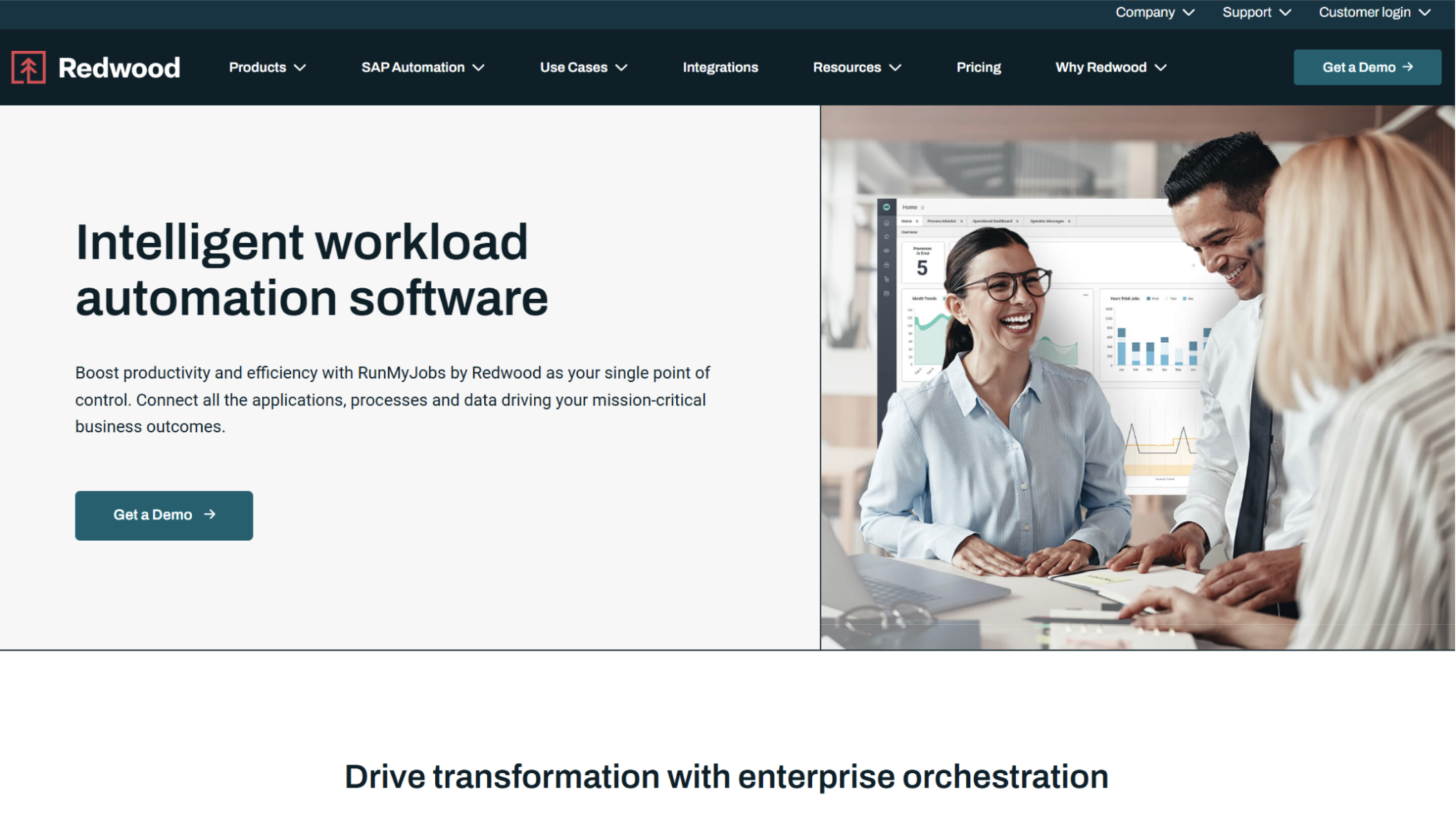
Redwood RunMyJobs is a Leader in the 2025 Gartner Magic Quadrant with particular depth in SAP-orchestration-based enterprise automation. Gartner highlights its intuitive, low-code interface and active integration catalog as key strengths.
However, customers have flagged pricing unpredictability and data sovereignty limitations as significant concerns.
Key Features
Deep SAP integration: Native orchestration for SAP S/4HANA, BW, and other SAP environments, directly competing with ANOW!’s enterprise SAP orchestration capabilities.
Low-code editor: Visual, drag-and-drop workflow editor accessible to IT operations and business analysts without deep scripting knowledge.
Redwood Insights: An AI assistant that analyzes performance, predicts SLA misses, and provides plain-language explanations of process behavior.
Where Redwood RunMyJobs Shines
SAP orchestration depth: For organizations with SAP at the core of their workflows, Redwood’s integration catalog is a strong fit
User experience: Gartner peer reviewers consistently praise RunMyJobs for its accessible low-code interface
Where Redwood RunMyJobs Falls Short
Data sovereignty limitations: RunMyJobs is primarily a multitenant SaaS platform, which creates challenges for organizations in regulated EU industries with strict data residency requirements
Pricing unpredictability: Customer feedback via Gartner indicates significant cost increases at renewal
Looking for more flexibility? Explore Redwood alternatives.
Customer Reviews
Alex S. praises, “It has been stable, we no longer have manual pre and post activities for RMJ patching and have gained confidence in the stability of your patch cycles. Clear improvement over our old On-Prem setup from the past.”
Ana Paula D. notes, “One point that could be improved in RunMyJobs is that the initial setup can be a bit complex for new users. Additionally, the interface could be a bit more intuitive to facilitate navigation and the creation of workflows.”
Who Redwood RunMyJobs is Best For
SAP-centric enterprises that prioritize ease of use and can operate within a multitenant SaaS model without strict data sovereignty constraints
5. Stonebranch UAC: Best for Hybrid CI/CD and DevOps Environments
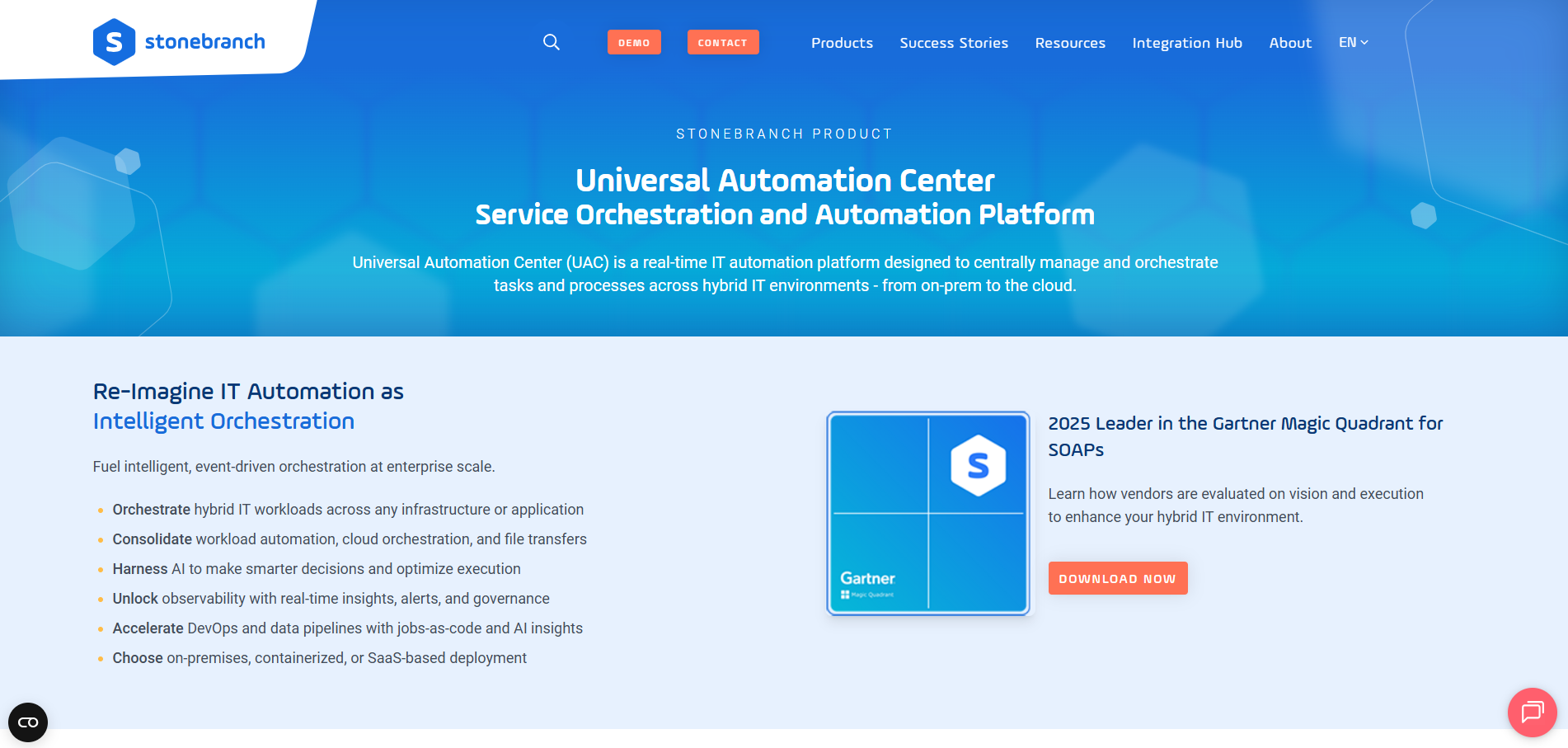
Stonebranch Universal Automation Center (UAC) offers strong support for CI/CD pipelines, DevOps toolchains, and hybrid environments. It is frequently encountered as a direct alternative in enterprise replacement scenarios.
Key Features
Universal Automation Center (UAC): Consistent automation coverage across on-premises, cloud, and edge locations
Jobs-as-code: Strong Git-based CI/CD workflow integration for DevOps Engineers and platform teams
Community-driven integrations: Around 100 integrations available in their hub
Where Stonebranch UAC Shines
Integration flexibility: Strong fit for DevOps and CI/CD teams that want to build their own integrations
Proven orchestration depth: UAC handles complex, multi-tier workloads across heterogeneous IT environments
Where Stonebranch UAC Falls Short
Limited AI capabilities: Stonebranch’s Robi AI for UAC is currently limited to generating documentation and task definitions, lagging other Leaders that already offer GenAI assistants for troubleshooting and workflow creation
No self-service trial: Requiring a sales-led proof of concept slows the evaluation process in an era when buyers expect hands-on access
Older platform: UAC’s platform is slightly outdated when compared to its competitors and also requires a steep learning curve for admins equipping the tool the first time
Customer Reviews
Samantha L. notes, “Stonebranch is an exceptional solution that manages or handles complex tasks by creating robust automation guides.”
Navya A. warns, “Reporting is limited in Stonebranch. Although reports exist, they aren’t fully comprehensive. For example, if I want to extract jobs based on a specific program name or variant name, I’m not able to do so.”
Who Stonebranch UAC is Best For
DevOps and platform engineering teams in hybrid environments with complex CI/CD requirements. Organizations already running Stonebranch UAC typically don’t need to switch
How to Choose a Data Center Automation Tool
The right platform depends on your environment, compliance requirements, and modernization roadmap. Here are the five key considerations.
1. Hybrid Cloud and Multi-Cloud Coverage
Your automation platform must operate seamlessly across on-premises servers, private cloud, and public clouds (AWS, Azure, GCP).
Platforms with cloud-agnostic, cloud-native architectures give you the flexibility to run consistent automation logic across all environments without rearchitecting as your infrastructure evolves.
Look for native integrations with cloud-native services like Kubernetes clusters, AWS Glue, and Azure Data Factory.
→ Compare infrastructure automation tools for hybrid cloud operations.
The ANOW! Advantage
ANOW! Automate is certified as an AWS and Azure cosell partner, with native integrations for all three major hyperscalers and the ability to switch deployment models (SaaS, private cloud, on-premises) at any time without disruption.
2. Integration Breadth and Flexibility
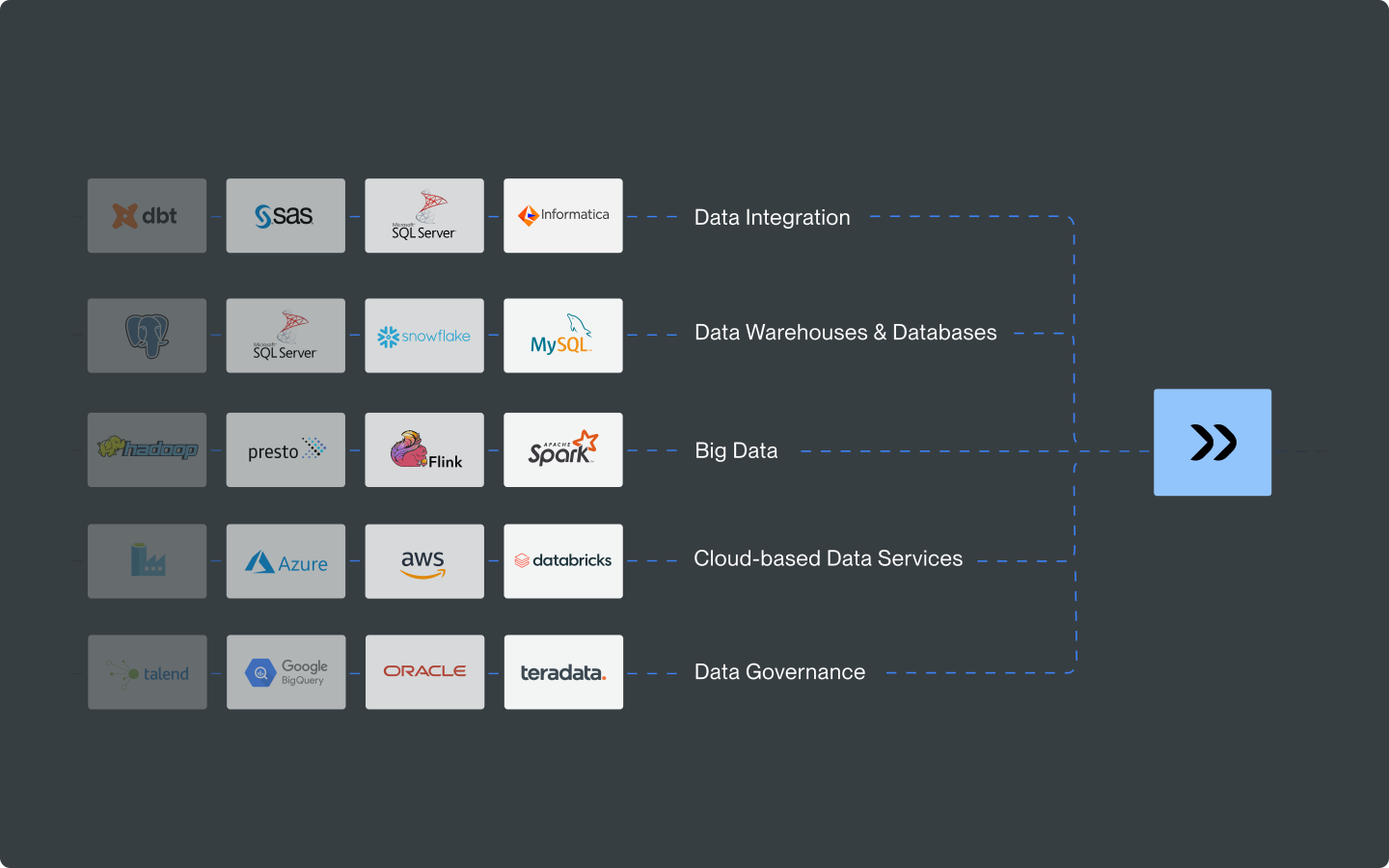
Enterprise data centers run dozens of systems simultaneously. Narrow integration support creates bottlenecks and forces manual handoffs.
According to Gartner, broad integration capability is one of the mandatory features for any SOAP platform.
Did you know ANOW! Automate offers 600+ native integrations, the most of any workload automation vendor? Learn more about how it can help maximize efficiency with event-driven automation.
3. Observability and Real-Time Monitoring
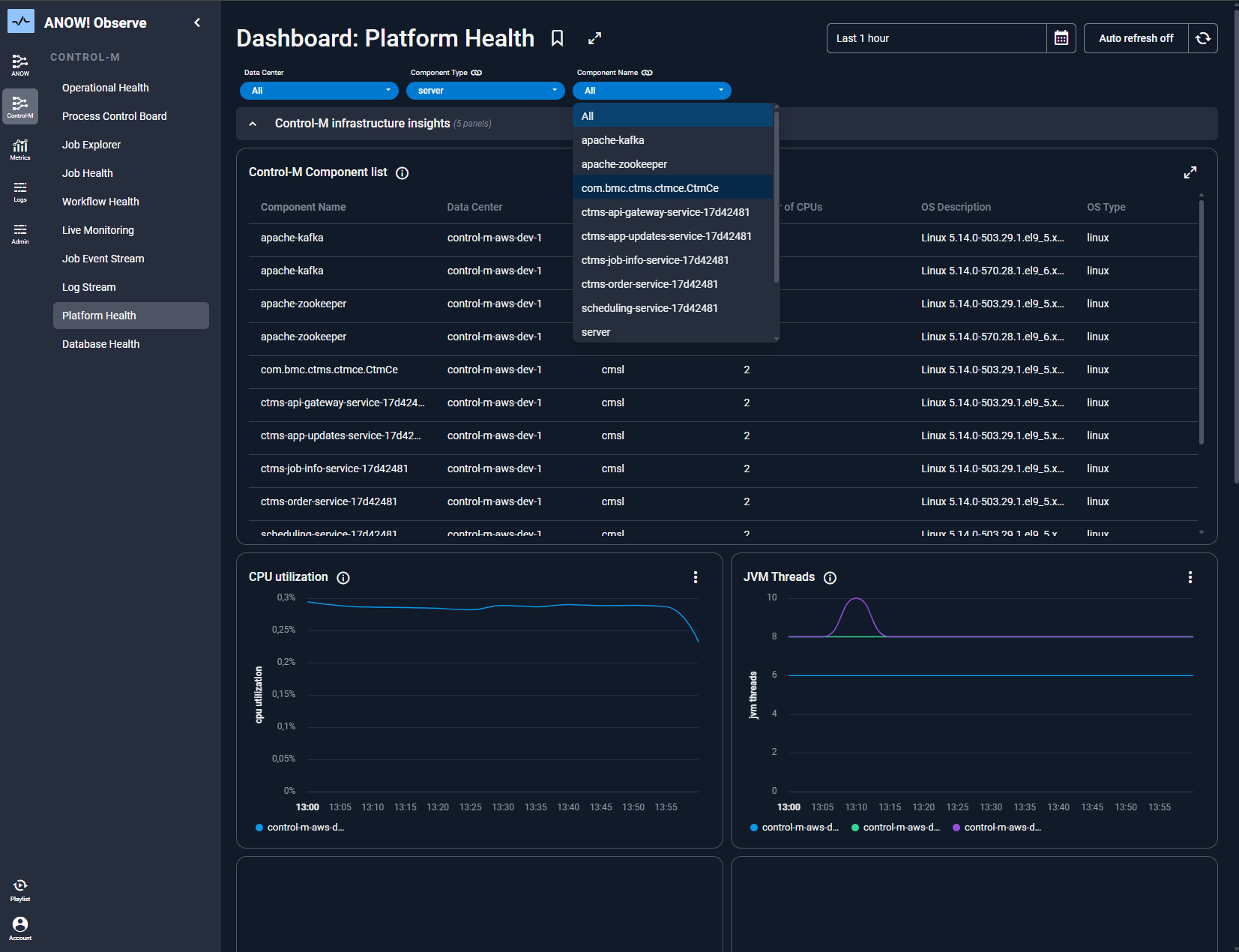
A platform with built-in observability enables your team to catch problems before they cascade. Look for workload-aware monitoring that understands job dependencies, not just generic IT monitoring.
4. Migration Simplicity from Legacy Platforms
If you’re replacing BMC Control-M, Broadcom AutoSys, or a similar legacy tool, migration complexity is a critical factor. Platforms that offer zero-touch migration toolkits and certified migration pathways significantly reduce project risk and time-to-value.
Beta Systems offers structured migration toolkits and dedicated customer success resources for organizations transitioning from BMC, Broadcom, and Redwood environments.
5. Compliance, Security, and Digital Sovereignty
For enterprises in regulated industries or those subject to EU regulations like DORA or GDPR, data sovereignty is non-negotiable. Evaluate whether the platform offers on-premises or dedicated private cloud deployment, built-in compliance features, and PII detection.
Automate Your Data Center with Confidence Using Beta Systems
In 2026, the data center automation market is defined by one central tension: enterprises are locked into expensive, aging workload automation platforms from BMC or Broadcom, while modern cloud-native alternatives offer dramatically better TCO, observability, and flexibility.
For large enterprises ready to make the move, Beta Systems ANOW! Suite stands out as the most complete modern platform. Recognized as a Leader in the 2025 Gartner Magic Quadrant, ANOW! has a higher customer retention rate than most other Leaders, particularly in finance, government, and insurance.
Ready to move beyond legacy automation? Learn more about the Beta Systems ANOW! Suite today!
Frequently Asked Questions
What is the difference between workload automation and data center automation?
Workload automation is a subset of data center automation focused on scheduling, orchestrating, and monitoring IT jobs and workflows across systems. Data center automation is broader, also covering server provisioning, network configuration, and infrastructure management. Modern SOAP platforms like ANOW! address both domains in one platform.
How do I know if I need to replace my legacy workload automation platform?
Key indicators include rising licensing costs at renewal, poor support responsiveness, inability to automate cloud-native workloads, lack of real-time observability, and missing integrations for modern tools. Most enterprises evaluate replacements after significant price increases from vendors like BMC or Broadcom.
What is a Service Orchestration and Automation Platform (SOAP)?
A SOAP is Gartner’s category name for enterprise platforms that unify workload automation, workflow orchestration, and resource provisioning across hybrid IT environments. SOAPs extend traditional workload automation by supporting data pipelines, cloud-native architectures, and DevOps toolchains. Beta Systems ANOW! is recognized by Gartner as a Leader in this category in 2025.
:quality(50))
:quality(50))
:quality(50))