:quality(50))
This guide covers seven platforms evaluated for enterprise readiness, covering workload automation, workflow orchestration, infrastructure automation, and ITSM-driven automation. If you’re thinking about replacing a legacy scheduler or building a modern orchestration layer from scratch, you'll find a clear, honest comparison here.
What is an IT Automation Solution?
An IT automation solution is software that executes, schedules, monitors, and coordinates IT processes and workloads without requiring manual intervention. At the enterprise level, these platforms go far beyond simple task scheduling.
They also orchestrate complex dependencies between systems, trigger workflows in response to real-time events, and provide observability across hybrid IT environments.
Their core benefits:
Eliminates manual, error-prone task execution across business-critical workflows
Enforces SLA compliance through dependency management and real-time monitoring
Reduces operational costs by consolidating multiple point tools into a unified platform
Improves visibility across hybrid and multi-cloud infrastructure
Accelerates data pipeline delivery and DevOps CI/CD cycles
Enables IT teams to scale operations without proportional headcount growth
7 Best IT Automation Solutions: A Quick Overview
Tools | Best For | Standout Feature | ||||
|---|---|---|---|---|---|---|
|
| 600+ native integrations; unified observability | ||||
|
|
| ||||
|
|
| ||||
|
|
| ||||
|
|
| ||||
Ansible |
| Agentless architecture; YAML playbooks | ||||
Redwood RunMyJobs | Cloud-first workload automation with SAP depth | Low-code workflow editor; SaaS-first delivery |
1. Beta Systems ANOW! Suite: Best for Enterprise-Scale IT Automation
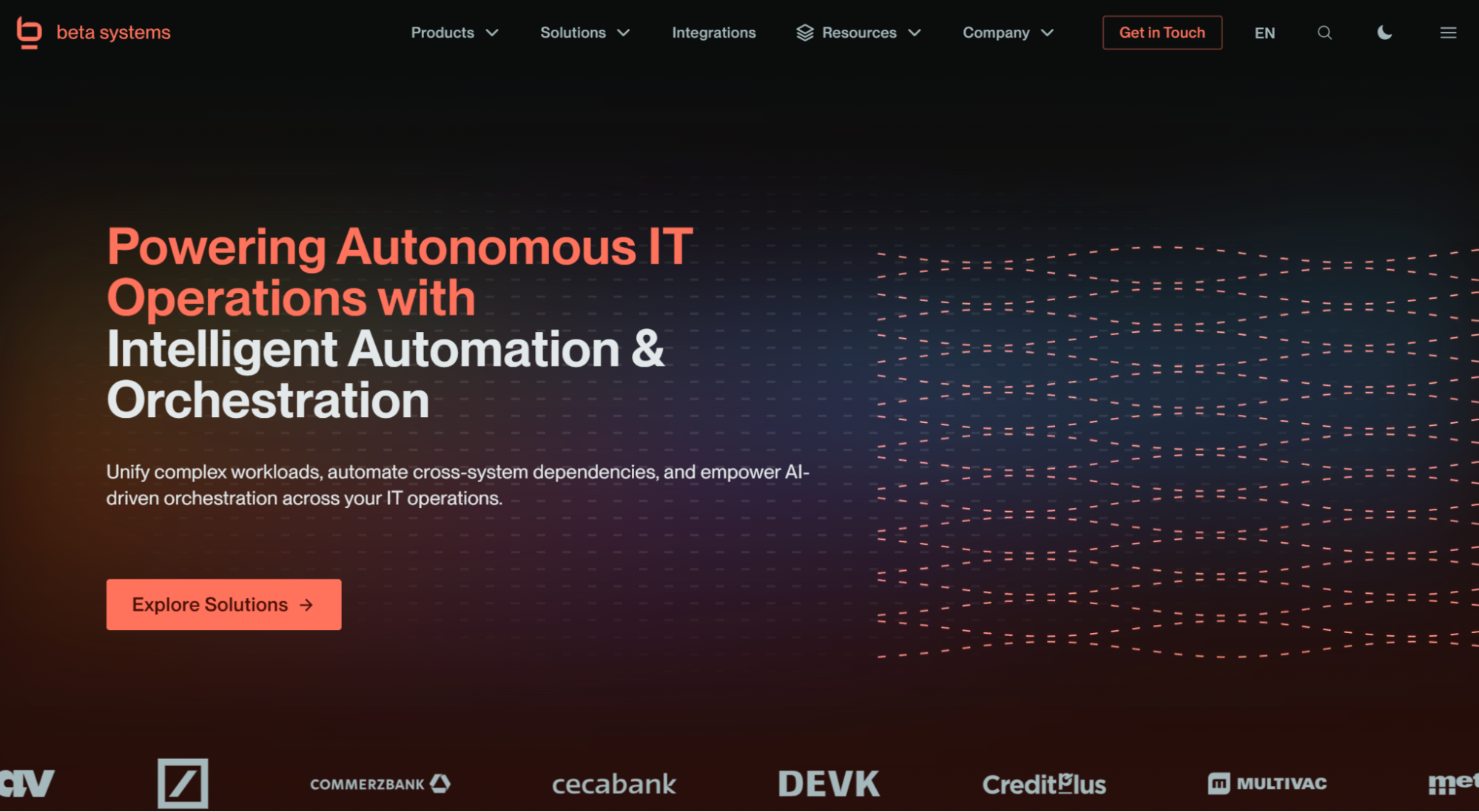
Beta Systems’ flagship product, the ANOW! Suite, is a cloud-native platform that unifies workload automation, observability, AI-driven insights, and compliance in a single solution.
ANOW! is purpose-built for large enterprises managing thousands of jobs, complex inter-system dependencies, and hybrid environments that span legacy mainframes through modern cloud.
The platform has a notably higher customer retention rate than most other Leaders in the Gartner Magic Quadrant, particularly in mission-critical sectors like finance, government, and insurance.
Key Features
Here are the features that make the ANOW! Suite stand out.
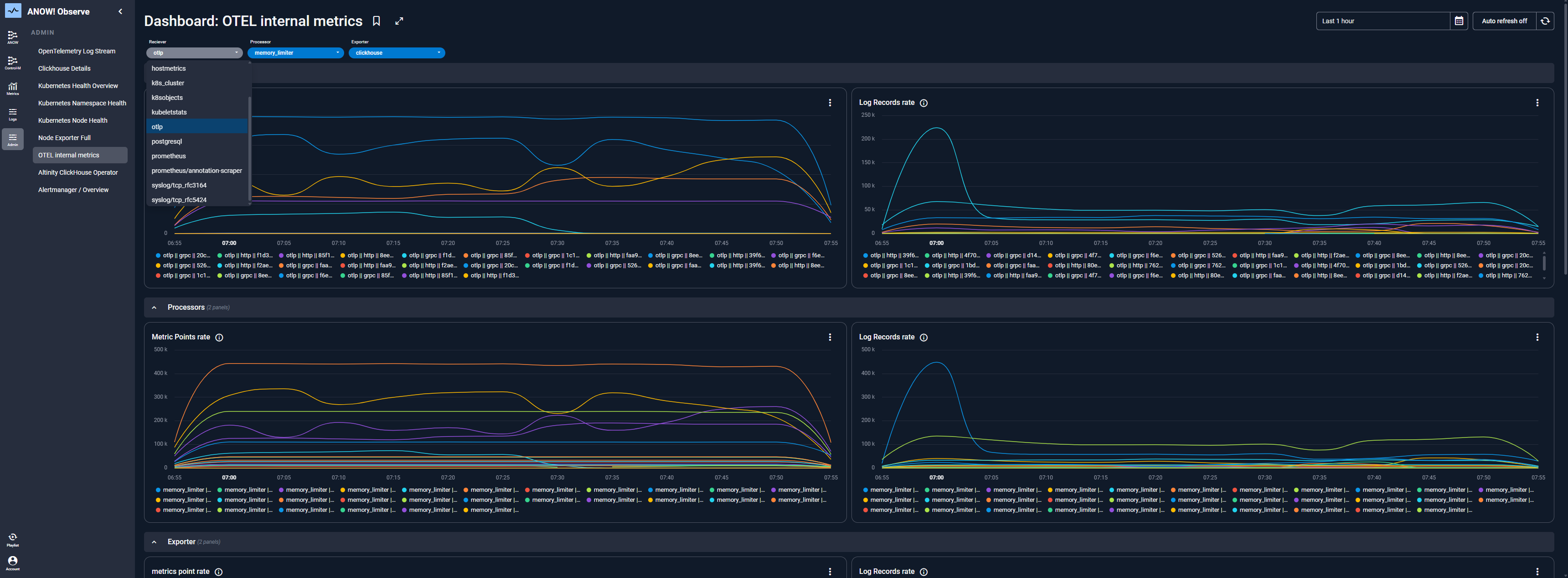
Unified Observability with OpenTelemetry
ANOW! Observe embeds OpenTelemetry-native observability directly into the orchestration engine. In 2025, Beta Systems invested in adding OpenTelemetry support, transforming what had been a caution in 2024 into a key competitive differentiator, as Gartner now identifies it.
The platform provides a real-time view into the health and performance of an organization's entire hybrid IT landscape, detecting anomalies, forecasting SLA risks, and triggering automated remediation before failures cascade.
Zero-Downtime, Container-Native Architecture
Built on a microservices foundation with Kubernetes orchestration, ANOW! Suite delivers zero-downtime upgrades, on-demand scaling, and zero-touch migration from legacy platforms.
No client installation is required because the platform is accessed entirely via browser, making it ideal for distributed enterprise teams.
600+ Native Integrations
ANOW! Automate offers over 600 out-of-the-box connectors across cloud services (AWS, Azure, Google Cloud), databases (Snowflake, BigQuery, Databricks), DevOps toolchains (GitHub, GitLab, Azure DevOps), ERP systems (SAP S/4HANA, Oracle Peoplesoft), ITSM platforms (ServiceNow, Jira, Remedy), and legacy schedulers.
This number is the broadest native integration catalog in the WLA market, enabling teams to connect virtually any environment without custom scripting.
ANOW!'s Infinite Integration capability allows teams to onboard any custom tool, legacy system, or new cloud service through a JavaScript-based integration framework, even where no pre-built connector exists. This matters especially during migrations from BMC or Broadcom, where proprietary connectors can create lock-in.

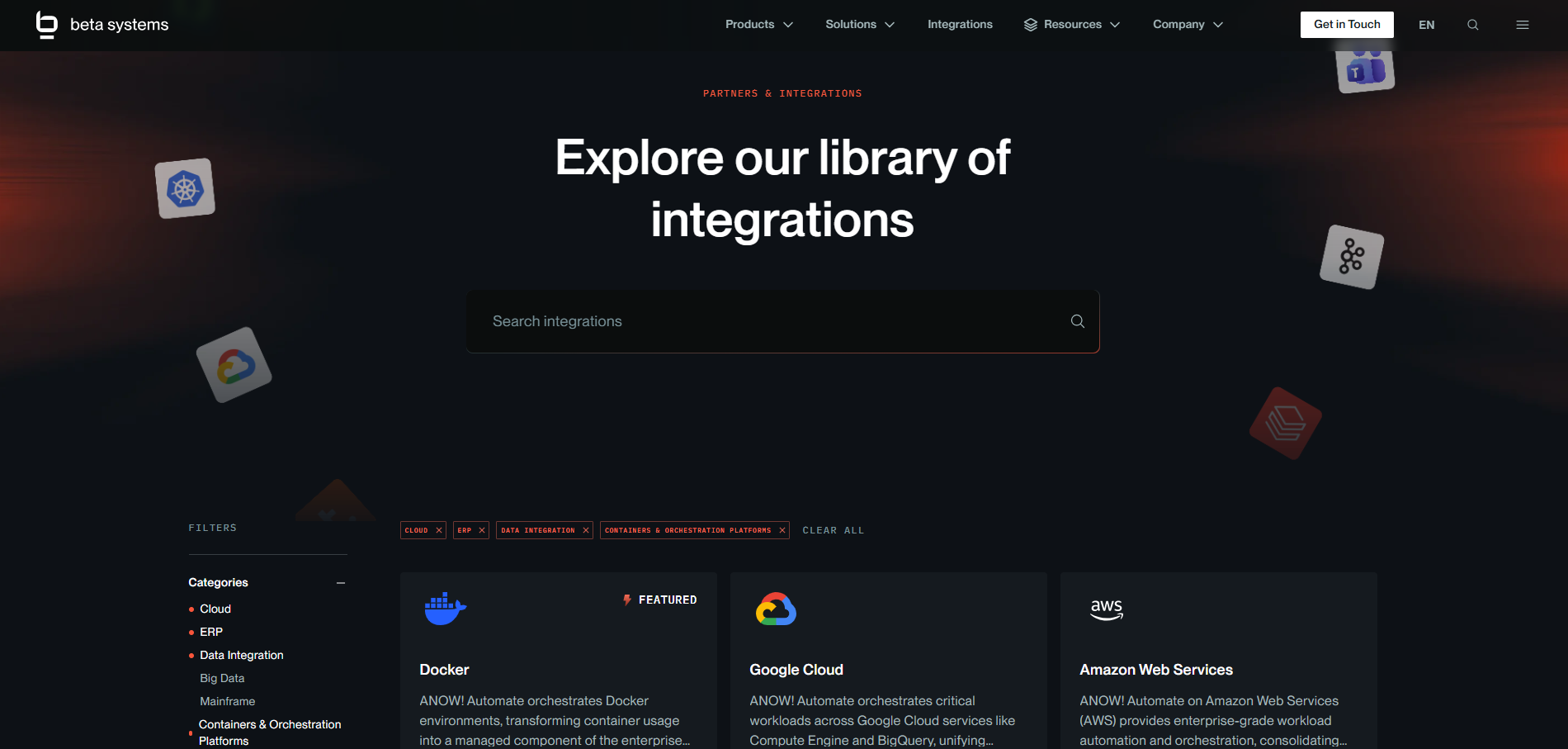
Integration Architecture
Discover Your Integration Possibilities
Connect your Beta Systems platform with the enterprise applications, APIs, and services that you already use. Streamline data exchange and orchestrate end-to-end workflows across your IT landscape.
Contextual Intelligence and Dynamic Workflows
ANOW! supports multilevel dynamic variables that adapt workflows in real time in response to changing inputs, event triggers, and conditional logic. The platform can generate hundreds of thousands of unique workflows from minimal definitions, critical for organizations with high-volume, unpredictable workloads.
Where Beta Systems ANOW! Suite Shines
Migration from legacy WLA vendors: ANOW! Suite was designed from the ground up to replace platforms like BMC Control-M, Broadcom AutoSys, and Redwood RunMyJobs. It offers zero-touch migration capabilities and a structured migration path
Hybrid and multi-cloud orchestration: ANOW! runs natively on AWS, Azure, and Google Cloud simultaneously, and can manage workloads across all three from a single, centralized location, including dynamic allocation based on capacity or budget constraints
Digital sovereignty for European enterprises: Beta Systems is a trusted European vendor with ISO 27001-compliant infrastructure, data sovereignty options, and compliance tooling aligned with EU regulations, including DORA and GDPR
Where Beta Systems ANOW! Suite Falls Short
Limited regional presence outside Europe: ANOW!'s customer base is concentrated in Europe. While Beta Systems is actively expanding into North America, its brand recognition and partner ecosystem in those regions are still developing
Overkill for simple scheduling needs: ANOW!'s depth of capability is designed for complex enterprise environments. Organizations that need only basic task scheduling or a narrow point scheduler (e.g., AWS Batch, SAP Job Scheduler) will find the platform more than they require
Customer Reviews
One verified user shares, “I really like that everything is in one place. It gives me a 'single point of control' for all my tasks and workflows, which makes it much easier to see what is happening in real-time.”
Another user praises ANOW!’s centralized nature, saying, “It helps me organize tasks, track progress, and maintain better visibility across ongoing activities. What I like most about ANOW! Suite is its ability to bring everything into one centralized platform. It makes task management and tracking very intuitive, improves visibility across workflows, and helps me stay organized.”
Who Beta Systems is Best For
Enterprise IT Operations leaders migrating off BMC Control-M, Broadcom Automic/AutoSys, or Redwood RunMyJobs due to price increases or poor vendor support
Chief Data Officers and Data Platform Directors managing complex, cross-platform data pipelines across hybrid cloud environments
European enterprises requiring digital sovereignty, GDPR compliance, and a trusted regional vendor
Ready to Simplify Enterprise IT Automation?
See how ANOW! replaces fragmented tools with one platform for workload automation, orchestration, and visibility across hybrid environments.
2. BMC Control-M: Best for Large-Scale Batch and Data Pipeline Orchestration
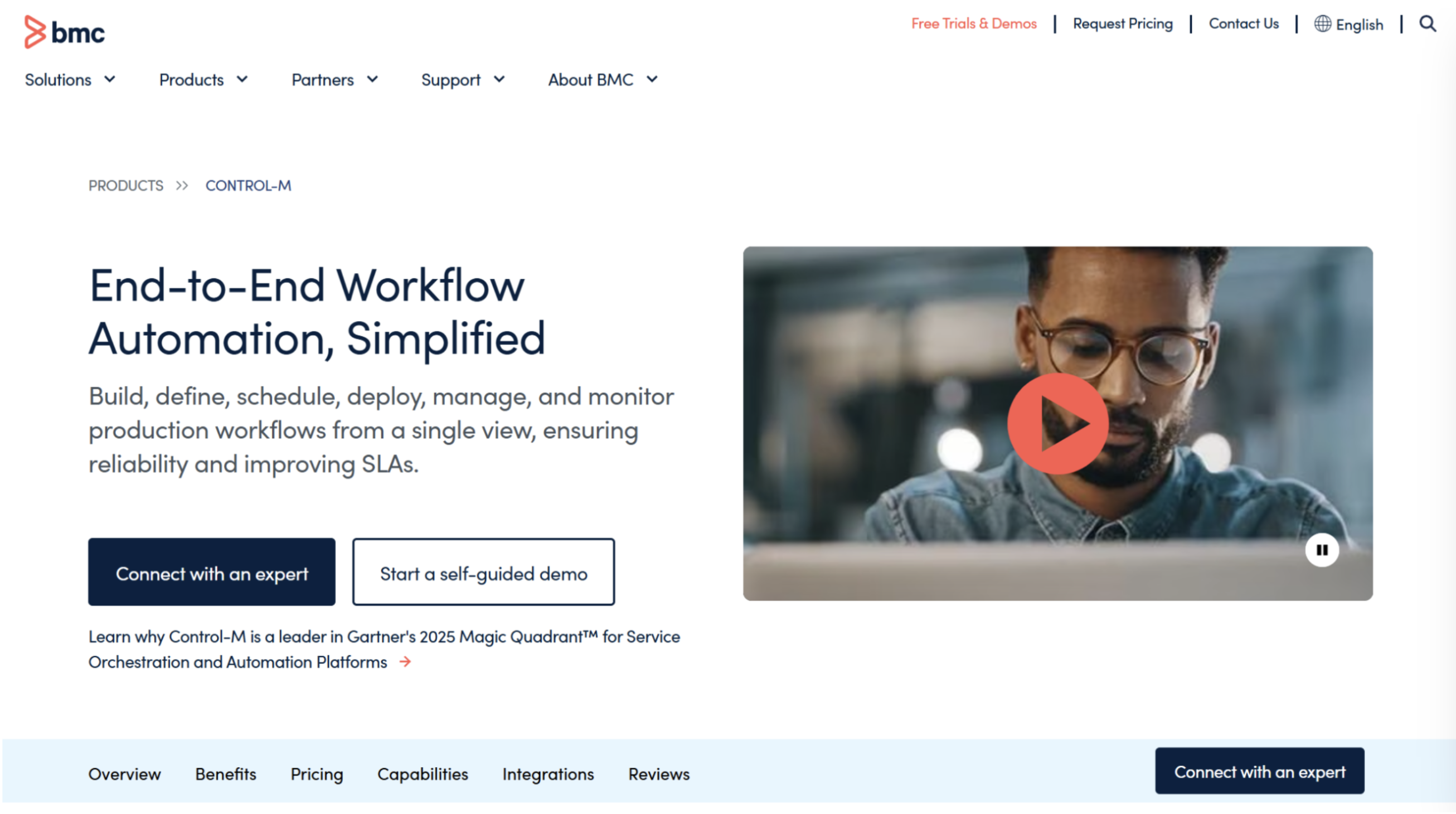
BMC Control-M is one of the most established workload automation platforms in the enterprise market and a Gartner Magic Quadrant Leader. It provides orchestration across mainframe, multicloud, and cloud-native environments, including AI/ML and DataOps pipelines, and is available as self-hosted software or SaaS.
Note: In April 2025, BMC split into two independent companies. While the transition has been relatively smooth, some customers have flagged uncertainty about long-term product integration between the two entities.
Key Features
Unified View: Single interface for managing workloads across self-hosted and SaaS deployments
Jett AI Assistant: GenAI advisor embedded in Control-M for natural language workflow queries, troubleshooting, anomaly detection, and compliance checks
Mainframe-to-cloud Orchestration: Spanning the full enterprise IT spectrum from legacy IBM Z to modern cloud-native architectures
Where Control-M Shines
Enterprise ecosystem breadth: Control-M has one of the most mature partner networks and GSI relationships in the WLA market, giving it reach in procurement-driven large enterprise deals
Multicloud and mainframe in one platform: Unique capability to span IBM Z through hyperscaler cloud in a single orchestration layer
Where Control-M Falls Short
High TCO: Licensing costs combined with administrator overhead make Control-M one of the more expensive options in the market, a key driver of the current wave of enterprise migrations to alternatives
Post-split uncertainty: The 2025 BMC/BMC Helix split has introduced support and integration questions that prospective buyers should evaluate carefully before committing
Customer Reviews
Shaik A. praises, “What I like best about Control-M is its powerful automation and centralized workflow management. It allows me to schedule, monitor, and manage jobs across multiple systems from a single interface, which makes operations much easier and more efficient.”
Shivaji B. warns, “The initial setup and configuration process can be somewhat complicated for new users. Additionally, the licensing costs are significantly higher compared to other tools. What I find most frustrating is the column width and sizing in the self-service section. While many features have been carried over from CCM to the web version, the configuration windows remain quite small, making them difficult and frustrating to use.”
Who BMC Control-M is Best For
Large enterprises with deeply embedded, complex batch processing environments
Organizations with significant mainframe workloads that need cloud extension
IT Ops teams that need strong GSI support and a broad partner network
3. Broadcom AutoSys and Automic: Best for Regulated Enterprise Batch Environments
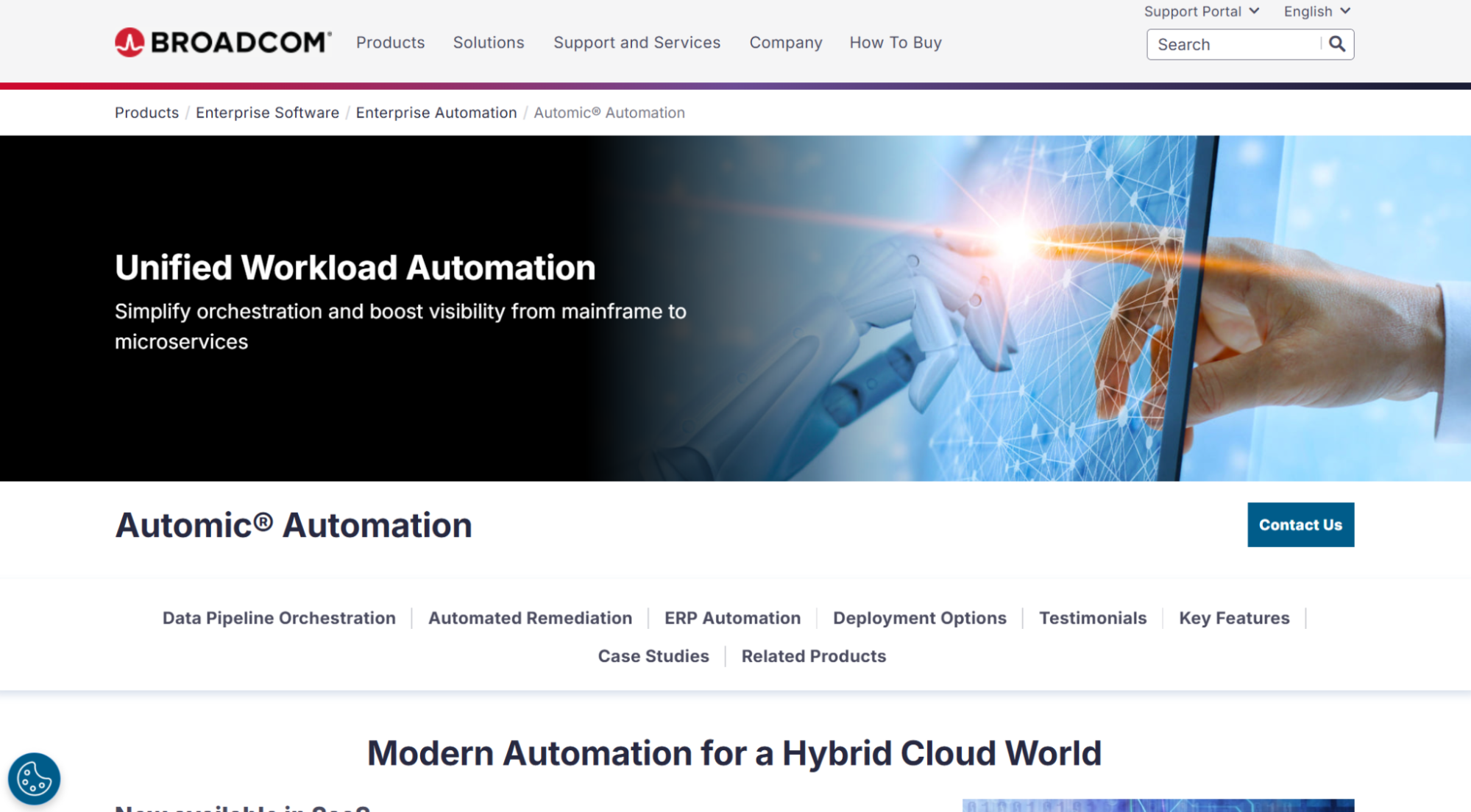
Broadcom's SOAP offering encompasses both Automic Automation (its modern workload automation platform) and AutoSys (its long-standing batch scheduling solution, now part of the Broadcom portfolio).
Broadcom is also a Gartner Magic Quadrant Leader, with a geographically diversified customer base and deep vertical expertise in finance, retail, and manufacturing.
Key Features
Zero Downtime Upgrade: Production-grade availability during platform upgrades
AAI Observability: AI-powered cross-vendor observability for predictive insights and SLA management
Hybrid/Multicloud Orchestration: Mainframe to microservices on-premises, containers, or SaaS
Where Broadcom Shines
Enterprise-grade SLA management: AAI's predictive analytics help operations teams get ahead of SLA breaches before they occur
Vertical expertise: Broadcom maintains dedicated industry sales teams for financial services, retail, and manufacturing with deep domain knowledge
Where Broadcom Falls Short
Customer satisfaction at renewal: Gartner notes inconsistent renewal experiences and lower retention rates compared with other Leaders. Many enterprise buyers exploring alternatives cite frustration with licensing practices
Integration library lag: Broadcom has been slower than other Leaders to add official, out-of-the-box support for emerging cloud services and DevOps tools
If integrations and customer experience are concerns, AutoSys alternatives are worth comparing.
Customer Reviews
Sridhar K. praises, “Automic as a company has got fresh blood and brain in Development. Hence its growth in future will be reliable. As a tool, it is easy to integrate with all environments.”
Shreyash R. warns, “Integrations with other applications is challenging and requires Web services to be available for the same. The UI was quite outdated, which recently was converted into a Web based application.”
Who is Broadcom best for
Large enterprises with entrenched AutoSys or CA-7 deployments in regulated industries
Organizations seeking a robust batch scheduling engine with deep vertical support
IT teams that are not yet ready to migrate but are exploring competitive options
4. ServiceNow: Best for ITSM-Adjacent Workflow Automation
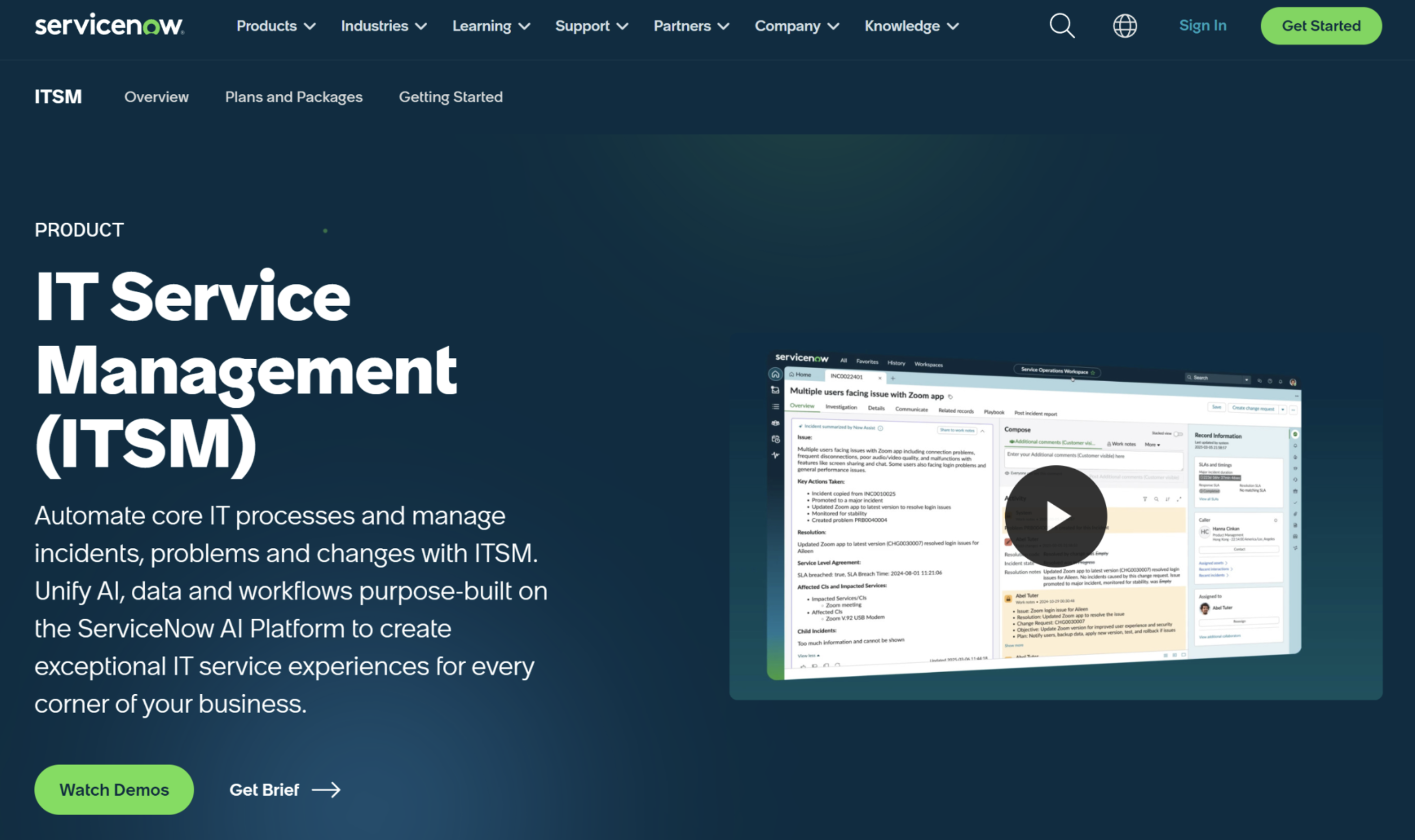
ServiceNow is one of the most recognized platforms in enterprise IT, primarily known for its IT Service Management (ITSM) capabilities. Its automation features allow enterprises to automate workflows across ticketing, incident management, change management, and service requests.
Note: ServiceNow operates in a different lane from pure-play workload automation platforms, focusing on automating what happens around IT service delivery (ticket routing, incident response, access requests, and service catalog fulfillment) rather than managing complex batch job dependencies or data pipeline orchestration.
Pro Tip
Beta Systems' ANOW! integrates natively and bidirectionally with ServiceNow, making the two platforms complementary rather than competitive in many enterprise environments.
Key Features
Flow Designer: Low-code/no-code workflow builder for cross-platform process automation
Integration Hub: Connects ServiceNow with external systems, including HR, security, and DevOps tools
CMDB integration: Leverages the configuration management database for relationship mapping and system health checks
Where ServiceNow Shines
ITSM workflow automation: No platform matches ServiceNow's depth for automating IT service management processes
Self-service automation: ServiceNow's portal and virtual agent capabilities enable end users to resolve issues without IT intervention, reducing help desk load
Where ServiceNow Falls Short
Not a workload automation platform: ServiceNow cannot replace a dedicated WLA for managing complex batch job dependencies, event-driven scheduling across hybrid environments, or data pipeline orchestration
Cost at scale: For organizations that primarily need workflow automation rather than ITSM capabilities, ServiceNow's licensing model may carry significant overhead
Customer Reviews
Youssef B. praises, “I like how ServiceNow ITSM keeps everything organized in one place, so teams don’t waste time jumping between different tools. Its workflows and automation make incident handling smoother, faster, and more consistent from one case to the next. Overall, it helps day-to-day operations feel more controlled and predictable, and simply easier to manage.”
Avantika D. warns, “It’s not very user-friendly, and the cost is high. I also found it complex to implement, and it feels over-engineered for a simple use case.”
Who ServiceNow Is Best For
Enterprises with complex ITSM processes that need cross-platform workflow automation
IT operations teams automating incident response, change management, and service requests
Organizations already on the ServiceNow platform seeking to extend automation across IT service delivery
5. Apache Airflow: Best for Open-Source Data Pipeline Orchestration
Apache Airflow is the most widely used open-source workflow orchestration engine in the data engineering space. Built in Python, it allows teams to define, schedule, and monitor data pipelines as DAGs (Directed Acyclic Graphs). Airflow is extremely popular in data-heavy environments and has a massive community following.
Pro Tip
Beta Systems maintains an Apache Airflow replacement resource for organizations that have outgrown self-managed Airflow and are looking for a production-ready enterprise alternative.
Key Features
Python-native DAG authoring: Define workflows entirely in Python; familiar to data engineers and highly extensible
Rich Operator Library: Hundreds of community-maintained operators for connecting to cloud services, databases, and APIs
Web UI for DAG monitoring: Built-in interface for tracking DAG runs, task status, and failure states
Where Airflow Shines
Python-first data engineering: Teams already working in Python can adopt Airflow quickly and build complex, code-defined pipelines
Community and ecosystem: Airflow has an exceptionally active community, extensive documentation, and a large ecosystem of plugins and operators
Where Airflow Falls Short
Operational complexity at scale: Running production Airflow requires dedicated engineering resources for infrastructure management, scaling, upgrades, and incident response; overhead that compounds in large enterprise environments
No enterprise vendor support: Unlike commercial platforms, Airflow has no SLA-backed vendor support, which creates risk for mission-critical operations
Customer Reviews
Brian K. praises, “What I like most about Apache Airflow is how it makes managing workflows feel organised and predictable. You can clearly define tasks, set dependencies, and see everything laid out in one place, which makes complex pipelines much easier to understand.”
Akash M. warns, “For beginners, Apache Airflow can be complex to set up, especially with Docker. At times when a DAG is updated, the UI can feel slow.”
Who Airflow is Best For
Data engineering teams in mid-market companies with strong Python expertise
Organizations prototyping or building early-stage data pipeline automation
Teams exploring orchestration before committing to a commercial platform
6. Ansible (Red Hat): Best for Infrastructure and Configuration Management Automation
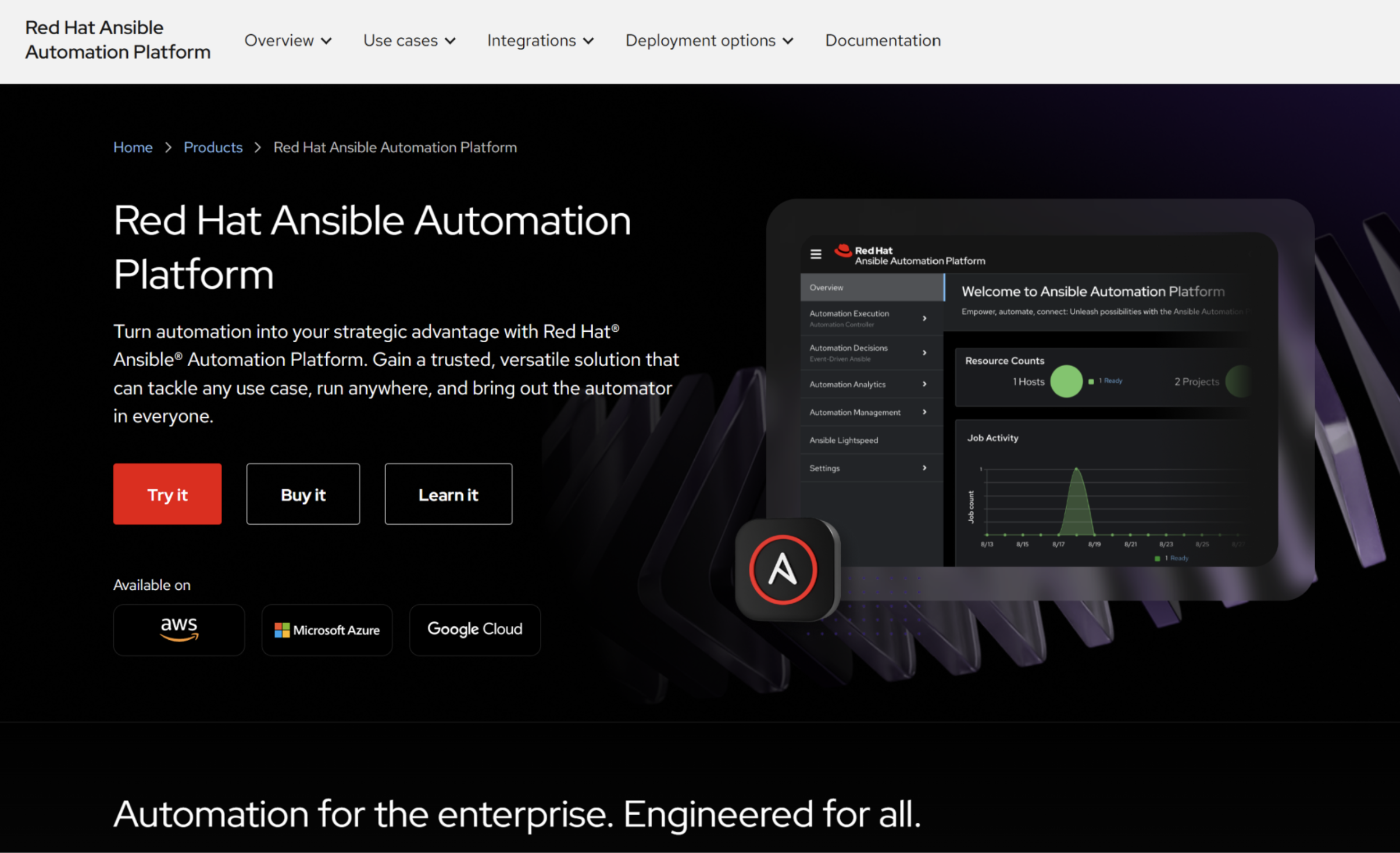
Ansible is one of the most widely deployed infrastructure automation tools in enterprise IT, primarily used for configuration management, server provisioning, application deployment, and compliance enforcement.
Ansible operates agentlessly, using SSH to communicate with target systems, which significantly reduces deployment complexity. It also has YAML playbooks with human-readable automation definitions accessible to both developers and operations teams. Red Hat's enterprise offering adds automation controller, execution environments, and analytics.
However, it’s worth noting that Ansible is designed for infrastructure automation, not for orchestrating complex business workflows, batch-job dependencies, or data-pipeline scheduling.
Best for: IT infrastructure and operations teams managing server fleets, network devices, and cloud resources. Also suitable for organizations automating patch management, compliance enforcement, and configuration drift remediation.
7. Redwood RunMyJobs: Best for Cloud-First Workload Automation with SAP Depth
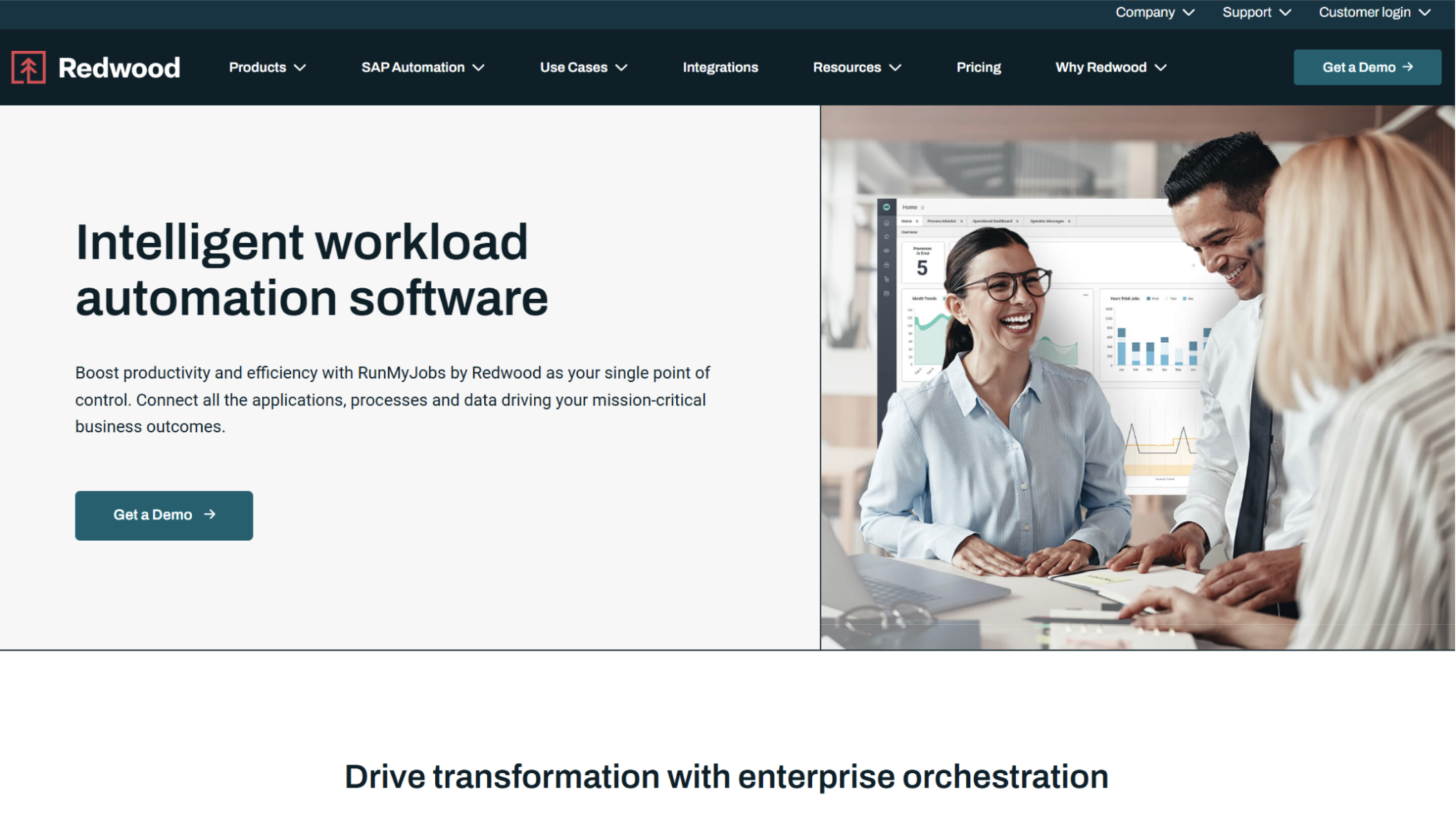
Redwood Software's RunMyJobs is a Gartner Magic Quadrant Leader, consumed primarily as a cloud-based, multitenant SaaS. It features a strong low-code, drag-and-drop workflow editor and an extensive SAP integration catalog.
For enterprises running complex SAP landscapes, RunMyJobs offers one of the most mature integration catalogs in the market. In 2025, Redwood introduced Redwood Insights, an AI-powered observability solution that predicts SLA misses and provides plain-language explanations of process behavior.
However, some customers have expressed frustration with Redwood's renewal pricing practices. Redwood’s primary SaaS model is also not ideal for organizations with strict data sovereignty requirements. While self-hosting is available, it's not the platform's native strength.
Best for: SAP-heavy enterprise environments, especially organizations using RISE with SAP or S/4HANA, where native SAP certification is a priority.
Compare Redwood alternatives for deployment, pricing, compliance, and more.
How to Choose an IT Automation Solution
The right automation orchestration platform depends on your organization's technical environment, scale, and primary use cases. Here are the most important evaluation criteria for enterprise buyers.
Hybrid and Multi-Cloud Compatibility
Enterprise IT environments are never homogeneous. Your automation platform must orchestrate workloads across on-premises systems, private cloud, and multiple public clouds, without requiring separate tools for each environment.
Look for platforms that offer true cloud-agnosticism (not cloud-specific adapters) and a unified control plane spanning the entire environment.
ANOW! Automate, for example, runs natively on AWS, Azure, and Google Cloud simultaneously, and manages allocations across all three based on capacity or budget constraints, all from a single interface.
Integration Depth and Breadth
Evaluate the number and quality of native integrations your platform supports. Broad connector libraries reduce the engineering overhead required to onboard new systems and lower the risk of orphaned integrations when underlying technologies change.
Look beyond headline integration counts. Verify native support for your critical systems (SAP, Snowflake, Databricks, your CI/CD toolchain) rather than generic REST connectors that require custom development.
ANOW! offers 600+ certified integrations, the most of any WLA vendor, built in partnership with hyperscalers and major enterprise software providers.
Migration Path from Your Current Platform
Your chosen platform must offer a credible, low-risk migration path from your incumbent solution, including tooling for job-definition conversion, parallel-run capability, and documented best practices.
Platforms like ANOW! offer zero-touch migration capabilities specifically designed to reduce the complexity of transitioning from legacy vendors. See Beta Systems' migration strategy resource for a detailed breakdown.
Security, Compliance, and Data Sovereignty
Enterprise automation platforms handle sensitive operational data and often touch business-critical systems. Evaluate security at every layer: access control, audit logging, data sovereignty options, and compliance with regional regulations (GDPR, DORA, HIPAA).
Particularly for European enterprises or regulated industries, the vendor's own compliance posture matters.
ANOW! Observe provides log management, output management, and audit-proof storage capabilities which helps ensure compliance.
Modernize Your IT Operations with Beta Systems
The enterprise automation market is consolidating, and the pressure on IT operations leaders to replace aging, expensive platforms has never been greater.
According to the Gartner Magic Quadrant, the SOAP market is growing at 7.7% CAGR, driven by enterprises demanding unified orchestration across their increasingly hybrid IT landscape.
For large enterprises managing complex workloads across hybrid environments, particularly those currently running BMC Control-M, Broadcom AutoSys, or Redwood RunMyJobs, Beta Systems ANOW! offers a modern, cloud-native alternative with transparent pricing, 600+ native integrations, and a proven migration path.
If you're in an earlier stage of evaluation, explore the future of workload automation or learn more about Beta Systems.
Ready to Replace Legacy IT Automation?
See how ANOW! helps enterprises migrate from Control-M, AutoSys, and Redwood with less risk and faster time-to-value.
:quality(50))
:quality(50))
:quality(50))